

Is Agbo Safe? What You Should Know Before Taking Herbal Mixtures
Agbo is widely used in many Nigerian homes as a traditional herbal remedy.
If you grew up in Nigeria or anywhere in West Africa, chances are you have seen it.
A pot of herbs boiling over fire, producing a dark, bitter mixture.
Some people trust it deeply.
Others are unsure and ask an important question:
Is agbo safe?
The answer is not simply yes or no.
To understand it properly, we need to look beyond opinions and focus on how agbo is actually prepared and used.
What Is Agbo? (Quick Context)
Agbo is a traditional Yoruba herbal mixture made by combining different plant ingredients such as leaves, roots, bark, and other natural materials.
It is usually prepared by soaking or boiling these herbs in water.
In Yoruba herbal practice, agbo is not a random mixture of plants.
Each herb is selected for a reason, and different herbs are combined to perform specific roles in the body.
What People Say About Agbo
Opinions about agbo are often mixed.
Some people strongly believe in it.
They share stories of how agbo helped them recover from certain conditions, sometimes even after other treatments did not seem to work.
Others take a more careful approach.
They believe agbo can be helpful, but only when:
At the same time, some people are concerned about safety.
They worry about:
There are also people who choose to avoid agbo completely because they are unsure about it.
These different views often come from differences in knowledge, preparation, and personal experience.
When Agbo Is Used Properly
In Yoruba understanding, agbo is more likely to be used properly when:
This reflects an important idea:
“Herbal mixtures are not random combinations. Each ingredient has a role.”
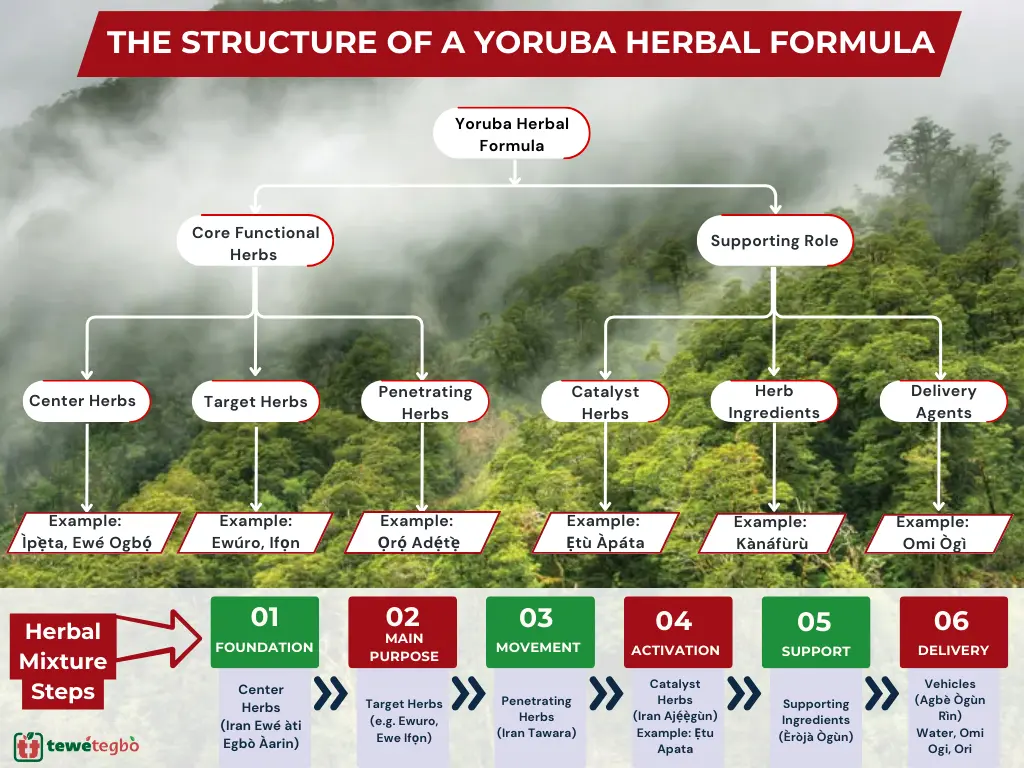
When Problems May Arise
Issues may occur when:
In such cases, the problem is not the herbs themselves, but how they are used.
Why Agbo Affects People Differently
Not everyone experiences agbo the same way.
This is because:
In Yoruba herbal practice, herbs are often selected based on:
This means two agbo preparations may not work the same way, even if they are called by the same name.
A Simple Way to Think About It
There is something interesting to consider.
Many of the same plants used in agbo are also used as food.
For example:
These are all plant-based substances.
The same category many people call “herbs.”
Yet, when we eat them as food, we do not usually stop to ask:
“Is this safe?”
But when similar plants are prepared as a drink, the question suddenly changes to:
“Will this harm me?”
So what really makes the difference?
Is it the plant itself?
Or how it is prepared and used?
Either taken as soup or drink, they still go inside the body.
So the question is not simply whether herbs are “safe” because they are eaten as food, or “unsafe” because they are taken as a drink.
The real question is:
👉 How are they being prepared, combined and used?
Can Agbo Herbs Be Poisonous?
Whenever people hear that a herb needs special preparation, someone will quickly say:
“That leaf is poisonous.”
But it is not always that simple.
In Yoruba herbal medicine, a herb that cannot be taken directly in its fresh state is not automatically regarded as a bad or useless herb.
Sometimes, the herb simply has not been prepared into a condition suitable for the intended use.
Think about freshly boiled water.
If somebody gives you water straight from the fire and says:
“Drink it.”
Will you put it into your mouth immediately?
Of course not.
Not because the water is poisonous.
It is because the water is too hot to consume at that moment.
You allow it to cool until it reaches a condition in which you can safely drink it.
Traditional Yoruba herbal practice has a similar understanding of preparation.
Some herbs are considered too strong in their fresh or untreated state for certain internal uses. The practitioner therefore needs to know how to process the herb before it is used.
One of these traditional processes is called jìjó (burning).
And jìjó (burning) is not simply throwing a leaf into fire and bringing it out again.
There are traditional techniques behind it.
The purpose, in the appropriate herbs and preparations, is to reduce or alter the strength of the herb so that it can be used internally in the intended manner.
This is why simply saying about herbs or leaves:
“This thing is poisonous.”
can be an oversimplification.
Take Ewe Bomubomu (Sodom Apple Leaf), for example.
If you simply pick the fresh leaf, squeeze it and drink it, vomiting and purging may follow.
Someone may then conclude:
“Bomubomu is poisonous.”
But a Yoruba herbal practitioner may ask a different question:
“Was the herb prepared correctly?”
That is an important difference.
Traditional herbal knowledge is not only about knowing which plant to use.
It is also about knowing which part to use, how to prepare it, how much of it is appropriate, what to combine it with, and whether it is ready for internal use.
The knowledge surrounding the herb matters.
Calling a plant “poisonous” because it is poisonous in a particular form, stage, preparation, or circumstance can be an incomplete description of the plant itself.
Is Agbo Good or Bad?
Agbo itself is not the problem.
In Yoruba herbal understanding, the issue is not the herbs, but how they are used.
Herbs are natural materials.
But like anything powerful, they require knowledge.
When herbs are:
they are not harmful to the body.
However, when:
then problems may arise.
This is not unique to herbal medicine.
Even in modern medicine, the outcome of any treatment depends on:
Would we then say modern medicine is good or bad because of that?
The answer is no.
In the same way, agbo (herbal mixture) should not be simply judged as “bad”.
The focus should be on:
Why Knowledge Matters More Than Random Advice
To understand better that the problem is not the herbs.
The problem is often how they are used and who is using them.
Today, many people share herbal remedies on social media without proper knowledge.
Some suggestions may sound convincing, but when you think about them carefully, they do not make sense.
For example, imagine someone telling people to grind a glass bottle and use it as a remedy.
If you look around, you will see that this kind of advice is actually being shared on platforms like Facebook and Instagram.
It is clear that this is not herbal knowledge.
This is not nature.
This is not traditional practice.
Yet, if something goes wrong, people may blame herbal medicine instead of questioning the advice itself.
This highlights an important truth:
👉 Not everything called a “herbal remedy” is actually herbal knowledge.
The real traditional herbal remedies are not invented randomly.
What is used today is often traceable to knowledge passed down over generations.
Even though much of this knowledge was not written then, it was preserved through oral traditions and cultural systems such as:
Because of this, herbal knowledge is usually grounded in continuity and understanding.
So we can ask a simple question:
How do we trace something like grinding a bottle as a remedy to this system of knowledge?
The answer is clear. Such ideas have no real foundation in Yoruba herbal practice.
True herbal medicine is guided by:
Because of this, it is important to be careful about:
The focus should always be on knowledge, not guesswork.
The Role of Proper Preparation
One of the most important factors in safety is how agbo is prepared.
Preparation may involve:
But beyond the method, what matters most is:
Common Questions People Ask About Agbo or Herbal Mixtures.
Can Herbal Mixtures Affect the Kidneys?
Herbal mixtures (agbo) pass through important organs in the body such as the liver and kidneys.
In Yoruba herbal understanding, herbs themselves are not harmful to the kidneys or the livers when they are properly identified, correctly prepared, and used with knowledge.
However, problems may arise when mixtures are:
– too strong
– wrongly prepared
– taken excessively
– or made with unknown or inappropriate ingredients
In such cases, the issue is not the herbs themselves, but how they are used.
This is similar to all forms of treatment, not just herbal medicine.
Even in modern medicine, when drugs are:
– wrongly prescribed
– overdosed
– or used without proper guidance
they can also affect the body, including the kidneys, the liver etc.
So the concern is not about the system alone, but about how it is applied.
This is why traditional practice always emphasizes:
– proper knowledge
– careful preparation
– and appropriate use
What Are the Side Effects of Herbal Mixtures?
The effects of any herbal mixture depend on:
– the ingredients used
– how it is prepared
– how it is taken
When used incorrectly, some people may experience:
– discomfort
– unusual body reactions
– or effects that were not intended
In many cases, these are not because herbs are harmful by nature, but because they were not used properly.
What Are the Disadvantages of Herbal Mixtures?
The main challenges with herbal mixtures are not always about the herbs themselves.
They often include:
– lack of standard measurement
– poor preparation methods
– unknown sources of ingredients
This is why traditional practice values knowledge, experience, and careful preparation.
What Do Herbal Mixtures Do in the Body?
In Yoruba herbal understanding, herbal mixtures are believed to work in different ways depending on how they are prepared.
Some herbs may:
– support the body
– help remove internal waste
– assist other herbs in the mixture
– help restore balance
This is why herbs are often combined, rather than used alone.
What Is the Use of Herbal Mixtures?
Herbal mixtures (agbo) are traditionally used based on purpose.
Different mixtures may be prepared to:
– support the body during illness
– restore balance
– address specific conditions
– strengthen the body
This is why there are different types of agbo for different needs.
“The issue is not the herbs, but how they are used.”
Agbo has been part of Yoruba herbal practice for generations.
Its continued use shows that it holds cultural and practical value.
Its safety is not just about the herbs themselves.
It depends on:
Understanding how herbal mixtures are structured provides a clearer and more balanced way to understand agbo.
Explore More Yoruba Herbal Knowledge
Yoruba herbal medicine is a wide and structured system.
To understand the full picture, you can explore these related guides: