

Ewe Bomubomu: English Name, Yoruba Uses, Benefits & Spiritual Meaning
There are some herbs Yoruba elders use casually.
And there are others they handle carefully.
Ewe bomubomu belongs to the second group.
The thick dusty leaves…
the strange white milk that appears immediately the leaf is cut…
the balloon-like fruit that swells like pregnancy…
and the warnings that often followed its use made bomubomu one of the most respected wild herbs in traditional Yoruba medicine.
For a long time, people have used it for pain, swelling, cough, skin problems, childbirth-related traditions, and spiritual cleansing practices.
But at the same time, elders also knew something important:
A strong herb can help when properly used…
and become dangerous when wrongly used.
That makes understanding it important.
So, let's start with:
Quick Answers About Ewe Bomubomu
| Question | Answer |
|---|---|
| Yoruba name | Ewe Bomubomu / Bomu-bomu / Bomunbomun / Alatẹlu / Oje-omu |
| English name | Sodom Apple, Giant Milkweed, Rubber Bush |
| Botanical name | Calotropis procera |
| Hausa name | Tumfafiya |
| Igbo name | Otokwuru |
| Is it medicinal traditionally? | Yes, widely used in Yoruba herbal practice |
| Is it edible like vegetable? | No. It is mainly used medicinally |
| Does it produce white sap? | Yes. The plant releases a thick milky latex |
| Can it be dangerous? | Yes. Excessive or improper use may be harmful |
What Is Ewe Bomubomu?
Ewe bomubomu is a wild plant that grows easily in many parts of Nigeria.
You will often see it:
Ewe Bomubomu Picture
The plant is easy to recognize because it has:
If you break the leaf, a thick white liquid quickly comes out.
Many people know this plant because of that white “milk.”
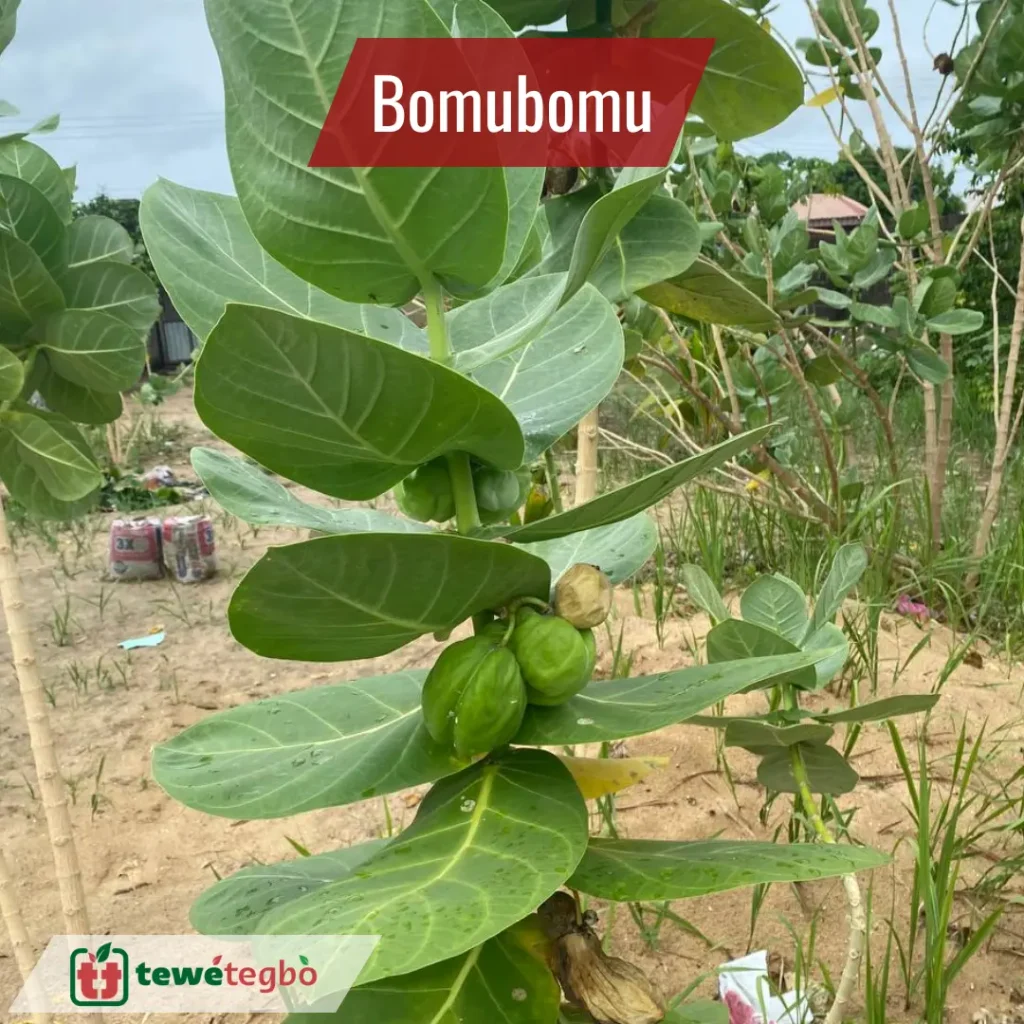
In English, people call it:
Its scientific name is Calotropis procera.
In some northern parts of Nigeria, people also call it the Nunu plant.
Traditional Uses of Ewe Bomubomu
1. Traditional Use for Pain, Swelling & Joint Problems
One of the most repeated traditional uses of bomubomu is for:
In older Yoruba practice, the leaf was sometimes lightly heated and placed over painful areas of the body.
Some traditional preparations also used the dried outer covering of the fruit.
The fruit cover could be:
before being rubbed on painful joints and inflamed areas.
2. Traditional Use for Cough & Chest Tightness
Bomubomu is also strongly connected with chest-related traditional remedies.
Historically, people used it for:
Traditional methods included:
3. Traditional Use for Measles (“Tita”, “Baba”, “Olode”)
Among older Yoruba households, bomubomu was sometimes used for illnesses traditionally called:
which were often associated with measles-like childhood conditions.
Traditionally:
The plant was believed to help cool the body and support recovery.
4. Traditional Use for Boils (Óówo)
For boils, some traditional users crushed the leaves and mixed them with red oil before applying externally to the affected area.
Like many traditional topical remedies, this was usually intended for localized swelling and skin irritation.
5. Traditional Use for Toothache (“Akokoro”)
The milky sap from the leaf was sometimes used traditionally for tooth pain.
In old household practice, tiny amounts of the latex were placed directly around painful tooth areas.
This was particularly associated with severe toothache or what many Yoruba people traditionally called akokoro eyin.
Because the sap is:
very strong
elders usually handled it carefully.
6. Traditional Use for Eye
One of the most delicate traditional uses associated with bomubomu involved eye-related complaints, dirt in the eyes and blurry vision.
Historically, some practitioners carefully prepared extracts from the seeds inside the fruit.
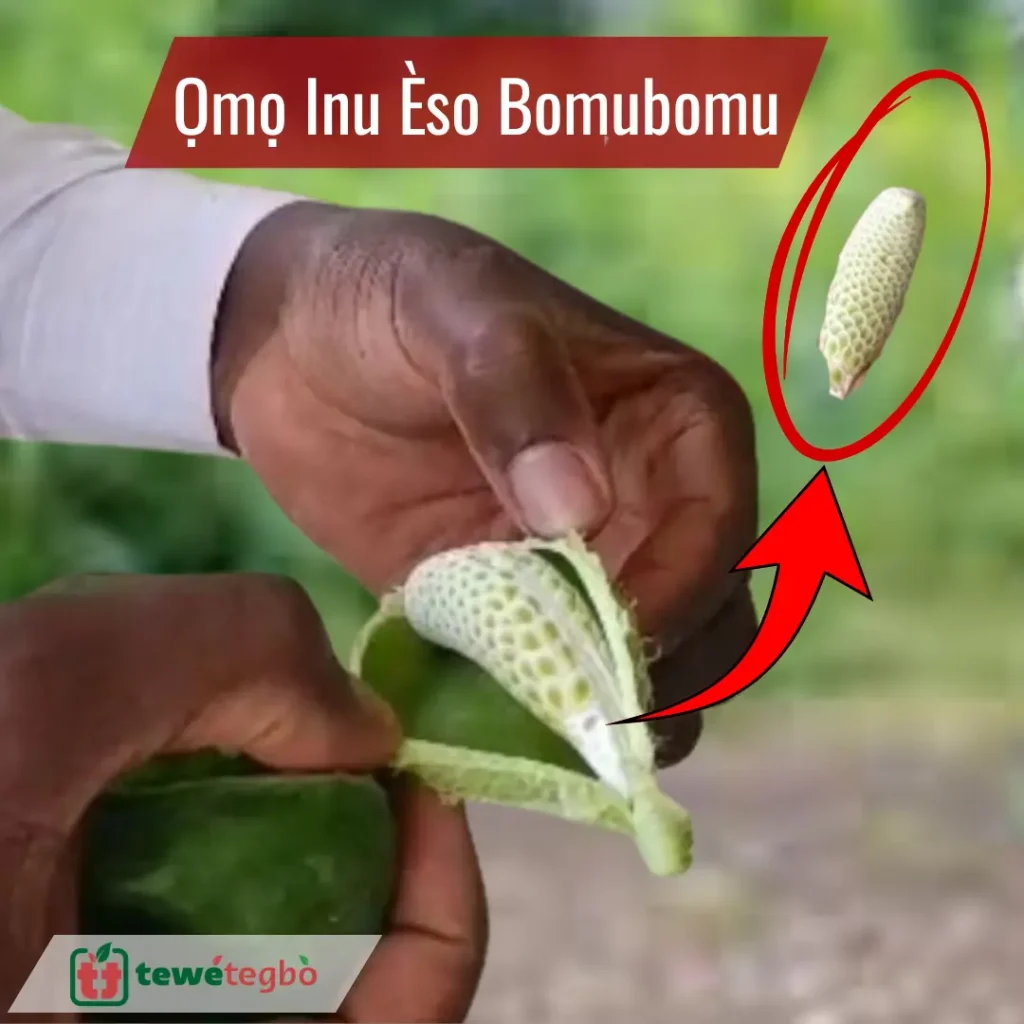
The preparation was usually done with strong emphasis on cleanliness and caution because the eye is extremely sensitive.
Traditionally:
7. Traditional Use for Easy Delivery During Childbirth
Among older Yoruba traditional practices, bomubomu was also connected with childbirth and safe delivery.
Elders traditionally believed the plant symbolized easy labour because of the way its large swollen fruit eventually bursts open lightly, releasing mostly air and soft fibers.
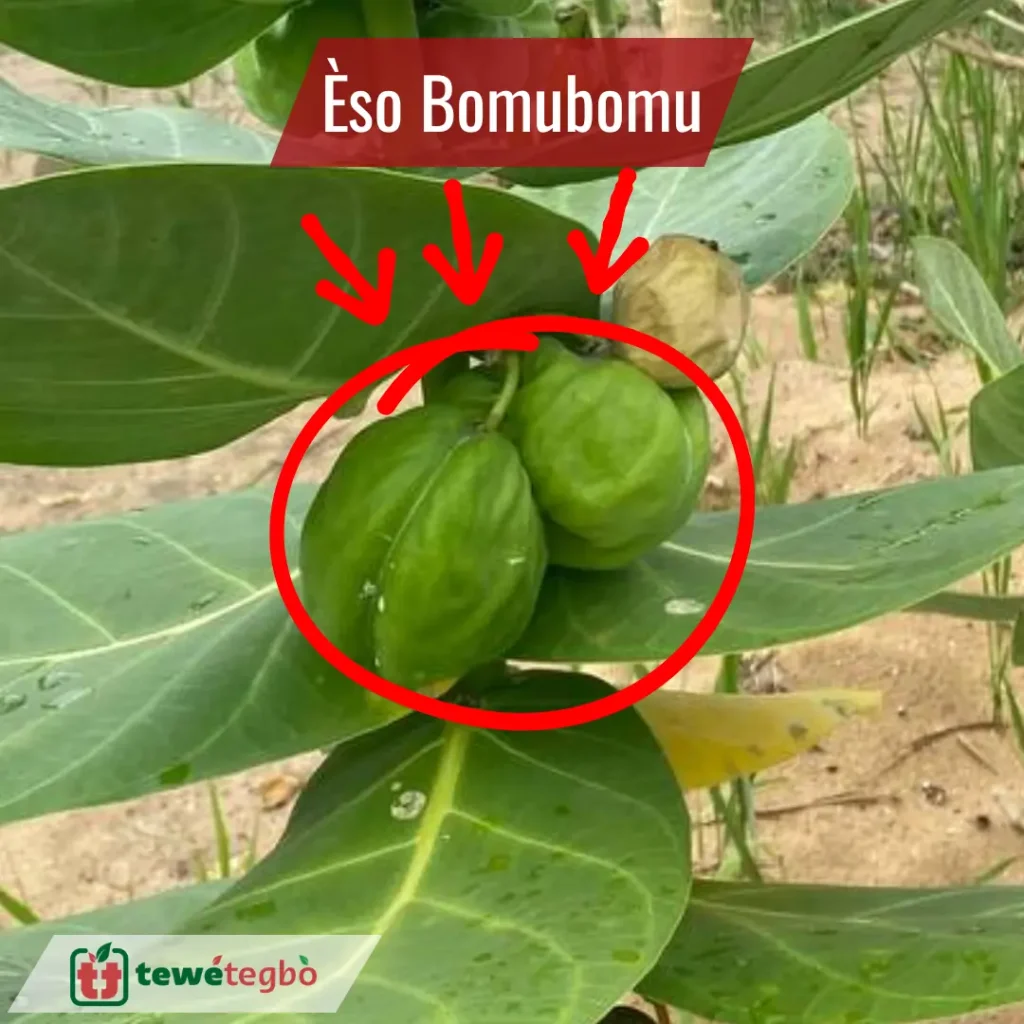
This belief is reflected in an old Yoruba saying:
“Oyún ti bomubomu ba ni, isó ni n fi só.”
Roughly meaning:
“No matter how swollen or pregnant bomubomu becomes, it eventually releases it like ordinary fart.”
The proverb comes from observing the balloon-like fruit of bomubomu.
No matter how large or frightening the swollen pod appears, it eventually opens easily without releasing anything heavy inside.
In traditional Yoruba symbolism, this became associated with:
The saying also reflects how Yoruba elders often used humor, nature, and deep observation to explain important life experiences.
Even today, many older people still remember the proverb whenever bomubomu is mentioned.
8. Traditional Use for Diabetes
In some traditional practices, bomubomu was combined with alligator pepper in remedies connected to blood sugar concerns.
Different herbal practitioners prepared such mixtures differently depending on the intended purpose.
9. Traditional Use for Memory Support
Some traditional preparations also connected bomubomu with memory support and early mental distress care.
In certain practices, the outer fruit covering was burned into ash and used in specialized preparations.
These uses belong to traditional oral practice and cultural medicine traditions.
Ewe Bomubomu and Spiritual Uses
Like many herbs in Yoruba traditional practice, bomubomu also became associated with spiritual uses.
Some preparations combined it with:
Part of the reason bomubomu gained this kind of reputation was because of how unusual the plant itself appears:
In many traditional systems, plants with “strong behavior” were often believed to carry strong spiritual significance too.
Over time, some claims surrounding bomubomu became heavily exaggerated.
For example, some people claimed the plant could provide bullet protection or supernatural physical protection.
Personally, I would advise caution with such claims.
No herb should replace wisdom, caution, or personal safety.
As for me…
I take God beg you no stand in front of bullet o.
The Lesson Inside Bomubomu
Ewe bomubomu is one of those plants that reveals the depth and complexity of Yoruba traditional medicine.
A single plant can be:
That is why elders rarely handled strong herbs casually.
They understood that power without wisdom can become dangerous.
Perhaps that is the deeper lesson hidden inside bomubomu itself.
The same plant that people used for healing…
was also approached with caution.
And maybe that balance is what made traditional herbal knowledge survive for generations:
not just knowing which plant to use,
but knowing when,
how,
and why it should be used.
Chat me Now on WhatsApp about Bomubomu
Not sure if Bomubomu will work for you?
Send me a WhatsApp message now, I’ll guide you.
Let me reconnect you to the nature’s pharmacy.