
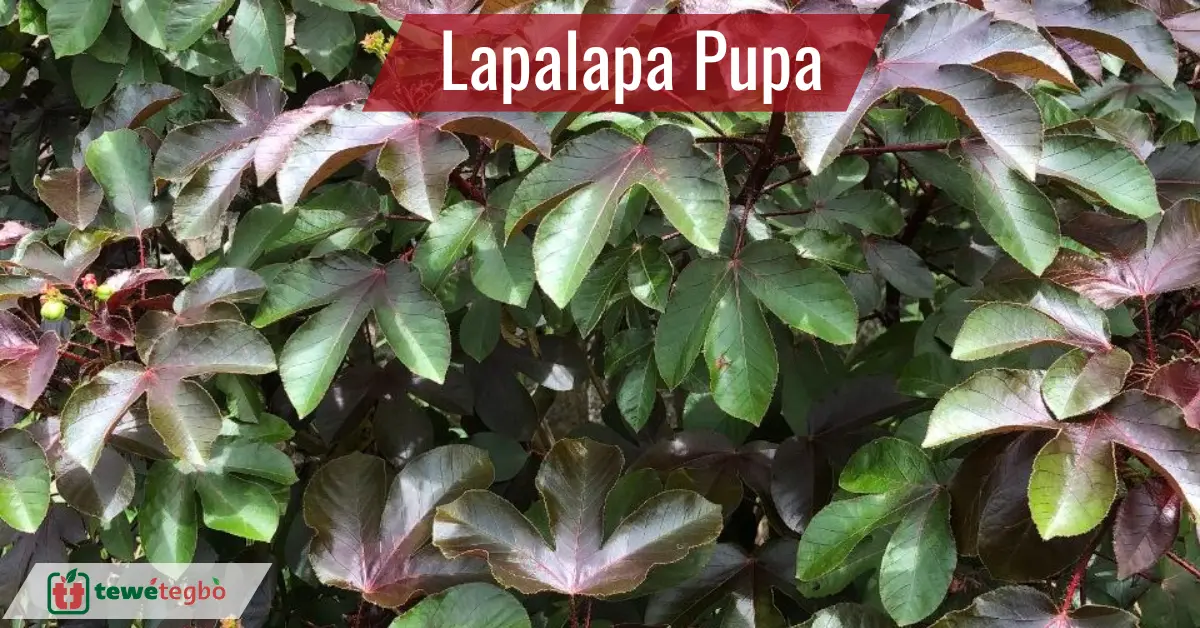
Ewe Lapalapa Pupa: Health Benefits, Traditional Uses
See this plant…
It is called Ewe Lapalapa Pupa.
You have seen it before?
Or at least passed by it without knowing?
It often grows quietly along roadsides, around farms, on abandoned land, and sometimes even close to people's houses.
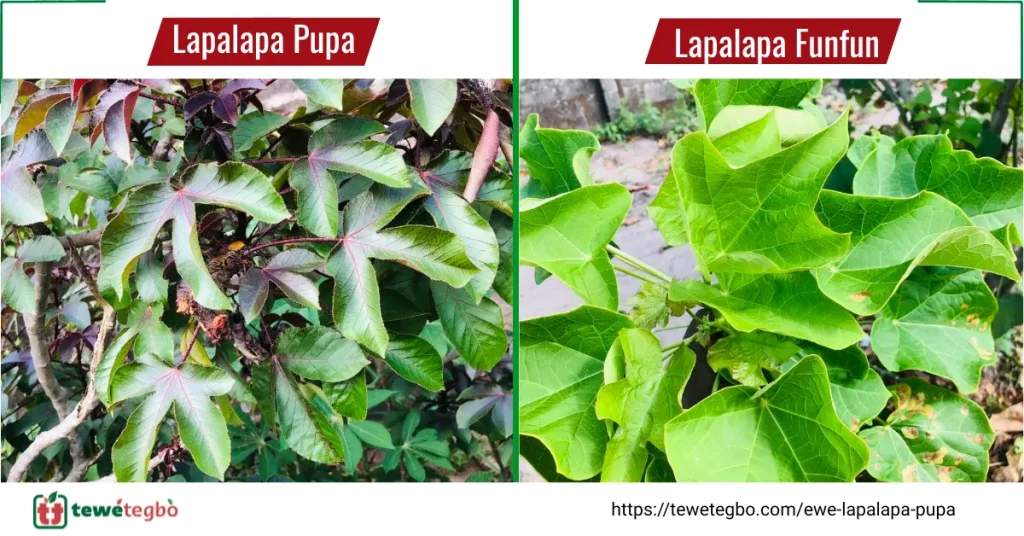
It is not the same thing as Ewe Lapalapa Funfun. Do not get confused.
Some people confuse it with Ewe Laara Pupa.
They're different plants with different traditional uses, so getting the identification right matters.
Here is what I plan to do…
I'll clear the confusion so you will never mistake Ewe Lapalapa Pupa for another plant.
I'll also tell you what Yoruba elders use it for…
And exactly how they use it.
Let's start from here:
What Is Ewe Lapalapa Pupa?
Ewe Lapalapa Pupa is a medicinal herb that has been part of Yoruba herbal practice for a very long time.
When you break its leaf or stem, it brings out a whitish water.
Its scientific name is Jatropha gossypiifolia.
Don't worry about pronouncing that.
Your teeth may bite your tongue hard. 😂
Honestly, I don't enjoy pronouncing those jargon terms either.
Let's just call it Ewe Lapalapa Pupa and move on.
In English, it is commonly called:
But in Yorubaland, you may hear several different names for the same plant.
Depending on the area, tradition, or the person you're speaking with, it may be called:
And these names are not just random names people gave the plant.
Some of them tell us something about how Yoruba people traditionally understood the plant.
Where Does the Name Bòtújẹ̀ Come From?
The common Yoruba name you will hear is Bòtújẹ̀.
At first, the name may sound meaningless in Yoruba.
But Bòtújẹ̀ is actually a shortened form.
The fuller name is Òbòtújẹ̀ or Olóbòtújẹ̀. The initial “O” or “Olo” removed.
Òbò refers to the female private part, ẹ̀jẹ̀ means blood, while tú means to flow or pour out.
So, Olóbòtújẹ̀ can be understood as the one associated with the female private part releasing or flowing blood.
It is connected to one of the traditional uses of Ewe Lapalapa Pupa.
Yoruba elders traditionally used the plant when a woman's menstrual flow was not coming as expected.
So, the name itself carries a clue about how the plant was traditionally understood and used.
But why was Olóbòtújẹ̀ shortened to Bòtújẹ̀?
The straight-forward answer is…
Òbò is a sensitive word in Yoruba.
Yoruba culture generally prefers some modesty when talking about intimate parts of the body.
Rather than directly mention a woman's private part as òbò in an ordinary conversation, they use softer or indirect expressions instead.
The same applies to men. Instead of directly naming the private part as okó, you may hear expressions such as àbẹ́ or nǹkan ọmọkùnrin (literally, “the man's thing.”)
So, saying Olóbòtújẹ̀ openly could sound much more direct than saying Bòtújẹ̀.
Over time, the shorter name naturally became the more familiar one.
Where Does the Name Lapalapa Come From?
The name Lapalapa itself has an interesting story.
In Yoruba, lapalapa refers to a skin rash or skin condition, particularly one that was commonly seen on the scalp of children.
It is also locally called tanmọna / tanmona ori.
And traditionally, Ewe Lapalapa was used for treating lapalapa.
That is believed to be where the plant got its name.
So when an elder called it Ewe Lapalapa, the name was not just describing the plant. It was also pointing to what the plant was traditionally known to be used for.
There is even a Yoruba proverb that uses the word:
“A kì í fi ẹ̀tẹ̀ sílẹ̀ pa lapalapa.”
In simple English:
You don't leave leprosy untreated while treating a rash.
Here, lapalapa refers to the less serious skin condition, while ẹ̀tẹ̀ refers to a much more serious disease.
So, the old name Lapalapa carries a little piece of the traditional knowledge surrounding the plant.
And when you add ‘Pupa‘, meaning red, you get Lapalapa Pupa…
Helping to distinguish it from the other variety traditionally known as Lapalapa Funfun.
This is one of the things I find interesting about Yoruba herbal knowledge.
Sometimes, you don't need a complicated botanical description.
The name itself is already giving you a clue.
How to Identify Ewe Lapalapa Pupa
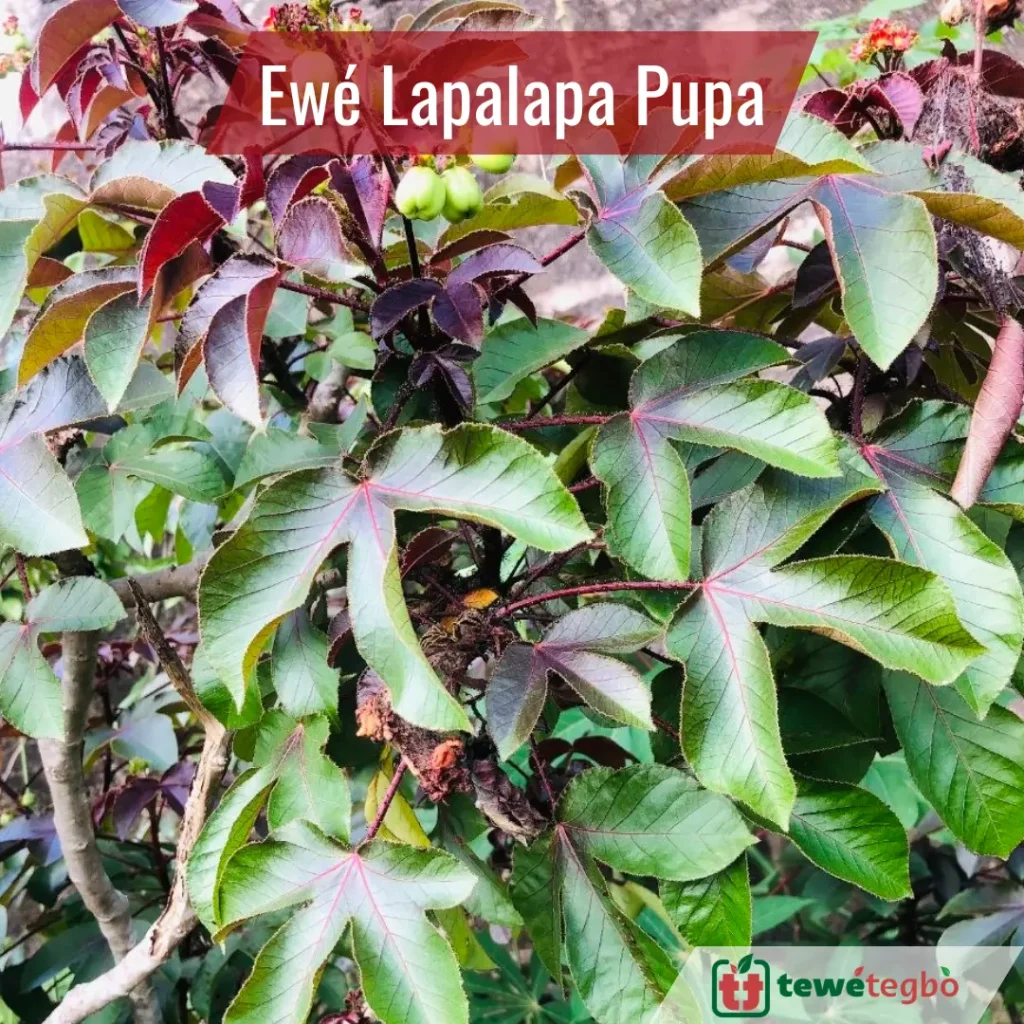
When using herb, one mistake you can't make is using the wrong plant.
Before any herb is prepared, you first make sure it is the right one.
Here are what you should see in Lapalapa Pupa:
You'll commonly find it growing along roadsides, around farms, on abandoned land, and in bushy areas.
If you're still unsure, try to confirm with me.
Traditional Uses of Ewe Lapalapa Pupa
One thing you'll notice about Yoruba medicinal herbs is that they are rarely known for just one use.
The same plant may be prepared differently depending on what it is being used for, the part of the plant being used, and the knowledge of the herbal practitioner.
Ewe Lapalapa Pupa is no exception.
Its traditional uses include its association with skin problems, menstrual flow, and piles, among others.
For Lapalapa and Other Skin Problems
The name Lapalapa itself tells part of the story.
As we saw earlier, lapalapa refers to a type of skin rash or condition, particularly one traditionally associated with the scalp of children.
And Ewe Lapalapa was traditionally used for treating lapalapa.
The leaves have also been used traditionally in preparations for other skin complaints such as boils, wounds, and swelling.
So the connection between Lapalapa Pupa and the skin is not something added to the name later.
It is part of the traditional knowledge that surrounds the plant.
For Menstrual Flow
Another traditional use is reflected in the name Olóbòtújẹ̀.
The name is associated with the idea of blood flowing from the òbò, and this connects with the traditional use of Lapalapa Pupa when a woman's menstrual flow was not coming as expected
This is one of those situations where the Yoruba name of a plant preserves a piece of the knowledge about how it was traditionally used.
When Blood Levels Keep Dropping
There is another traditional use that is less commonly discussed.
In some Yoruba herbal practice, Ewe Lapalapa Pupa is included in herbal preparations for someone whose blood level repeatedly becomes low, even after receiving blood.
The traditional thinking is that simply replacing the blood may not be enough if the person's blood level keeps dropping again.
So, in such situations, Lapalapa Pupa is combined with any blood building herbs in a preparation traditionally intended to help strengthen and stabilize the person's blood condition.
This is another example of how traditional herbal practice often looks beyond the immediate problem and asks what may be happening repeatedly.
As Part of a Traditional Piles Remedy
Lapalapa Pupa is also traditionally used as part of a particular herbal combination for piles (hemorrhoids).
The combination includes:
Notice something interesting here.
Both Lapalapa Pupa and Lapalapa Funfun appear in the same formulation.
So although the two plants are often confused with each other, traditional herbal practice can distinguish them clearly enough to use both in one preparation.
Ewe Lapalapa Pupa & Ewe Lapalapa Funfun (Side-By-Side)
Is Ewe Lapalapa Pupa Safe?
Ewe Lapalapa Pupa is traditionally prepared in different ways depending on its intended use.
Although the fresh leaves are not eaten as a vegetable, they may be processed in traditional practice by squeezing for the juice or cooking them as part of a herbal preparation.
This is not a herb to use casually.
Mostly used in small quantity like 1 spoon.
Pregnant women and breastfeeding mothers should avoid using Ewe Lapalapa Pupa unless they have been specifically advised to do so by a professional.
And before you let anyone tell you that a herb is “bad” or “poisonous” simply because it requires caution or special preparation, read this first: [Are Herbs Poisonous? Simply Damaging Your Liver & Kidney?]
Frequently Asked Questions About Ewe Lapalapa Pupa
What is Ewe Lapalapa Pupa in English?
Ewe Lapalapa Pupa is commonly known in English as Bellyache Bush, Purple Physic Nut, Black Physic Nut, or Cotton-leaf Jatropha.
Its scientific name is Jatropha gossypiifolia.
What is Ewe Lapalapa Pupa used for?
In Yoruba traditional medicine, Ewe Lapalapa Pupa has been used for several purposes, including traditional preparations for skin problems, menstrual flow, piles, and situations involving repeatedly low blood levels.
It is also used together with other herbs in certain traditional formulations.
Is Ewe Lapalapa Pupa the same as Ewe Lapalapa Funfun?
No. They are different varieties traditionally distinguished by their appearance and names.
Lapalapa Pupa has reddish or purple colouring, particularly in its young leaves and stems, while Lapalapa Funfun is generally greener.
Why is it called Bòtújẹ̀?
Bòtújẹ̀ is a shortened form of the fuller Yoruba name Olóbòtújẹ̀.
The name is traditionally associated with the idea of blood flowing from the female private part and is connected with the plant's traditional use in situations where menstrual flow was not coming as expected.
Why is it called Lapalapa?
Lapalapa is a Yoruba term associated with a type of skin rash or condition.
Ewe Lapalapa was traditionally used for this condition, which is believed to be the reason the plant became known by the name Lapalapa.
Can Ewe Lapalapa Pupa be eaten?
The leaves are not eaten as a vegetable.
In traditional practice, the plant may instead be processed in different ways, including squeezing for its juice or cooking as part of a herbal preparation.
Is Ewe Lapalapa Pupa used for fertility?
Ewe Lapalapa Pupa is not traditionally known to me as a fertility herb.
Its traditional uses are associated with other purposes, such as skin complaints, menstrual flow, piles, and other herbal preparations.
I would not recommend calling it a fertility herb simply because people search for it in that context.
Can pregnant women use Ewe Lapalapa Pupa?
Pregnant women should not use Ewe Lapalapa Pupa without specific guidance from a qualified healthcare professional.
The same caution applies during breastfeeding.
Chat me Now on WhatsApp about Lapalapa Pupa
Not sure if Lapalapa Pupa will work for you?
Send me a WhatsApp message now, I’ll guide you.
Let me reconnect you to the nature’s pharmacy.