

Yoruba Plant Classification System
Long before modern plant science introduced Latin names and scientific families, Yoruba traditional healers already had a structured way of classifying plants within indigenous knowledge.
This system was not written in textbooks.
It was developed through:
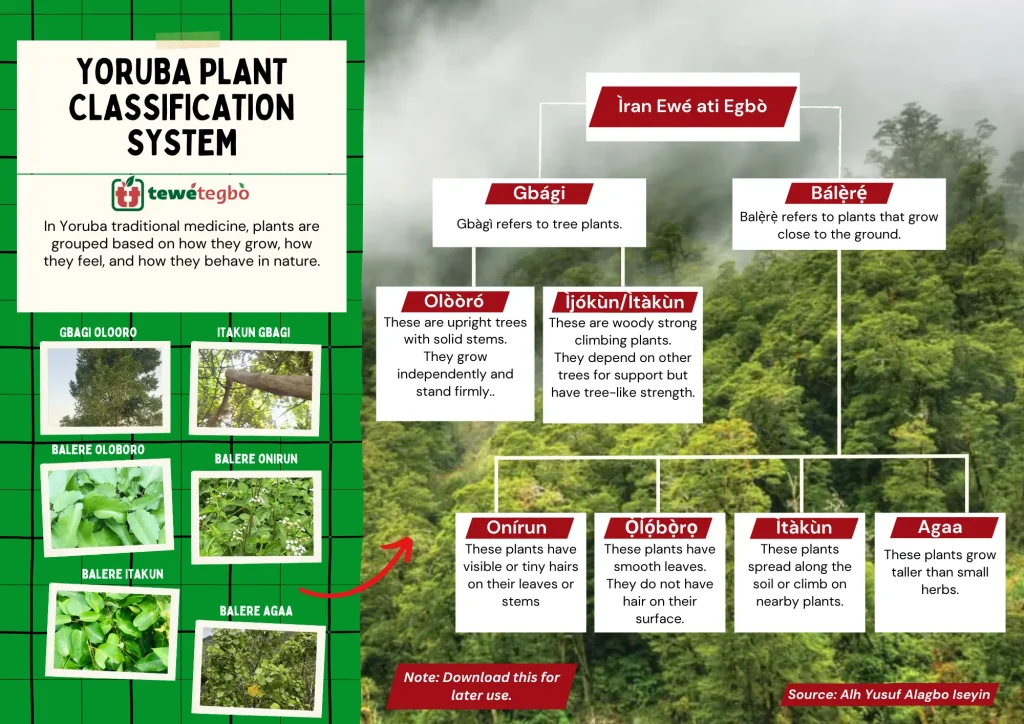
In Yoruba traditional medicine, plants are grouped based on how they grow, how they feel, and how they behave in nature.
This post explains that system clearly.
The First Division: Two Major Plant Groups
In Yoruba herbal tradition, all plants are first divided into two main categories:
1. Bálẹ̀rẹ́ (Ground Plants)
Balẹ̀rẹ̀ refers to plants that grow close to the ground.
They do not develop thick woody trunks like trees.
They are usually herbs, or small plants.
Most common medicinal leaves used in daily herbal practice fall into this category.
2. Gbági (Tree Plants)
Gbàgì refers to tree plants.
These are woody plants that grow taller and stronger than Balẹ̀rẹ̀.
They develop solid trunks and live longer.
Many bark (èèpo igi) medicines come from this group.
Further Classification of Bálẹ̀rẹ́
Yoruba healers further classify Balẹ̀rẹ̀ based on texture and growth behavior.
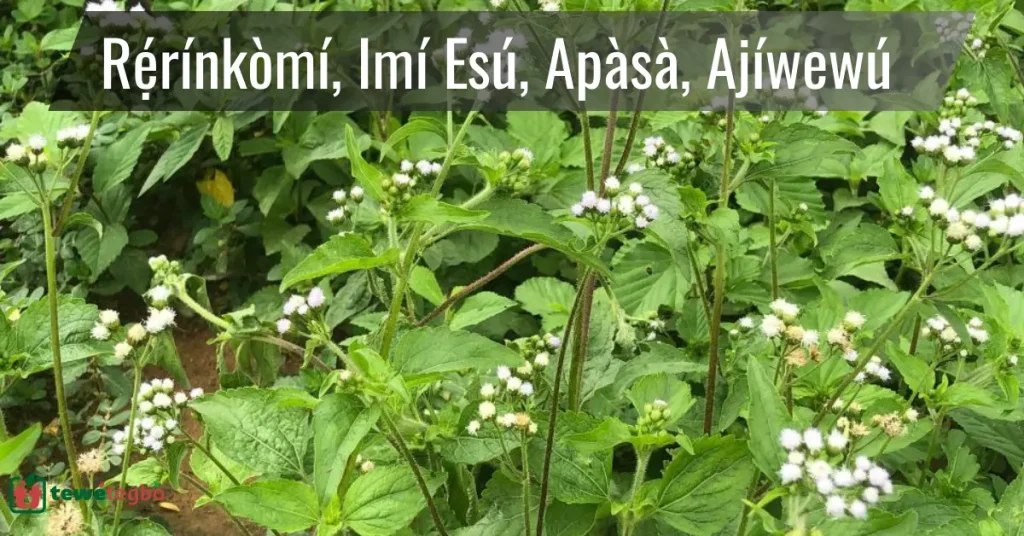
1. Bálẹ̀rẹ́ Onírun (Hairy Ground Plants)
“Onírun” means hairy.
These plants have visible or tiny hairs on their leaves or stems.
When touched, they feel rough.
Texture plays an important role in identification.
Example of Bálẹ̀rẹ́ Onírun (Hairy Ground Plants): Ewe Rerinkomi
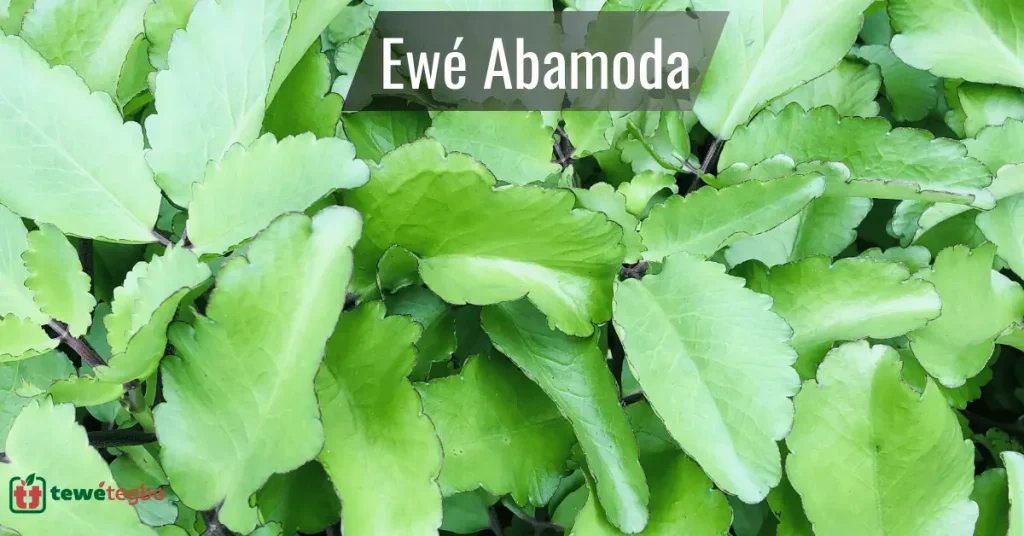
2. Bálẹ̀rẹ́ Ọ̀lọ́bọ̀rọ (Smooth Ground Plants)
These plants have smooth leaves.
They do not have hair on their surface.
They feel soft and clean when touched.
This is the opposite of Onírun.
Example of Balẹ̀rẹ̀ Ọ̀lọ́bọ̀rọ (Smooth Ground Plants): Ewe Abamoda
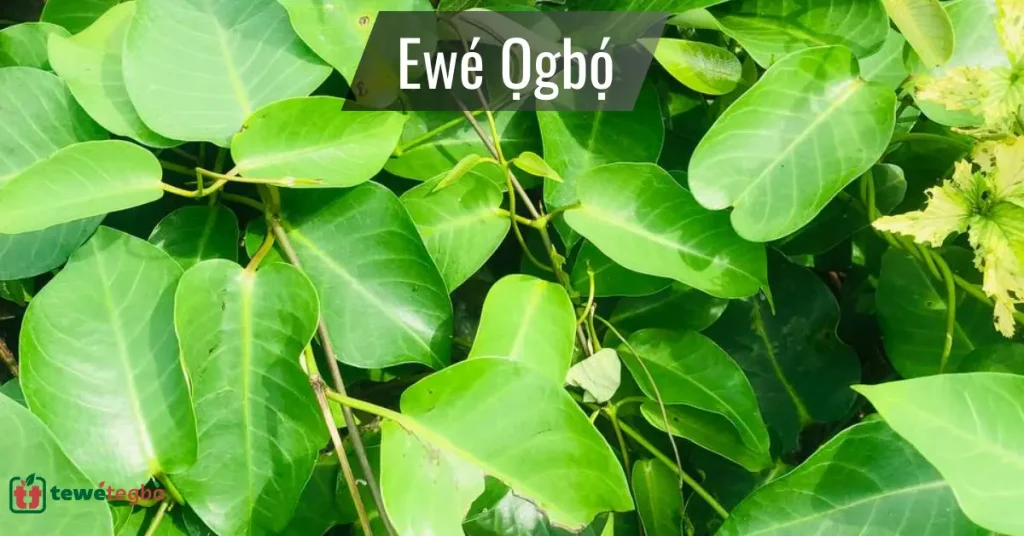
3. Ìtàkùn Bálẹ̀rẹ́ (Creeping or Climbing Ground Plants)
These plants spread along the soil or climb on nearby plants.
They behave like vines but remain within the ground-plant category.
Their growth pattern is the key feature here.
Example of Bálẹ̀rẹ́ Ìtàkùn (Creeping or Climbing Ground Plants): Ewe Ogbo
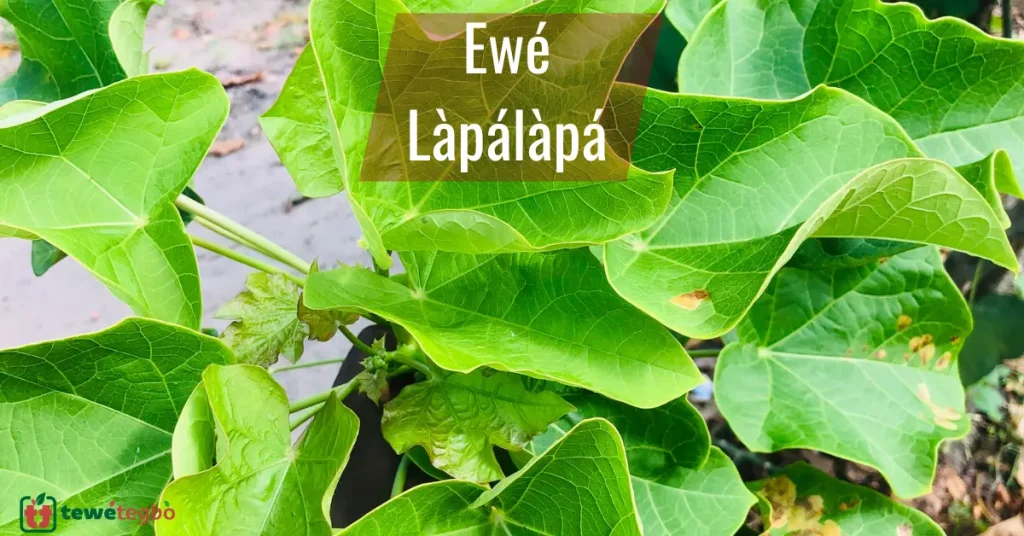
4. Bálẹ̀rẹ́ Agaa (Tall but Not Tree-Sized Plants)
These plants grow taller than small herbs.
However, they do not grow taller than an average human and do not develop a tree trunk.
In modern terms, many of them resemble shrubs.
Example of Balẹ̀rẹ̀ Agaa (Tall but Not Tree-Sized Plants): Ewe Lapalapa
Further Classification of Gbági
Tree plants (Gbàgì) are also divided into two types.
1. Gbági Olòòró (Standing Trees)
These are upright trees with solid stems.
They grow independently and stand firmly.
Many traditional bark medicines come from this category.
Example of Gbági Olòòró (Standing Trees): Igi Ipeta
2. Ìtàkùn Gbági (Woody Climbers)
These are strong climbing plants with woody characteristics.
They depend on other trees for support but have tree-like strength.
Example of Ìtàkùn Gbági (Woody Climbers): Igi Ogbolo
Quick Overview of Yoruba Plant Classification
|
Category |
Description |
Key Characteristic |
Examples |
|---|---|---|---|
|
Bálẹ̀rẹ́ Onírun |
Hairy ground plants |
Rough texture |
|
|
Bálẹ̀rẹ́ Ọ̀lọ́bọ̀rọ |
Smooth ground plants |
Soft, hairless surface |
|
|
Ìtàkùn Bálẹ̀rẹ́ |
Creeping/Climbing herbs |
Spread on the ground |
|
|
Bálẹ̀rẹ́ Agaa |
Bit taller plants |
Tall, but no woody body |
|
|
Gbági Olòòró |
Standing Trees |
Upright, independent woody body |
Igi Ipeta |
|
Ìtàkùn Gbági |
Woody Climbers |
Strong, tree-like vines |
Igi Ogbolo |
Less Common Traditional Classifications
In addition to the main structural classifications, some plants are also recognized based on other factors like their habitat etc.
– Erù Àpáta (Rock Habitat-Based Plants)
Some plants are also recognized based on their natural environment.
So, erù àpátá refers to plants that grow on rocky surfaces or mountainous terrain.
Example of plants under this classification include species like Ọrọ́ adẹ́tẹ̀ (Euphorbia unispina) and certain wild aloe species like Orọ́ bèbé.

These plants are adapted to survive in harsh rocky environments.
How Yoruba Classification Differs from Modern Botany
Modern plant classification focuses on:
Yoruba traditional classification focuses on:
It is a practical system developed from real-life field experience.
It is not based on laboratory study but on generations of observation.
Why This Indigenous System is Needed Today
Understanding Yoruba plant classification helps:
As we document herbs on Tewé Tegbò, you will often see references such as:
“This plant is classified as “Bálẹ̀rẹ́ onírun” in Yoruba traditional medicine.”
Now you understand what that means.
What Next?
That’s the classification system. Now the list: 1,500+ Yoruba Herbs/Plants →. Also available in pdf.
Is using agbo good or bad. See the clear explanation concerning the controversy:
Is Agbo Safe to Use?