
Shea Butter Tree (Igi Emi): Traditional Uses and Health Benefits
The shea butter tree (Vitellaria paradoxa) is the tree that produces the nuts used to make shea butter.
In Yoruba, it is called Emi or Igi Emi. The raw shea nut is called Esè, while the finished butter is called Ori.
If you grew up in a Nigerian village, you may have seen this tree many times without giving it much thought.
It was simply there.
It grew around the village and produced its fruit. Nobody needed to explain what it was.
Today, many of those trees are gone. Some were cut down and burned to make charcoal. Trees that were once common in some villages are now becoming harder to find.
Yet this is the tree that gives us the raw material for Ori, the shea butter many of us know.
But there is something interesting about its name.
Emi is not the only Yoruba plant name that contains “emi.”
There is Emi Ilẹ̀, the small herb traditionally known for uses including asthma preparations. There are also other plants known as Emi Igbo, Emi Gbẹ̀gì and Emi Odò.
So how do you know which Emi someone is talking about?
One name gives us a clue: Emi-Gidi.
In this context, gidi means actual or genuine. Emi-Gidi helps distinguish this particular tree from other plants with “Emi” in their names.
You may also hear the name Emi-Ìyẹ́mí. In some Yoruba naming traditions, Ìyẹ́mí is used to emphasise that something is the actual or original one.
For example, consider the name Ọsàn-Ìyẹ́mí. It can be used to distinguish the actual orange from other fruits known by names containing Ọsàn, such as Ọsàn ìbafòó (grape) and Ọsàn wẹ́wẹ́.
In the same way, the names Emi-Gidi and Emi-Ìyẹ́mí help distinguish this tree from other plants with similar names.
There are three important names to remember:
Emi is the tree.
Esè is the raw shea nut or seed.
Ori is the shea butter made from it.
So, when someone says Ori, they are talking about the finished butter, not the tree or the raw seed.
This post is about that tree (Emi, Emi-Gidi, Emi-Ìyẹ́mí).
And I will breakdown how Ori (shea butter) is traditionally used, and some of the Yoruba herbal knowledge connected to the tree.
So, let's get into it;
What Is Emi?
Emi is the Yoruba name used for the shea butter tree, the tree that produces the nuts used to make Ori (shea butter).
The tree may also be called Emi-Gidi or Emi-Ìyẹ́mí.
Emi is a slow-growing tree that can live for many years. In the past, many villages had old Emi trees that people depended on.
When the tree produces fruit, the fruit contains the raw nuts used to make Ori.
The simple way to remember it is:
Emi → the tree
Esè → the raw shea nut/seed
Ori → the processed shea butter
Esè and Ori are not the same. Esè is the raw material used to produce Ori.
What Does the Shea Butter Tree Look Like?
The shea butter tree (igi emi) is a large tree with a broad canopy, and it can remain productive for many generations.
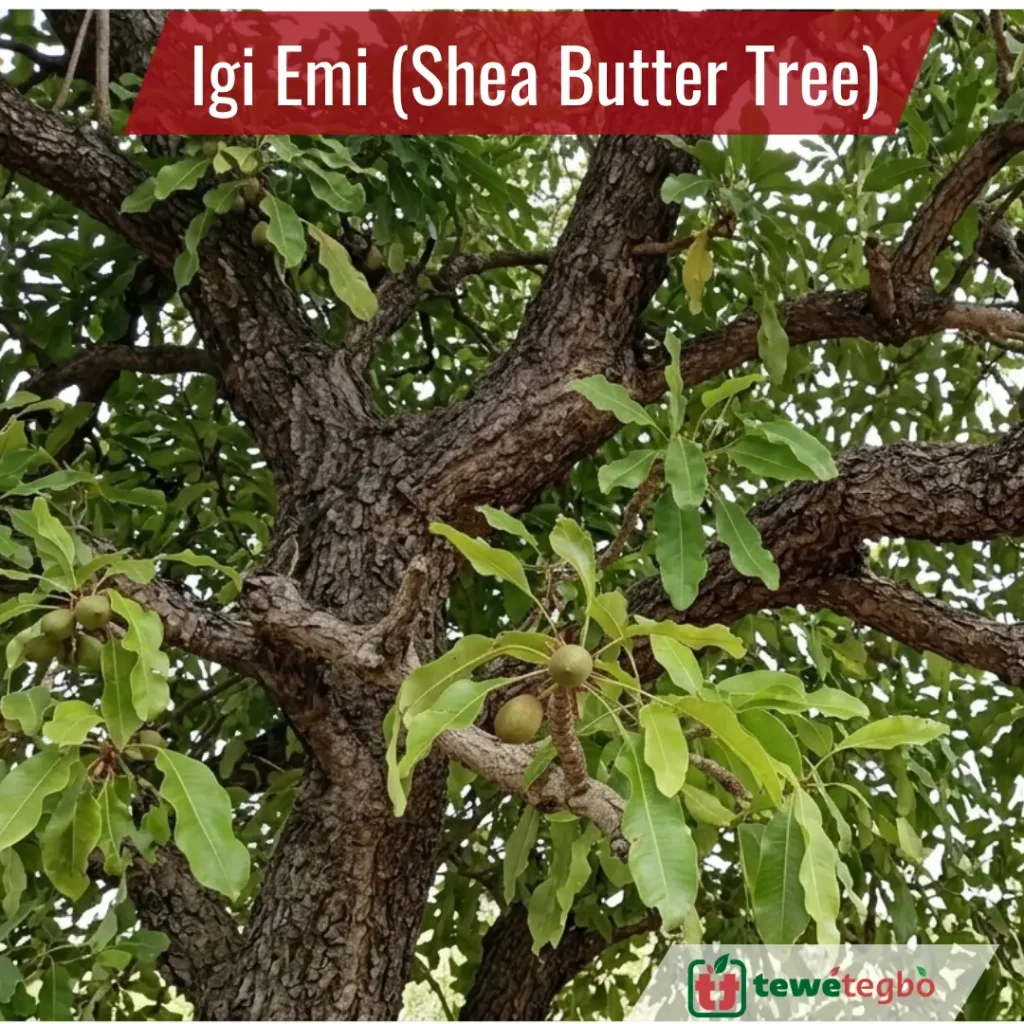
Some old Emi trees have been cut down for purposes such as making charcoal.
Because the tree grows slowly, replacing an old tree takes time. This makes the shea butter tree valuable to the communities that depend on it.
How Is Shea Butter Made From the Emi Tree?
Ori (shea butter) is made from the nuts of the shea fruit.
The nuts, called Esè, must be processed before they become Ori.
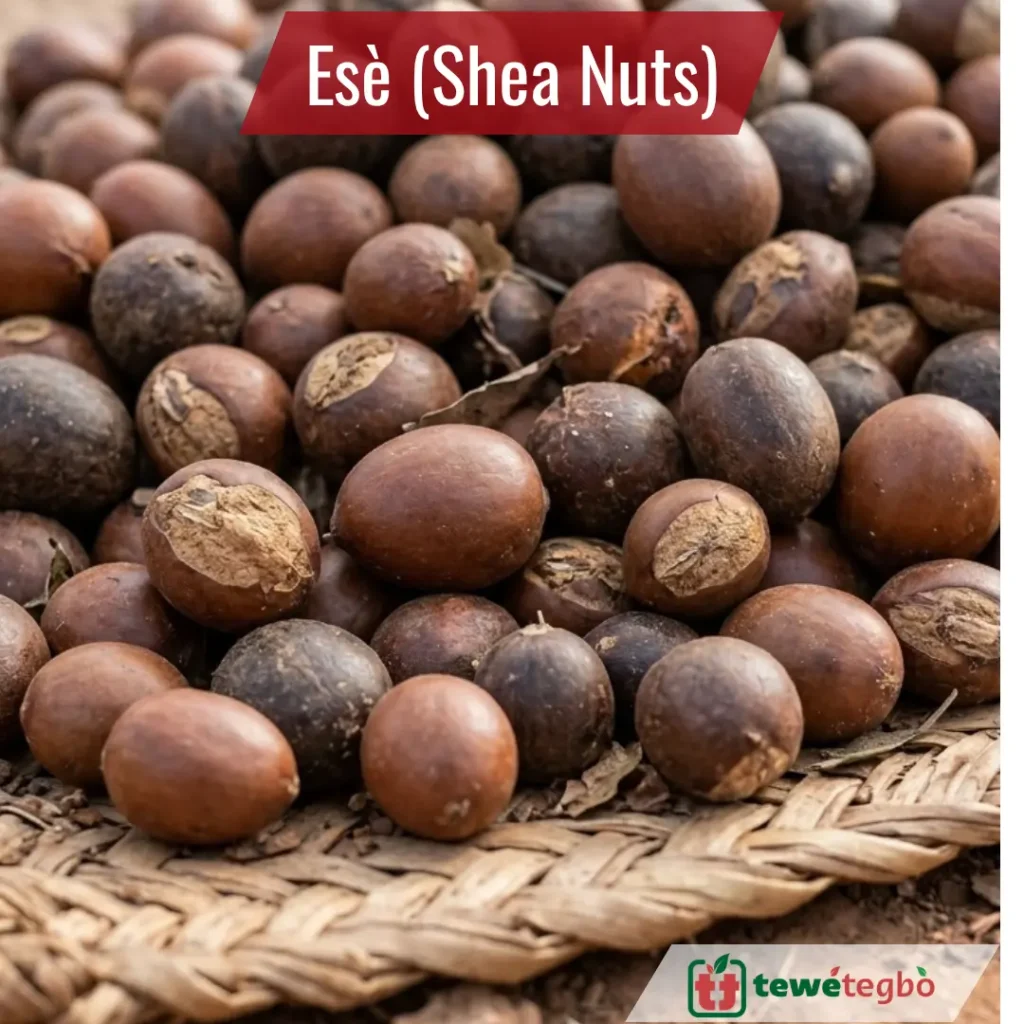
Traditionally, the nuts are cleaned, dried, crushed or ground, and processed to extract the fat inside them. This fat is then worked into the shea butter we know as Ori.
The process is simple to remember:
Emi tree → Fruit → Esè (raw nuts) → Processing → Ori (shea butter)
Ori can vary in colour, smell, and texture depending on the nuts and how they are processed.
And Ori is not just for the skin and hair. It also has a place in traditional Yoruba cooking and herbal practices.
How Shea Butter (Ori) Is Traditionally Used
Ori (shea butter) is used in different ways in Yoruba tradition.
It can be used on its own, in cooking, or mixed with herbs and applied to the body.
As Food
Ori (shea butter) is also used in cooking and can serve as a substitute for cooking oil.
So, Ori is not just for the skin and hair; it can also be used in the kitchen.
As a Carrier for Herbal Preparations
One of the more important traditional uses of Ori is as a carrier or helper.
It is used to mix herbs and apply them to the body.
In Yoruba traditional medicine, Ori is sometimes mixed with herbs for body pain, skin rashes, and other conditions, then rubbed onto the skin.
For Hair
Ori (shea butter) is used to soften dry hair and make it easier to comb.
It can also be mixed with herbs used in traditional hair care and hair growth.
For Skin
Ori (shea butter) is commonly used to care for the skin.
It can also be mixed with other ingredients, such as coconut oil, and applied to the skin.
Traditional Medicinal Uses of Shea Butter Tree (Emi)
The shea butter tree is not known only for producing Ori. Different parts of the tree also have a place in Yoruba traditional medicine.
The preparation usually depends on which part of the tree is being used.
1. The Bark (Epo Igi Emi)
The bark is traditionally used externally in some preparations for wound healing.
It is also used in some traditional preparations taken for conditions described as infections. However, taking bark preparations internally requires proper knowledge of the plant and its preparation.
2. Raw Shea Nut for Hernia (Ìpákè)
The raw shea nut, Esè, also has a traditional medicinal use.
The nuts are traditionally ground and combined with other herbs in preparations used for Ìpákè (hernia).
This is different from the use of the processed Ori. Here, it is the raw Esè that forms part of the traditional preparation.
3. Ori in Traditional Fertility Preparations
There is also a traditional herbal preparation used for fertility. When the preparation is ready, it is mixed with an egg and fried with shea butter (Ori).
These uses show why it is useful to look at Emi as a whole plant, rather than seeing it only as the tree that produces shea butter.
Why Some Shea Butter Is More Expensive Than Others
Not all Ori (shea butter) is the same.
Some Ori costs more than others because of its quality and how it was made.
Pure Ori that has not been mixed with other substances is often valued for its natural smell, texture, and different uses.
The quality of the Esè (raw shea nuts) and how they are processed can also affect the final Ori.
So, when buying Ori, remember that purity, quality, and processing matter.
Frequently Asked Questions About Shea Butter
What Can I Mix With Shea Butter for My Baby?
For babies, simple is best. Ori (shea butter) can be used on its own to moisturise the skin.
It can also be mixed with coconut oil, but for babies, it is best to avoid adding too many ingredients.
Can Shea Butter Clear Stretch Marks?
Ori (shea butter) helps keep the skin soft and moisturised, but using it alone does not clear stretch marks.
In traditional practice, Ori is sometimes mixed with other ingredients in preparations used for stretch marks.
Is Shea Butter Good for the Face?
Yes, Ori (shea butter) can be used on the face to keep the skin soft and moisturised.
However, facial skin differs from person to person. Many people find that Ori maintains their natural skin appearance.
It doesn't bleach or naturally darken skin.
Does Shea Butter Lighten the Skin?
Ori (shea butter) is mainly used to moisturise and soften the skin.
It is not traditionally used to lighten the skin or change its natural colour.
Does Shea Butter Darken the Skin?
Shea butter (ori) does not normally darken the skin. It is mainly used to keep the skin soft and moisturised.
However, skin differs from person to person. Some people may notice a change in their skin tone after using shea butter regularly, while others may not.
Sun exposure and other ingredients mixed with some commercial shea butter products can also affect the skin’s appearance.
What You Should Remember About Emi (Shea Butter Tree)
Emi is the shea butter tree. Its fruit contains Esè (the raw shea nut), which is processed to make Ori (shea butter).
But Emi is more than just a tree that produces shea butter. Different parts of the tree have also been used in Yoruba traditional medicine.
Knowing the correct Yoruba name matters because different plants can have similar names.
Our traditional knowledge is not just about knowing a plant's name. It is also about knowing the tree, its different parts, what they are called, and how our elders used them.
Chat me Now on WhatsApp about Igi Emi (Shea Butter Tree)
Not sure if Igi Emi will work for you?
Send me a WhatsApp message now, I’ll guide you.
Let me reconnect you to the nature’s pharmacy.