

Ogede Odo: Traditional Uses and Benefits
Ogede odo (Crinum jagus), also known as Iṣu mẹ̀rì is an old Yoruba medicinal plant traditionally used for certain health problems, including cough, asthma and convulsion (giri).
But there is something interesting about its name.
When you hear Ogede odo, what comes to mind?
A banana growing beside a river?
You wouldn't be wrong to think so!
In fact, someone recently asked me exactly that.

And I completely understood the confusion.
Ogede means banana, while odo means river in Yoruba.
But this Ogede odo is not a banana plant.
It is a completely different plant.
Interestingly, it is one of those medicinal plants our elders knew and used in traditional preparations.
It was not something people necessarily used every day. Depending on the problem being addressed, it could be combined with other ingredients such as aidan, alubosa onisu, alubosa elewe, eru alamo or garlic.
But today, many people may hear the name Ogede odo and have no idea what plant you are talking about.
Some may even think you mean a banana growing beside a river!
So, what does Ogede odo actually look like? What did our elders use it for? And what has modern research discovered about it?
Let's take a look at the plant.
What Is Ogede Odo?
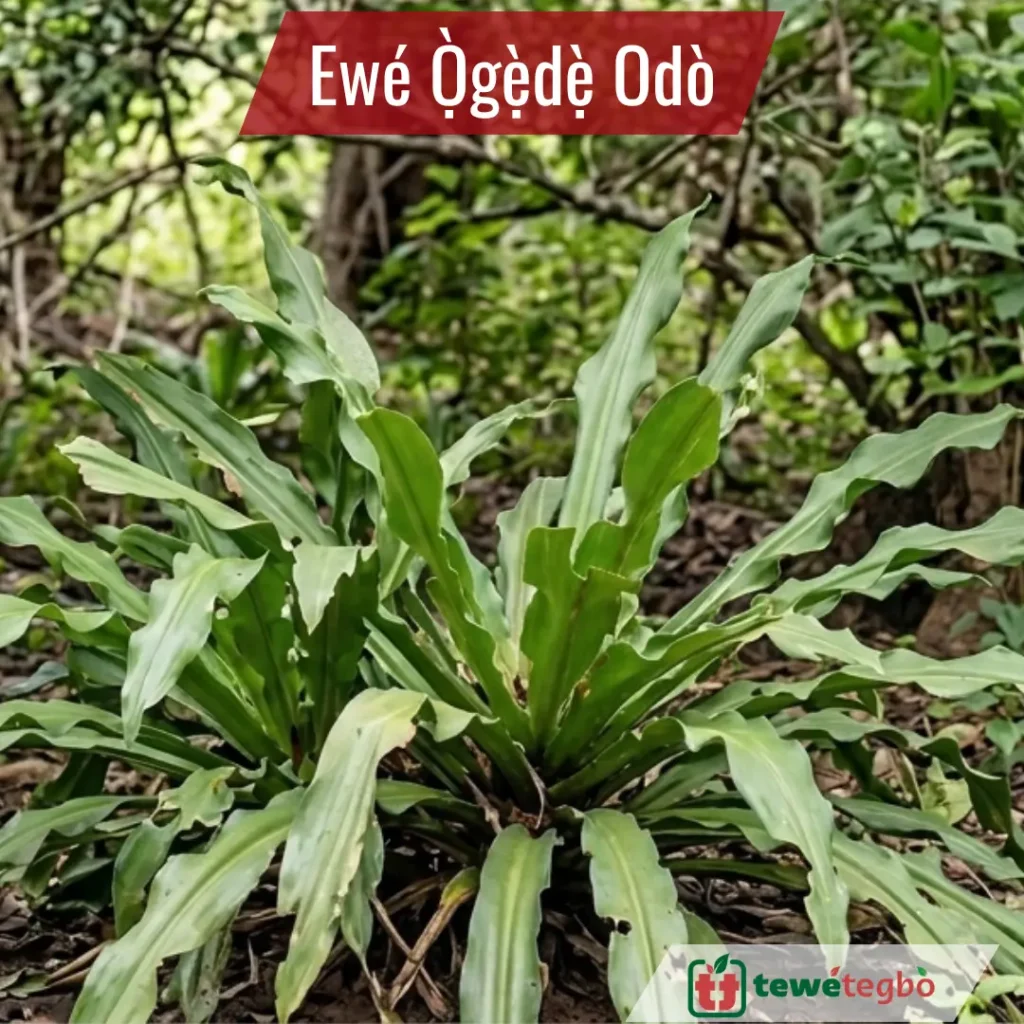
Ogede odo is the Yoruba name for a plant scientifically known as Crinum jagus.
And remember, it is not a banana plant!
Ogede odo grows from a large underground bulb (like an onion), with long, flat leaves spreading out from its base.
Another Yoruba name for Ogede odo is Isu mẹri.
There is also something worth explaining about its name.
When people talk about isu Ogede odo, they are simply referring to the bulb of the plant (that has an onion look).
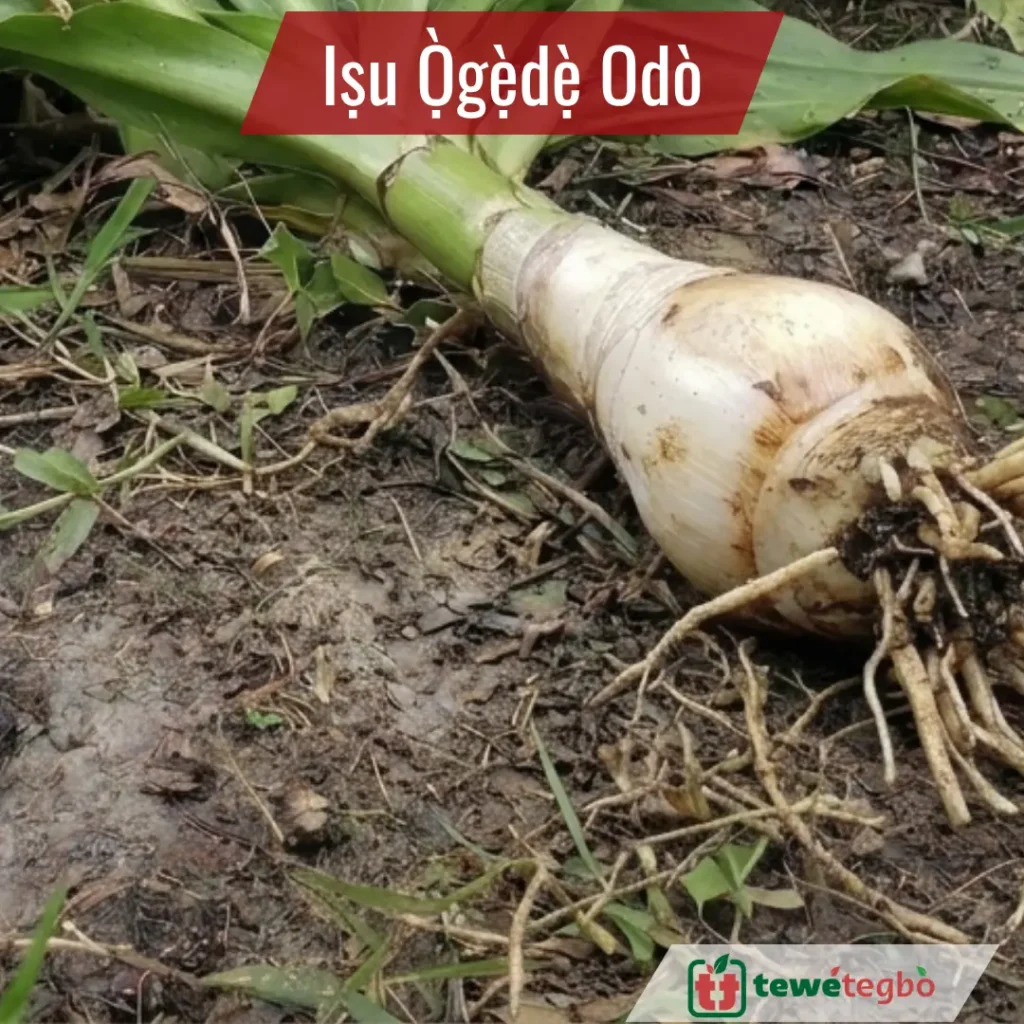
You probably know isu as the Yoruba word for yam. But the word can also refer to the underground bulb of certain plants.
So, isu Ogede odo does not mean another plant. It simply means the bulb of Ogede odo.
When our elders talked about using Ogede odo for traditional medicine, they most often referred to the bulb (isu Ogede odo).
Traditional Uses of Ogede Odo
Ogede odo is not one of those Yoruba herbs that people use every day.
It is more of a “know the plant when you need it” kind of herb.
Our elders traditionally remembered this plant for certain health problems, especially giri (convulsion/seizure), cough and asthma.
The underground part (the bulb, isu ogede odo) could be mixed with other ingredients, depending on what it was being prepared for.
Some of the ingredients traditionally used alongside Ogede odo include aidan, alubosa onisu, alubosa elewe, eru alamo and garlic.
Ogede Odo for Giri (Convulsion)
One of the traditional uses of Ogede odo is for giri, the Yoruba name for convulsion.
Our elders traditionally used the underground part (the bulb, like an onion) in preparations for this condition.
It was sometimes mixed with other ingredients rather than used alone.
Ogede Odo for Cough
Ogede odo was also traditionally used in preparations for cough.
The bulb (isu ogede odo) was the part commonly mentioned, and it was prepared with other ingredients.
Ogede Odo for Asthma
Another traditional use of Ogede odo is for asthma.
In Yoruba traditional medicine, other plants are also recognised for this purpose, including ewe emile and Ọja ikoko.
Ogede odo could also be combined with plants such as aidan and other ingredients in traditional preparations.
These uses show that Ogede odo has an interesting place in the herbal knowledge passed down by our Yoruba elders, even though many people today may no longer recognise the plant.
Is Ogede Odo Safe to Use?
Ogede odo is not a plant people should take anyhow or in large quantities.
In traditional practice, only very small amounts are mentioned in preparations involving isu Ogede odo (the underground part, like an onion).
More is not necessarily better when it comes to Ogede odo.
Pregnant women, breastfeeding mothers, children and people taking medication should avoid using Ogede odo for medicinal purposes without proper medical advice.
What You Should Always Remember About Ogede Odo
Ogede odo (Crinum jagus) is one of the old Yoruba medicinal plants that deserves to be remembered, even though many people today may no longer recognise it.
Despite its name, it has nothing to do with banana. It is a different plant that grows from an underground part called a bulb (like an onion). This is what our elders refer to as isu Ogede odo.
In Yoruba traditional medicine, Ogede odo is particularly known for its traditional use in preparations for giri (convulsion), cough and asthma.
Its bulb is often combined with other ingredients such as aidan, alubosa onisu, alubosa elewe, eru alamo and garlic.
One important thing to remember is that Ogede odo is not a plant you can consume carelessly.
There is a lot we can learn from the plants our elders knew and used. But preserving this knowledge also means understanding the risks.
Ogede odo may not be familiar to everyone today, but it remains part of our Yoruba herbal knowledge and deserves to be remembered.
Chat me Now on WhatsApp about Ogede Odo
Not sure if Ogede Odo will work for you?
Send me a WhatsApp message now, I’ll guide you.
Let me reconnect you to the nature’s pharmacy.