Iwulo Ewe Rerinkomi (Ewe Imi Esu, Ewe Apasa)
Ewe Rerinkomi is perhaps one of the most spiritually significant herbs in Yoruba traditional medicine. Depending on the region or the specific work it is being called upon to do, this leaf answers to many names: Imi Esu (or Imin Esu), Apasa, Ajiwewu, Pakududu, Rerin Nreyin, and Kojoloti.
While many people know its physical healing uses, interest in iwulo ewe rerinkomi is often driven by its deep spiritual uses. It is seen as a plant of change, believed to help remove heavy spiritual ties and turn a life of delay into one of favor and joy.
The many names it carries are meaningful; each one reflects the plant’s nature, from the way its white flowers look like an elder’s hair to its role in protecting a child during the delicate time of teething.
In this post, we will look at the deep meanings behind these names and why Ewe Rerinkomi remains an important part of eyonu (favor) and isina (breakthrough) in Yoruba traditional heritage.
This is where understanding begins:
How to Recognize Ewe Rerinkomi — with Photo and Video
Watch this short clip and listen to the pronunciation of ewe rerinkomi
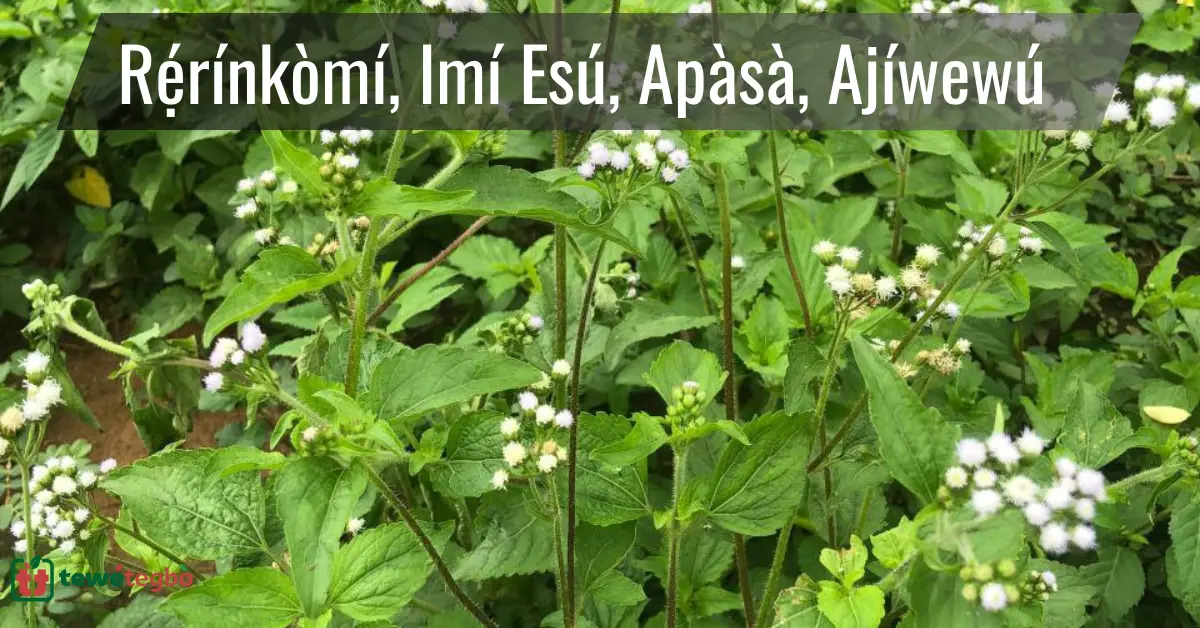
Ewe Rerinkomi Picture (Aworan Ewe Rerinkomi)
Ewe Rerinkomi typically has:
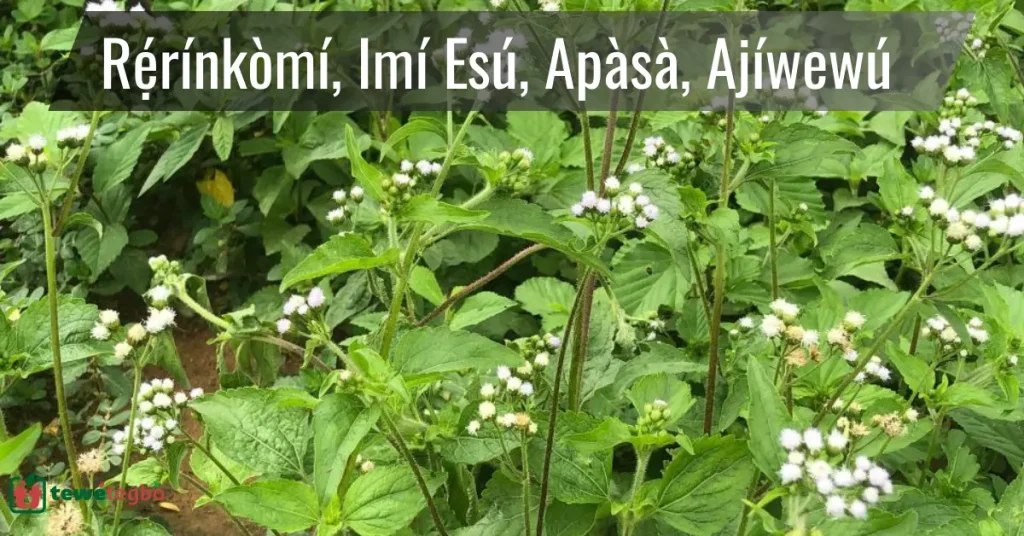
The Flower (Ìtàná)
One of the most distinctive features of the plant is its flower.
Asiri Ewe Rerinkomi: The Meaning Behind the Many Names of Ewe Rerinkomi
One of the most interesting things about Ewe Rerinkomi is that its identity is deeply tied to language. In Yoruba herbal tradition, names are rarely random. They often describe:
Below is a rational explanation of how some of its popular names likely came into existence:
1. Why Is It Called “Ewe Rerinkomí”?
The name Rẹ́rín-kò-mí can be loosely interpreted as “bring smiles to me.”
Traditionally, the leaf is associated with preparations used for ẹ̀yọ́nú (favour, acceptance, attraction, or goodwill). In this context, the name does not describe the plant’s physical structure. Instead, it reflects the expected social outcome of its use.
In Yoruba belief systems, when a person is experiencing consistent rejection, lack of favour, or blocked opportunities, it may be interpreted as a form of spiritual hindrance. Herbal cleansing preparations are then used with the intention of removing those unseen obstacles.
If the person’s situation improves afterward, the change is often attributed to the leaf. Over time, this reinforced the belief that the herb “brings laughter,” meaning people receive the user warmly.
2. The Name “Apasa” (From “Apa Àsàsí”)
The name Apàsà is widely believed to have evolved from “Apa Àsàsí.”
In traditional understanding, Apa Asasi refers to something used to confront or counter negative spiritual influence. Over time, the pronunciation shortened naturally into Apàsà.
Because the leaf was included in cleansing preparations meant to “fight spiritual attacks” or remove perceived obstacles, the name became associated with protection and reversal of misfortune.
Consequently, when someone regained progress in work, relationships, or social standing after using such preparations, the improvement was linked to the herb. This is one reason people began associating Ewe Rerinkomi with:
- Favour (Aanu)
- Attraction
- Acceptance
- Restoration of progress
⚠️ Important Clarification: Difference Between Apasa Oko & Apasa Ile (Ewe Rerinkomi)
It is important to understand that not every plant called Apasa is the same.
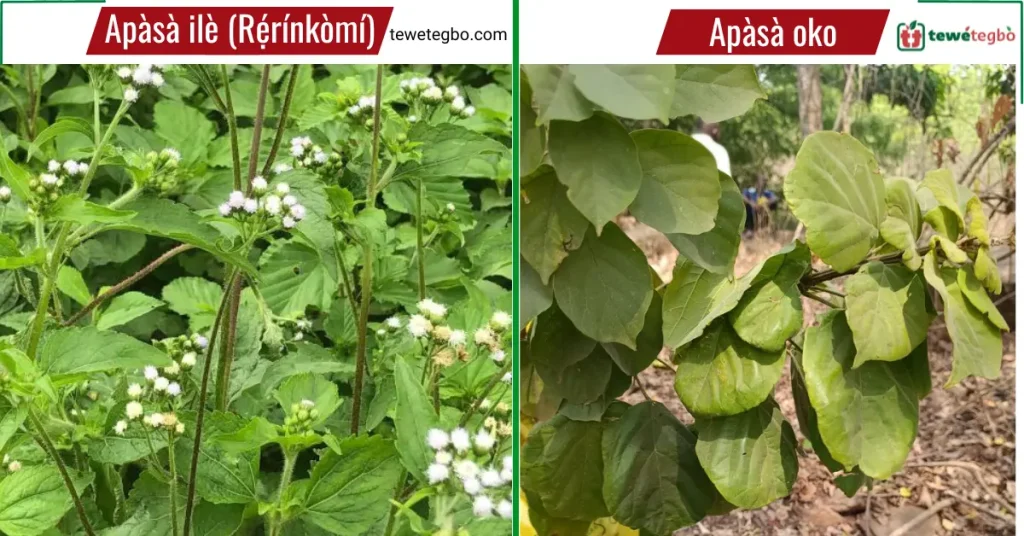
In Yoruba herbal practice, two different plants are commonly referred to by similar names:
1. Apasa Ile (Ewe Rerinkomi)
The Apasa discussed in this post, which is the same as Ewe Rerinkomi, is traditionally called Apasa Ile.
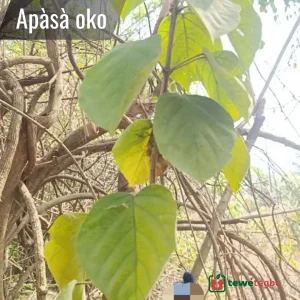
2. Apasa Oko
Apasa Oko is a different plant entirely, usually found in bush or farmland areas.
3. Why It Is Called “Ewe Ajiwewu”
The name Ajiwewu is connected to the plant’s flower.
“Ewú” in Yoruba refers to white hair on the human body. The flower of Ewe Rerinkomi has a light or whitish appearance, which likely inspired this name.
In this case, the naming is purely descriptive, based on visible physical characteristics rather than spiritual association.
4. Imi Esu, Kojoloti, Pakududu, and Regional Variations
Some of the other names such as Imi esu, Kojoloti and Pakududu appear to be regional variations or dialect adaptations.
In Yoruba herbal tradition, pronunciation shifts over time and between towns. What remains constant is the identity of the leaf and its associated uses.
Ewe Rerinkomi in English (with Igbo and Hausa Names)
|
Category |
Info |
|---|---|
|
|
Yoruba: Rerinkomi, imi esu (imin esu), apasa, ajiwewu, pakududu, kojoloti Hausa: Sabara |
|
|
|
|
|
|
|
|
Quick Overview of Iwulo Ewe Imi Esu (Rerinkomi)
|
Problem |
Ingredients |
Method |
|---|---|---|
|
Teething/Baby Health |
Itana imi esu + Eru Alamo + Soap |
Bathing |
|
Spiritual Bondage |
Itana imi esu + Iko Odidere + Perfume/Adi Agbon |
Creaming |
|
Ofa (Spiritual Attack) |
Fresh Leaves + Water |
Drinking (Morning/Night) |
|
Stomach Pain/Purging |
Fresh Leaves + Salt + Honey |
3 Spoons (Morning/Night) |
|
Eyonu (Favor) |
Leaves + Epo Obo + Soap |
Bathing |
Iwulo Ewe Rerinkomi (Traditional Uses and Applications)
In Yoruba herbal tradition, Ewe Rerinkomi is used in different types of preparations depending on the desired purpose. These uses range from child care rituals to cleansing preparations.
It is important to understand that many of these uses are rooted in cultural belief systems and traditional practice rather than modern clinical trials.
Below are some of the most commonly mentioned traditional applications.
1. Support for Teething Babies
One of the names for this plant is Rẹrin nreyin (Laughing and showing teeth). This name comes from a specific use for infants:
The Preparation: Take the flowers (itana) of the plant and pound them slightly.
The Combination: Add Eru Ela or Eru Alamo and mix the preparation into black soap.
The Result: When used to bathe a baby, it supports strong health and acts as a shield against the common fevers and sicknesses associated with teething. The child grows healthy and happy, and before you know it, you see them “laughing and showing teeth” without the usual pain or struggle.
2. Ewe Rerinkomi fun Eyonu and Breaking Spiritual Bondage
As we discussed earlier, the spiritual essence of this leaf is about clearing the path for favor.
For Attraction: Pound the itana (flowers) and mix with Iko Odidere (Parrot tail feather). Incorporate this into Adi Agbon (Coconut oil) or your preferred perfume.
For Favor (Eyonu/Aanu): A powerful combination involves pounding the leaves and adding Epo Obo. This is then mixed with soap to wash away “spiritual heaviness.”
The Belief: These preparations are believed to break the invisible bondages that cause people to be rejected or overlooked.
In this use case, it is believed to call this leaf “ewe rerinkomi” rather than its other names.
Treatment for Ofa (Spiritual Arrows)
In Yoruba medicine, Ofa represents a sudden spiritual attack that can manifest as physical pain or illness.
The Remedy: Squeeze fresh Ewe Rerinkomi leaves in water to extract the juice.
Dosage: Sieve the liquid and take it morning and night to neutralize the “arrows” and cleanse the system.
4. Remedy for Purging and Stomach Pain
Beyond the spiritual, the plant is a potent medicine for digestive issues and internal discomfort.
The Preparation: Squeeze the fresh leaves in water to create a potent extract.
The Recipe: Add a pinch of salt and a healthy portion of original honey.
Dosage: Take 3 spoons in the morning and 3 spoons at night.
The Result: This combination is highly effective for stopping excessive purging and soothing sharp stomach pains. The honey acts as a healer for the stomach while the herbs work to neutralize the cause of the pain.
Materials: Eru Alamo / Eru Ela (For children's health) Iko Odidere (For spiritual attraction) Epo Obo (For cleansing and favor) Adi Agbon (As a base for spiritual oils)
Does Ewe Rerinkomi Truly Bring Eyonu (Favour)?
It is important to approach this question with balance.
In normal human life, success and failure are part of existence. Everyone experiences seasons of progress and seasons of difficulty. Not every hardship means a person is spiritually afflicted.
However, within Yoruba traditional belief, there is also the understanding that certain misfortunes may arise from spiritual disturbance or negative spiritual influence.
In this context, some plants (like epo obo, apasa oko, ajeobale etc including Ewe Rerinkomi) are believed to have been created by God with the ability to counter such disturbances.
This distinction is important.
The plant itself is not believed to “manufacture” favour or magically create success. Rather, in traditional interpretation, it may help remove spiritual obstacles. If an obstacle is removed, a person simply returns to their natural state, and life progresses normally again.
When progress resumes, people may describe it as “ẹ̀yọ́nú” (favour), but the idea is not that the leaf creates blessings out of nowhere. Instead, it is believed to restore balance when imbalance exists.
The use of Ewe Rerinkomi is not meant to replace effort, hard work, wisdom, or good character. No herb can compensate for poor behavior, laziness, dishonesty, or lack of discipline.
You cannot maintain a bad character and expect people to be pleased with you because you did ẹ̀yọ́nú.
You cannot refuse to work and expect wealth to appear. Social acceptance, progress, and success are deeply connected to how a person lives, speaks, and acts.
⚠️ A Note on Spiritual Findings
Many people are always asking me for “spiritual benefits of ewe rerinkomi” looking for deeper traditional secrets. While these practices are a core part of Yoruba culture, it is important to remember:
- Character First: Traditional elders always say that ìwà ni ọba àwúre (character is the greatest medicine). No herb can replace a good heart.
- Guidance: Spiritual uses of herbs are complex and usually require the guidance of an experienced God-fearing herbal expert to ensure the right balance is struck.
Frequently Asked Questions (FAQ) About Ewe Rerinkomi
Can Ewe Rerinkomi stop spiritual attacks?
In Yoruba traditional belief, the plant is used in prayers and rituals believed to remove spiritual obstacles.
However, it does not create automatic success. It is traditionally seen as helping remove hindrances, not replacing effort, character, or hard work.
Can Ewe Rerinkomi help children grow teeth without sickness?
Some traditional practices involve bathing babies with preparations made from the flower (itana) mixed with other herbs. It is believed to support smooth teething.
Still Curious? Here's How to Ask Me Directly on WhatsApp
Want to know if Ewé Rẹ́rínkòmí is right for your condition or explore other Yoruba herbs that may help?
Or would you prefer my detailed Yoruba voice note or short video explanation (with real-life use cases, proper dosages, and a few hidden tips I can’t openly share here)?
👉 Just tap here to message me on WhatsApp. I’ll reply to you personally.
Let me reconnect you to nature’s pharmacy.