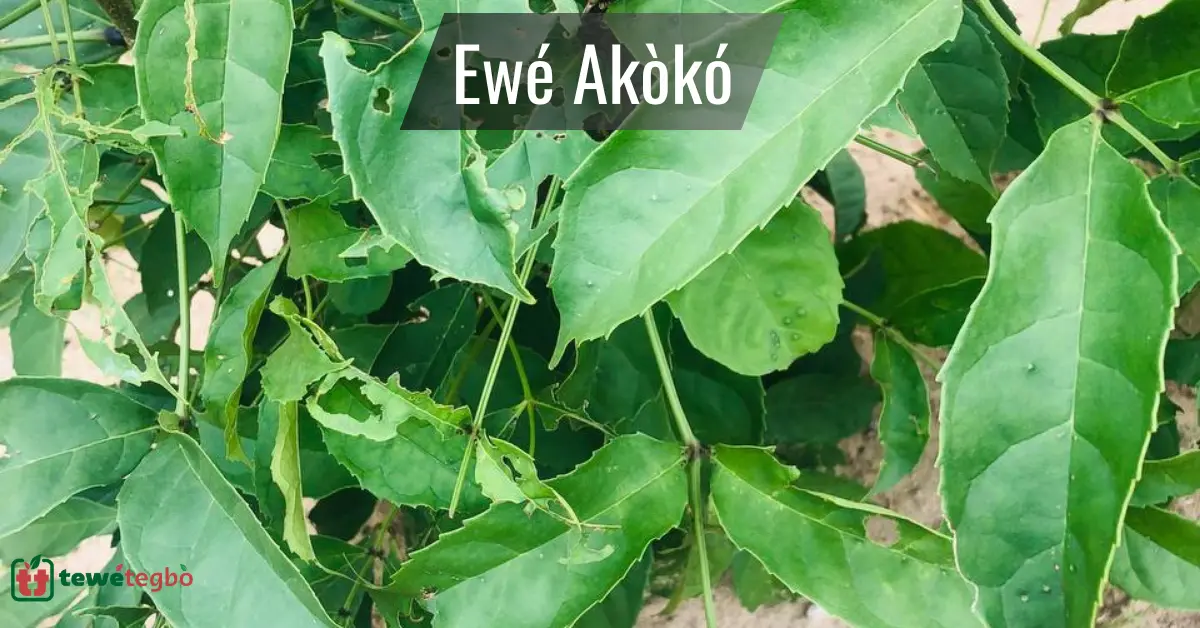
Ewe Akoko (Fertility Leaf) – Iwulo Ewe Akoko
In Yoruba land, Ewe Akoko (Fertility Leaf), also known as Ewe Olode and Ewe Oye is far more than just a medicinal plant. It’s a symbol of respect, and authority.
During coronations or chieftaincy ceremonies, a small piece of a leaf from Ewe Akoko tree is placed on the head of the person receiving the crown or title, marking the leaf as a sign of leadership and new beginnings.
That’s why it’s often said: “A kì í fi ewé k’ewé jẹ oyè lẹ́yìn ewé Akoko.”
(No other leaf is used to confer a title other than Akoko leaf.)
But its role doesn’t stop at culture. Traditionally, Ewe Akoko has also been linked to healing.
In fact, one of its names (Ewe Olode) comes from its use in managing a viral disease (ìgbóná) known locally as olóde. That’s why across Yoruba households, it’s remembered not just as the “chieftaincy leaf,” but as a regular part of traditional medicine.
Despite its cultural and medicinal significance, Ewe Akoko remains relatively unknown widely in Nigeria. Try searching for “Ewe Akoko in English” or “Iwulo Ewe Akoko” online, and you’ll find little to no clear detailed information.
That’s exactly why this post exists, to shed light on this plant: its names, cultural roots, healing uses, and the wisdom of Yoruba elders who knew its value.
Now, I will tell you the little-known elderly traditional uses of Ewe Akoko that will make you agree that our elders truly did not know science neither did they read books but they read senses (wọn oo ka ìwé ṣùgbọ́n wọn ka ọgbọ́n orí).
And not just that, I’ll also show you:
So, let’s get into it…
How to Recognize Ewe Akoko (Fertility Leaf) — with Photo and Video
Watch this short clip and listen to the pronunciation of ewe akoko
Ewe Akoko Photo (Aworan Ewe Akoko)
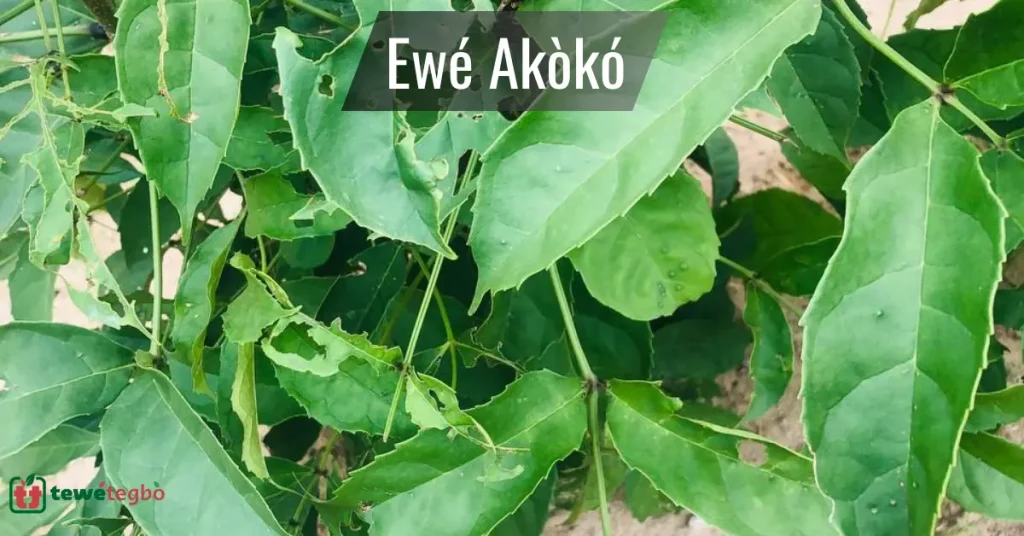
It is very important to identify the plant correctly before using it. Some leaves may look similar but are not the same.
If you are unsure, consult someone experienced in plant identification.
Ewe Akoko in English (with Igbo and Hausa Names)
|
Category |
Info |
|---|---|
|
|
Yoruba: Ewe Akoko, Ewe Olode, Ewe Oye Igbo: Ogilisi / Ogirisi Hausa: Aduruku Efik: Oniok Urhobo: Ogiriki Edo: Ikimi Igala: Kontor / Ogishi |
|
|
|
|
|
|
|
|
Small Tree |
|
Season |
It is active almost all year, especially with enough water. |
Iwulo Ewe Akoko (Fertility Leaf) — Benefits & Key Traditional Uses
In Yoruba traditional knowledge, Ewe Akoko (Fertility Leaf) is not used randomly. Each part of the plant; the leaf, bark, or root is applied based on the condition being addressed.
Ewe Akoko for High Temperature (Ìgbóná)
Traditionally, Ewe Akoko is used when the body feels unusually hot or weak, a condition commonly described as ìgbóná in Yoruba communities. The leaves are usually boiled alone or with other herbs and taken warm.
This practice is deeply rooted in villages before modern healthcare was introduced.
Ewe Akoko and Viral Illness (Olóde)
One of the most important cultural facts about this plant is that Ewe Akoko is also called Ewe Olode.
The name comes from its traditional use in managing a viral-type illness such as Measles etc known locally as olóde. Because the leaf was frequently used in this context, the disease and the plant became closely linked by name.
This historical connection explains why elders still refer to it as Ewe Olode today.
Ewe Akoko for Fertility (Traditional Perspective)
Among the Yoruba people, Ewe Akoko is widely known for its association with fertility, conception, and successful childbirth. Traditionally, it is believed to support a woman’s ability to conceive by helping the body “open up” and function as it should.
It is known as a plant that encourages ovulation and corrects conditions believed to delay pregnancy, making conception easier and less stressful.
Ewe Akoko is rarely prepared on its own. It is commonly combined with other fertility-related herbs such as ọ̀mùnú ewe gedu, and bara, forming powerful mixtures used by women trying to conceive or those experiencing repeated difficulty with pregnancy.
In traditional practice, these herbs are believed to strengthen the womb, improve menstrual balance, and prepare the body for carrying a child.
Bark of Ewe Akoko for Dizziness & Eye Spinning
Beyond the leaves, the bark of the Ewe Akoko tree also plays a role in folk healing.
Traditionally:
– The bark is soaked in clean water
– The water is drunk in small amounts
– The same water may be used to rinse the face, especially around the eyes
Multi-Herb Traditional Mixture Involving Ewe Akoko for Infection & Infertility
In real-life practice, Ewe Akoko is rarely used alone. A commonly mentioned traditional mixture includes:
– Ewe Akoko (leaf or bark)
– Guava leaf
– Mango leaf
– Aidan fruit (Ẹ̀súrú / Prekese – 6 pods)
– Eru Alamo
– Garlic
– Clove (Kanafuru)
– Ginger
– Cinnamon (Atadun)
Traditional method:
The herbs are boiled together, and 1 cup is taken morning and night.
As popular as Ewe Akoko (Fertility Leaf) is, it has also become the center of many modern myths, especially on social media, and street conversations.
Ewe Akoko Ati Omi Agbon: Does It Attract Money or Wealth?
One popular belief claims that mixing Ewe Akoko with coconut water (omi agbon), sometimes even adding a ₦1,000 note can magically attract wealth, success, or sudden financial breakthrough.
Let’s be clear and honest:
There is no traditional, historical, or medicinal basis for this belief.
Ewe Akoko Ati Ewe Ewuro: The “Breakthrough” Leaf Combination
Another widely circulated claim says that combining:
- 9 leaves of Ewe Akoko
- 9 leaves of Ewe Ewuro (bitter leaf)
can attract:
- Àṣínà (breakthrough)
- Àlùyọ̀ (upliftment)
- Àánú (help or favor)
Again, this belief does not come from traditional herbal medicine or Yoruba spirituality.
Why Authentic Yoruba Medicine Always Has a Traceable Foundation
In genuine Yoruba traditional medicine, nothing works in isolation or by guesswork.
Most valid remedies are not written down. They are preserved through oral documentation systems that have existed for generations.
These remedies are usually traceable through one or more of the following:
- Ọfọ̀ – spoken invocations or authoritative words tied to purpose
- Ohùn – vocal expressions or tonal utterances that carry meaning
- Àyájọ́ – prescribed actions or ritual sequences
- Ògèdè – symbolic items or representations used within context
- Òwe – proverbs that encode wisdom and precedent
- Odù Ifá – structured oral literature that preserves knowledge, patterns, and interpretation
Because of this, authentic Yoruba remedies always have traceable roots, a lineage of knowledge, context, and explanation.
When a claim cannot be connected to any of these oral repositories, it is usually a modern fabrication, not ancestral medicine.
Applying This Understanding to Ewe Akoko Myths
When claims like:
- “Soak Ewe Akoko with coconut water and ₦1,000 to attract money”
- “Count 9 leaves of Akoko and Ewuro for breakthrough”
are examined closely, they fail this test completely.
They have:
- No historical ọfọ̀
- No recorded òwe
- No known àyájọ́
- No lineage or elder-based precedent
- Not been proven to work for the claim
Which means they are beliefs without roots.
Respecting the Herb Without Distorting the Truth
Ewe Akoko does not need exaggeration to be respected.
Its:
- Role in chieftaincy
- Cultural symbolism
- Traditional medicinal applications
are already well-established and traceable. Turning it into a “money-attracting leaf” only cheapens its true value.
Preserving truth is how culture survives.
Common Mistakes & Warnings When Using Ewe Akoko
Because Ewe Akoko is widely respected, it is also widely misused. Many problems people face today are not because the herb is ineffective but because it is used wrongly, exaggerated, or misunderstood.
Here are the most common mistakes to avoid.
– Treating Ewe Akoko as a “Magic Leaf”
One of the biggest mistakes is assuming that Ewe Akoko:
- Solves every problem
- Works instantly
- Requires no context or combination
In authentic Yoruba practice, no herb works by hype alone. Ewe Akoko is purposeful, not magical. When it is treated like a shortcut to wealth, success, or miracles, disappointment is guaranteed.
– Copying Social Media Recipes Without Understanding
Many people now rely on:
- Facebook posts
- TikTok or YouTube “herbal gurus”
Most of these recipes:
- Have no cultural or medicinal grounding
- Mix herbs without understanding their interaction
Traditional medicine is not copy-and-paste knowledge. What works in one context may be harmful in another.
– Using Ewe Akoko Without Proper Identification
Many plants look similar.
Mistaking Ewe Akoko for another leaf can:
- Render the remedy useless
- Or cause unwanted reactions
Always ensure proper identification before use, especially when sourcing from markets or the wild.
Frequently Asked Questions About Ewe Akoko
Is Ewe Akoko the same as Ewe Olode?
Yes. Ewe Olode is another name for Ewe Akoko, derived from its traditional association with a viral-related illness known locally as olóde.
Can Ewe Akoko really attract money or success?
No. Claims that Ewe Akoko attracts wealth, especially when mixed with coconut water or money, have no traditional, historical, or medicinal foundation.
Why do people believe Ewe Akoko works for money rituals?
Most of these beliefs are modern myths, spread through social media and word of mouth, not authentic Yoruba traditional knowledge.
Is Ewe Akoko safe to use daily?
Traditionally, Ewe Akoko is used occasionally with moderation, not as a daily drink.
Can Ewe Akoko be mixed with Ewuro (bitter leaf)?
Both plants exist in traditional medicine, but claims that counting specific numbers of leaves guarantees breakthrough or favor are not part of authentic Yoruba practice.
Is Ewe Akoko used spiritually?
Yes, but symbolically, mainly in chieftaincy and kingship rites, representing authority and renewal, not ritual wealth creation.
Where can I find a real image of Ewe Akoko?
Authentic images usually show a small tree with broad green leaves, often found around old compounds and forests. You can check here for proper identification.
Is Ewe Akoko safe for everyone?
Pregnant women, children, or people with serious medical conditions should seek advice before using Akoko leaf depending on what is mixed with it
Still Curious? Here’s How to Ask Me Directly on WhatsApp
Want to know if Ewe Akoko is right for your condition or explore other Yoruba herbs that may help?
Or would you prefer my detailed Yoruba voice note or short video explanation (with real-life use cases, proper dosages, and a few hidden tips I can’t openly share here)?
👉 Just tap here to message me on WhatsApp. I’ll reply to you personally.
Let me reconnect you to nature’s pharmacy.