
Aidan Fruit Benefits
Aidan fruit, also called Aridan in Yoruba, is the fruit of Tetrapleura tetraptera. You may also know it by another name, prekese.
It is a strongly scented African fruit that is used as a spice and in traditional medicine.
If you know Aidan only as the brown, hard spice used in pepper soup, you may be surprised to learn what people have traditionally used it for.
Some people even say Aidan works for almost everything.
Diabetes.
Fibroid.
Cough.
And many others.
That may sound like a lot for one fruit.
But Aidan is not always used on its own.
In Yoruba traditional medicine, it is combined with other herbs. What it is combined with can determine the purpose and direction of the herb.
There is something even more interesting about the Aidan fruit itself.
Look closely at the common Aidan fruit.
It has four edges.
Two are hard.
Two are soft.
The two soft edges have their own name: Iṣu Aidan.
So when an elder tells you to use Iṣu Aidan, they are not necessarily telling you to use the whole fruit.
They are referring specifically to those two soft edges.
The two soft edges (the Iṣu Aidan) are traditionally regarded as the main medicinal part.
And when they say Aidan Onigun, they mean the complete Aidan (including all four edges).
And there is another plant which has Aidan in its name.
It is called Aidan Tọrọ.
It is much less popular, so when someone simply says “Aidan” without specifying the type, the Aidan that usually comes to mind is Aidan Onigun.
But here is where traditional herbal knowledge gets even more interesting.
And this may help explain something that can otherwise sound like an exaggeration:
Why does Aidan seem to appear in preparations for so many different things?
The traditional idea isn't necessarily that Aidan is a gbogbónìṣẹ̀, one herb that does everything.
Rather, what you add to Aidan helps determine what work it will do.
Aidan may be combined with a certain set of herbs for one purpose, and combined with a different set of herbs for another purpose.
So now, I will start explaining what you need to know about Aidan.
What is inside it?
What makes it so useful?
Let's get into it.
What is Aidan Fruit?
Aidan is the fruit of a tropical African tree scientifically known as Tetrapleura tetraptera.
In Yoruba, it is commonly called Aidan or Aridan. You may also come across the name Prekese or Uyayak in parts of Nigeria.
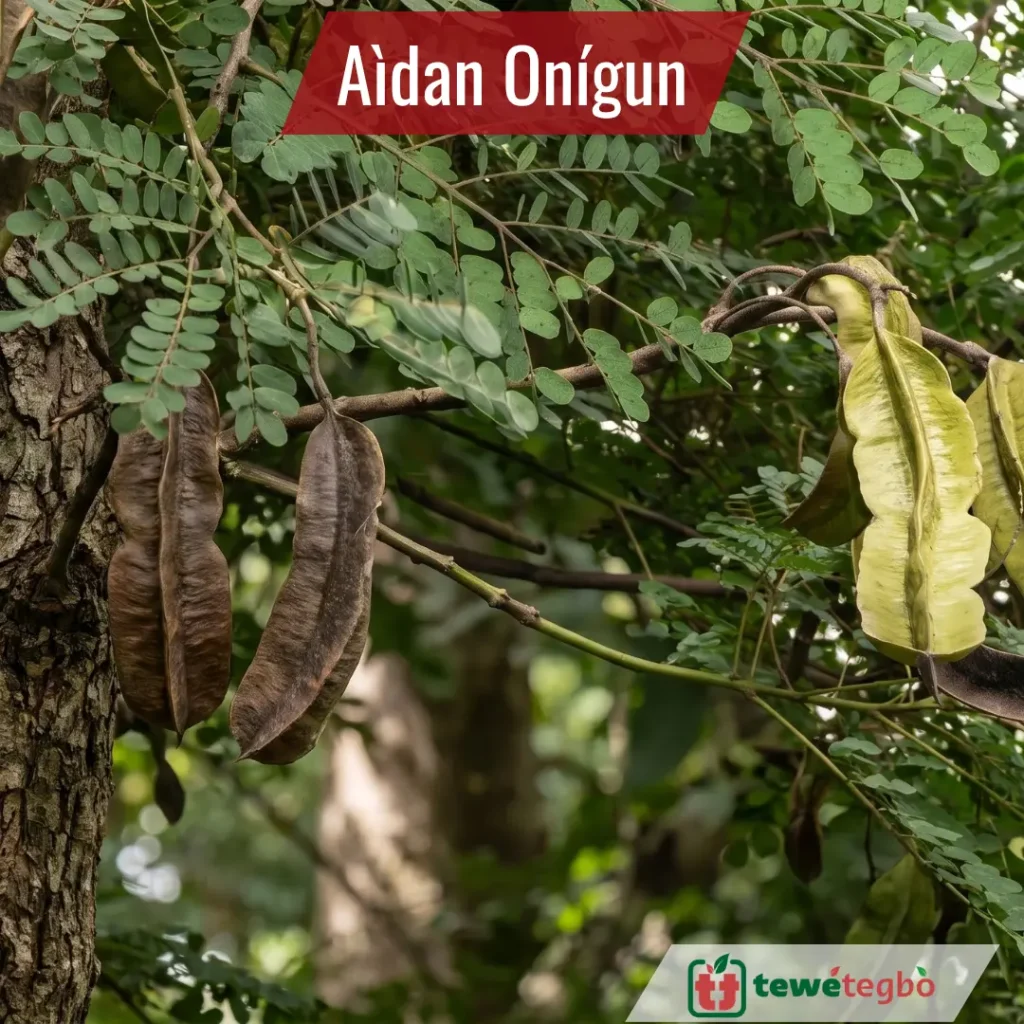
It is dark brown, hard and woody, with four raised sides running from one end to the other.
When dried, it almost looks like something made from wood rather than something that came from a tree.
Its most distinctive feature is its shape: it grows as a long pod with four wing-like edges, which is why it looks quite different from the ordinary fruits we eat.
Inside those four edges are the parts that have made Aidan useful for herbs.
Aidan is not simply a “herb.” It is also a spice and food ingredient.
Its strong aroma means that a small amount can change the smell and flavour of food.
And there is another aidan worth knowing: Aidan Tọrọ, a less commonly encountered type that does not look like the familiar four-edged Aidan.
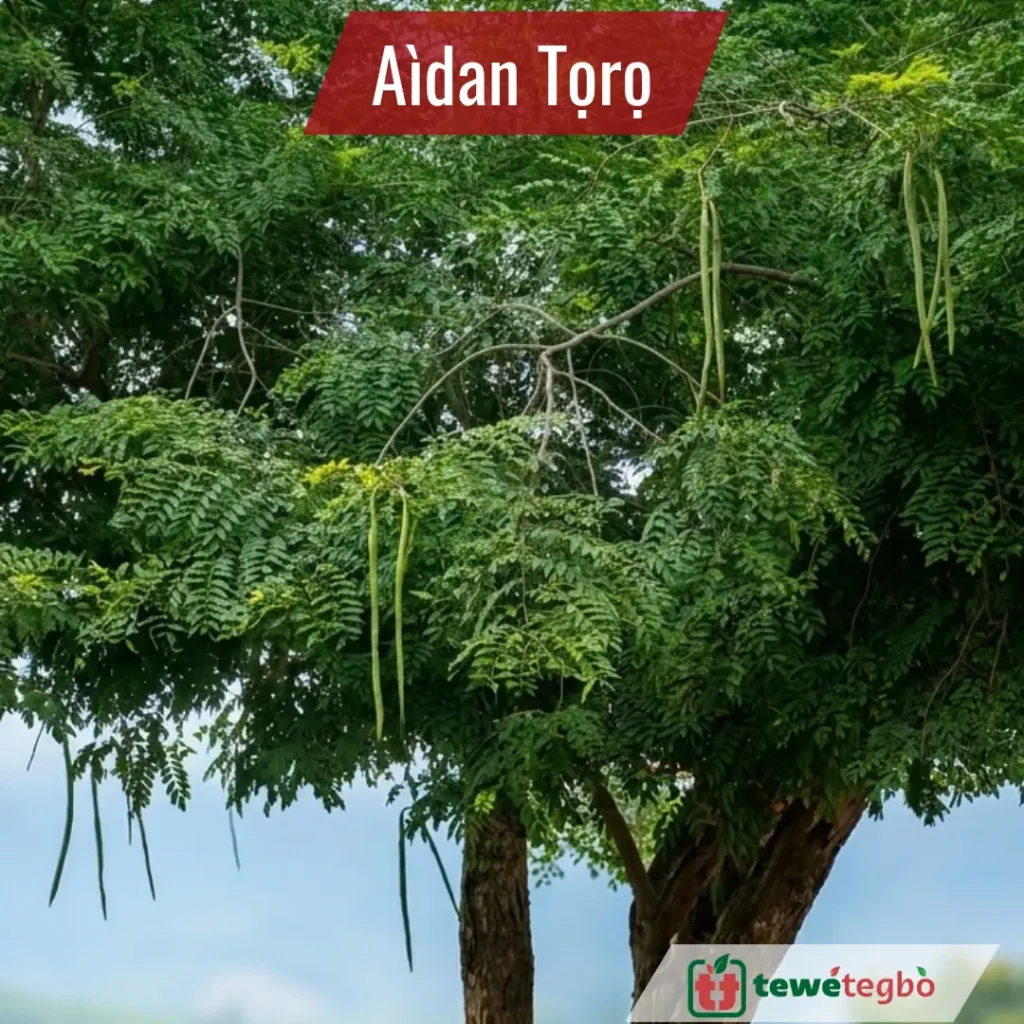
So when someone simply says “Aidan” or “Aridan,” they are usually referring to the familiar four-edged fruit, otherwise known as Aidan Onigun.
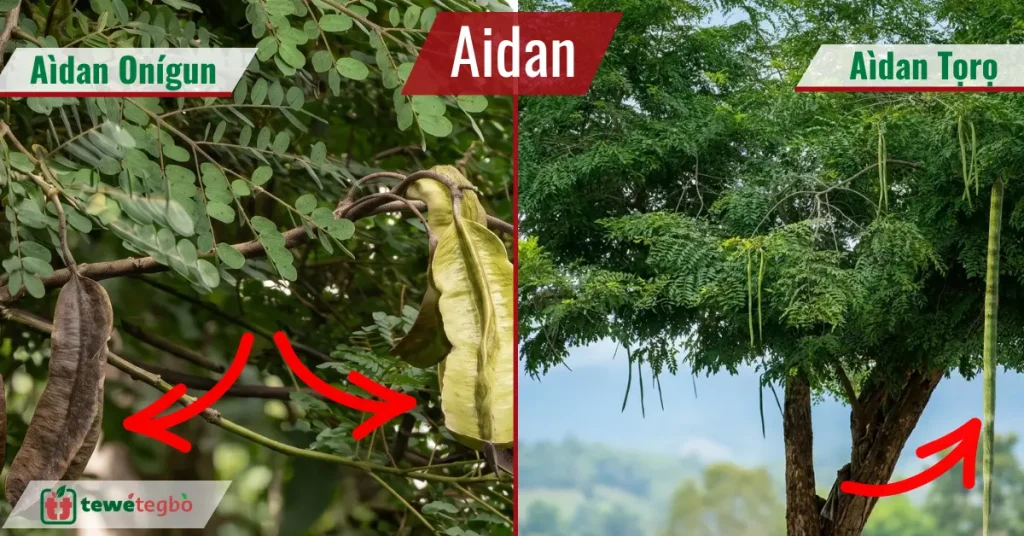
Aidan Onigun and Aidan Tọrọ
When many Yoruba people hear Aidan, the first thing that comes to mind is the familiar fruit with four sides.
That is Aidan Onígun.
But did you know there is another type called Aidan Tọrọ?
It is not as popular as Aidan Onígun, so many people have never heard of it.
Aidan Onigun
Onígun means “the one with edges.”
Look at the Aidan fruit you already know.
You will see the four sides or edges.
Two of the sides are hard and woody.
The other two are softer and contain the sweet-smelling pulp inside.
This is the Aidan most people know.
People use it as a spice in food, soups and drinks. It is also used in traditional herbal preparations.
There is also a name for the two soft sides.
They are called Iṣu Aidan.
So, when an elder says “Iṣu Aidan,” they are talking about the soft parts of the Aidan fruit.
They are not talking about another plant.
Aidan Tọrọ
Now, let us talk about the one many people do not know.
Aidan Tọrọ.
The name gives us a clue.
Tọrọ means something that is straight or points straight.
That is how this Aidan differs from Aidan Onigun.
Aidan Onígun has clear sides or edges.
Aidan Tọrọ has a more straight and pointed shape.
So remember it this way:
Aidan Onígun = Aidan with edges.
Aidan Tọ̀rọ̀ = Aidan that points straight.
Simple.
Why don't we hear much about Aidan Tọrọ?
Aidan Tọrọ is not as commonly talked about as Aidan Onigun.
Its root, Egbo Aidan Toro, is mostly mentioned in particular traditional contexts, especially in discussions concerning men's sexual strength or stamina, sometimes referred to as ‘Ale' or ‘Pẹ́lóriẹ́' in traditional slangs.
That is one reason many people may know Aidan Onígun very well but have never heard of Aidan Tọrọ.
Both have Aidan in their names, but they are not the same thing.
There is a lesson here
There is a Yoruba saying:
“Iṣẹ́ ọwọ́ àdó ni ó fún àdó ní iyi; akèrègbè tí ó jẹ́ bàbá rẹ̀, omi ni wọ́n fi ń pọn.”
The simple lesson is this:
It is what you use a thing for that makes people value it.
A small gourd may be more useful for certain things, while a bigger gourd may simply be used to fetch water.
So, it is not always about being bigger or more popular.
Usefulness is what brings value.
And that is an interesting way to look at Aidan Onigun and Aidan Tọrọ.
One became widely known.
The other stayed in the background.
But both have their own place in Yoruba traditional knowledge.
Aidan Fruit Benefits: Traditional Uses
This is the part most people came looking for.
What is Aidan actually used for?
In Yoruba herbal practice, Aidan is not a gbogbónìṣẹ̀, one herb expected to do everything.
It is often added to a preparation alongside other herbs. What it is combined with can determine the purpose of that preparation.
So when you see Aidan mentioned for diabetes, cough, fibroids, or other complaints, that does not necessarily mean Aidan is being used alone for all of them.
Here are some of its traditional applications.
1. Aidan After Childbirth
Aidan is traditionally included in some postpartum herbal preparations and foods given to women after childbirth.
Traditional knowledge associates it with the body's recovery after delivery, including support for the womb's contraction.
2. Aidan in Blood-Sugar Herbs
Aidan is used as an ingredient in some traditional herbal preparations for diabetes and high blood sugar.
This use has also attracted scientific interest. Animal studies have found blood-glucose-lowering effects from Aidan fruit extracts.
That is interesting evidence but in Yoruba traditional medicine, Aidan is only considered one of the ingredients used.
3. Aidan in Herbs for Fibroid Complaints
Many people also ask about using Aidan for fibroids.
In traditional herbal practice, Aidan is one of the ingredients used in some herbal mixtures for fibroids.
It is usually combined with other herbs rather than used alone.
4. Aidan for Cough and Respiratory Complaints
Cough and other respiratory complaints are among the traditional uses associated with Aidan.
It may be included alongside other herbs in preparations intended for these complaints.
5. Aidan for Inflammation, Arthritis and Joint Pain
Aidan has traditionally been used for body pain, arthritis, joint pain, and other problems caused by inflammation.
Modern studies have also looked at Aidan's effect on inflammation. Some studies found that Aidan extracts helped reduce inflammation.
6. Aidan Fruit Benefits for Men
What about men?
Aidan is also used in some traditional herbal mixtures for men, including mixtures used for sexual health and fertility.
Modern studies have also looked at Aidan fruit and male fertility.
In one study, Aidan fruit extract improved sperm count, sperm movement, and some other measures of fertility in male rats. [Source: (PubMed Central (PMC)]
7. Other Traditional Uses of Aidan Fruit
And the list does not end there.
Aidan is also traditionally used for fever, inflammation, stomach problems, joint pain, high blood pressure, and other health problems.
These uses are documented in traditional medicine across parts of West Africa. [Source: PubMed Central (PMC)]
This is why some people think of Aidan as a fruit that can be used for almost anything.
But Aidan is usually not used by itself for all these problems.
It is often one ingredient in a mixture of different herbs. The other herbs used with Aidan can change what the mixture is made for.
Frequently Asked Question About Aidan
What are Aidan fruit's local names?
Aidan fruit goes by many names across Africa. It's called Aridan in Yoruba, Uhio (or Uhiokrihio) in Igbo, Uyayak in Efik/Ibibio, Dawo in Hausa, Osakirisa or Oshosho (Igbo), Seghe-seghe in Bini, Abogolo in Igala, and Apakapakaba in Kalabari.
What is Prekese called in Yoruba?
In Yoruba, Prekese is called Aridan. It's the same plant, just known by different local names depending on the region: Prekese in Ghana, Aridan in Yoruba-speaking Nigeria.
What is Prekese?
Prekese is the Ghanaian (Akan/Twi) name for Tetrapleura tetraptera, also known as Aidan fruit or Aridan in Yoruba.
Prekese has a sweet, aromatic, almost caramel-like scent and is prized both as a food spice and as a traditional medicine.
What are Aidan pods?
Aidan pods are the dried seed pods of the Tetrapleura tetraptera tree.
It has four sides of which Two of the sides are woody, while the other two are filled with soft, sugary, aromatic pulp. Inside are small black seeds.
The pods are used whole or crushed in soups and stews, boiled into herbal teas, or dried and ground into powder for cooking and traditional herbs.
Chat me Now on WhatsApp about Aidan
Not sure if Aidan will work for you?
Send me a WhatsApp message now, I’ll guide you.
Let me reconnect you to the nature’s pharmacy.