
Oja Ikoko: Traditional Uses and Benefits
Oja Ikoko (Ọ̀já Ìkookò), scientifically known as Dracaena liberica and formerly Sansevieria liberica, is a Yoruba medicinal plant with long leaves covered in spots and patterns.
But have you ever wondered why it is called Oja Ikoko?
Let's break down the name.
Ọ̀já means a piece of cloth used to carry or wrap a baby at the mother's back.
Ikoko is associated with the hyena.
So, Oja Ikoko can mean something like the hyena's baby wrapper.
Strange name, isn't it?
But look at the plant's leaves.
Now look at the body of a hyena.
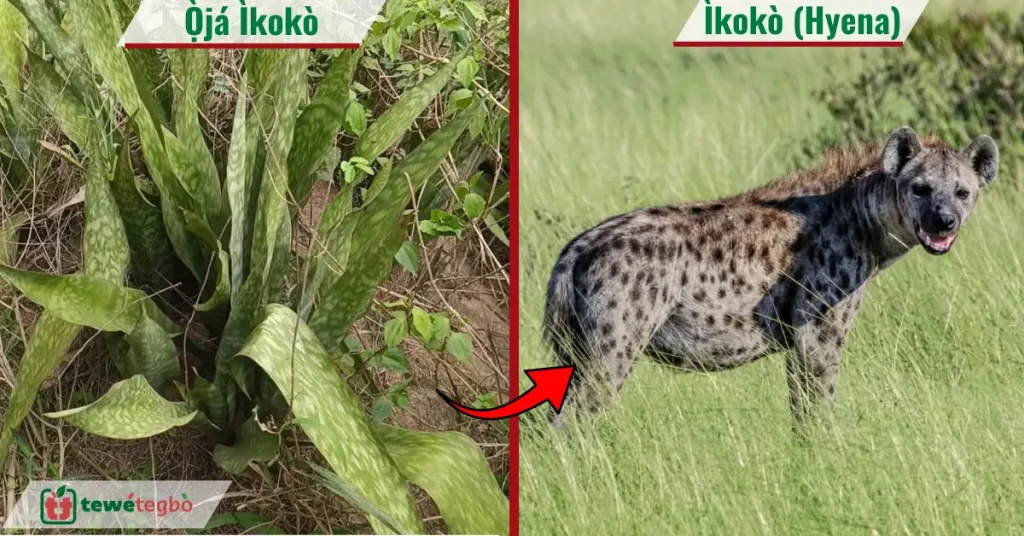
Do you see the resemblance?
The long leaves look like strips of cloth, while their markings resemble the spots on a hyena's body.
I haven't found any written source confirming this explanation of the name. Neither have I heard an elder explain it this way.
This is simply my own observation about why the plant may have received that name.
As the Yoruba saying goes:
Nkan tí kò bá jọra ẹnìkan kì fi we ara wọn.
We compare things with what they resemble.
Some people interpret Ikoko as wolf. However, I believe hyena is a better translation, particularly when we consider the resemblance between the spots on a hyena's body and the markings on Oja Ikoko leaves.
Of course, we cannot say for certain that this is how the name (Oja Ikoko) originated.
But it is an interesting possibility.
And there is much more to Oja Ikoko than its name.
In Yoruba traditional medicine, this plant is associated with several uses, including cough and asthma.
There are also some lesser-known traditional uses that are rarely discussed online.
Oja ikoko is easily confused with the common snake plant, but they are different species.
So, let's take a closer look at it, learn how to recognise it and break down what it is traditionally used for.
Let's get into it;
What Does Oja Ikoko Look Like?
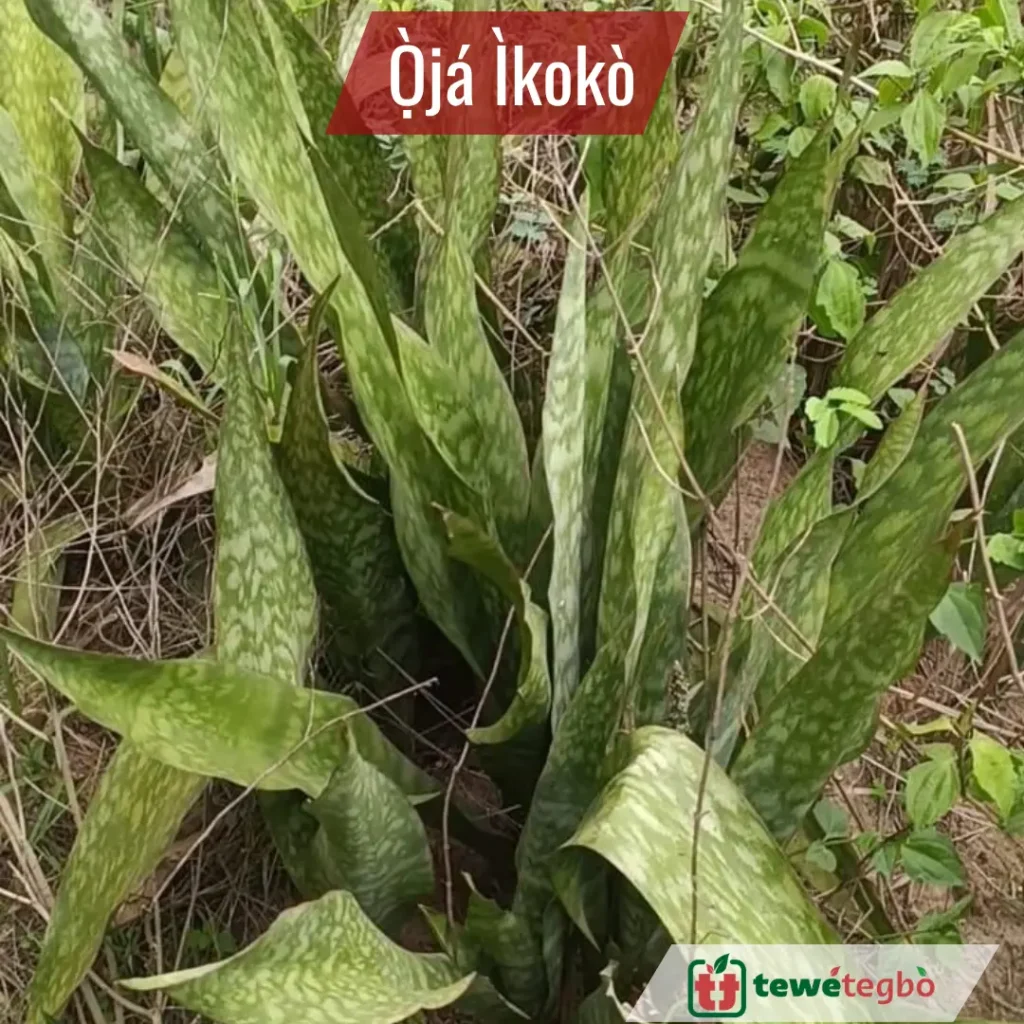
Oja Ikoko (Dracaena liberica), formerly known as Sansevieria liberica, is a leafy plant with long, broad leaves that grow from the base of the plant.
It sometimes spelled as Oja Ikooko and called other names such as:
The leaves are usually green, with lighter spots and patterns across them.
It can grow quite tall, sometimes reaching well over a metre.
But how can you recognise it?
Start by looking at its leaves.
They are long, broad, and tough, with markings that are often less regular than those of the common snake plant.
Is Oja Ikoko the Same as Snake Plant?
Not exactly.
Oja Ikoko is often confused with the common snake plant (Dracaena trifasciata, formerly Sansevieria trifasciata).
Although the two plants are related and look similar, they are different species.
The plant we are discussing here is specifically Dracaena liberica.
You may also find it listed as Sansevieria liberica in older Nigerian herbal books, plant records and online searches.
This is worth knowing because different plants can have different traditional uses.
Just because two plants look alike does not mean they are used in the same way.
Traditional Uses of Oja Ikoko
In Yoruba traditional medicine, it is used for different health complaints.
One of its traditional uses is for cough and asthma.
It is sometimes prepared with ginger, depending on the traditional method being used.
But cough and asthma are not the only reasons people use this plant.
There are some lesser-known traditional uses that are also worth discussing.
For example, Oja Ikoko is associated with traditional practices involving Oka Ori, certain forms of drinking and substance addiction, stroke.
These are quite different uses. Some involve preparing the plant as a traditional remedy, while others relate to beliefs about what the plant can do when placed in a particular environment.
We'll look at each of these uses separately, starting with the more familiar ones: cough and asthma.
Oja Ikoko for Cough and Asthma
One of the traditional uses is for cough and asthma.
In Yoruba herbal practice, Oja Ikoko may be prepared together with ginger for respiratory complaints.
The preparation is traditionally steamed, allowing the mixture to produce a vapour that is inhaled.
This is one of the traditional ways Oja Ikoko is used when the concern is related to breathing, coughing or asthma.
It is also a good example of how Yoruba herbal preparations are not always simply about drinking a plant.
Sometimes the way a plant is prepared and used is part of the traditional knowledge itself.
Oja Ikoko for Stroke
Oja Ikoko is also traditionally used in some Yoruba herbal practices for stroke.
A stroke happens when blood flow to part of the brain is blocked or when a blood vessel in the brain bursts.
It can affect a person's ability to walk, talk, move parts of the body or remember things.
Oja Ikoko for Oka Ori
Another traditional use of Oja Ikoko is for Oka Ori.
Oka Ori is a Yoruba expression used when the soft spot on a baby's head appears sunken.
This soft spot is the part of a baby's skull that has not yet fully closed. It is something parents and elders pay attention to when caring for a young child.
In Yoruba traditional medicine, Oja Ikoko is one of the plants associated with preparations for cases described as Oka Ori.
The way the plant is prepared and used may differ from one traditional practitioner to another. Other ingredients may also be included, depending on the practice being followed.
This is why it is important to understand Oja Ikoko not just by its scientific name, Dracaena liberica, but also by its Yoruba name and the traditional knowledge associated with it.
Oja Ikoko and Drinking Addiction
Another lesser-known traditional use of Oja Ikoko is its association with excessive drinking and substance addiction.
In the Yoruba traditional knowledge I have encountered, Oja Ikoko is used in cases where someone has developed a strong dependence on alcohol or other substances and finds it difficult to stop.
This is an interesting aspect of the plant because its traditional uses are not limited to physical complaints such as cough and fever.
Some traditional herbal practices also address problems involving a person's habits and behaviour.
Oja Ikoko is one of the plants associated with such practices.
Like other aspects of Yoruba herbal knowledge, this use is passed down through traditional practitioners.
The exact preparation and method of use may differ depending on the practitioner and the tradition being followed.
For someone dealing with drinking or substance addiction, this traditional approach may also be accompanied by counselling and guidance to help the person understand the harm caused by the addiction, recognise the need to stop and take steps towards changing their behaviour.
This is how the knowledge surrounding Oja Ikoko is traditionally understood and practised.
Other Traditional Uses of Oja Ikoko
Oja Ikoko is also traditionally used for other health complaints, such as:
These are some of the other traditional uses of Oja Ikoko, beyond its use for cough and other breathing problems.
Is Oja Ikoko Safe to Use?
Although Oja Ikoko is used traditionally for different health problems, it is not necessarily safe for everyone.
So, don't assume you can use it anyhow because it is a traditional remedy.
Pregnant and breastfeeding women should not use Oja Ikoko for medicinal purposes without first speaking to a qualified professional.
Remember, safety matters whenever you are using medicine, whether it is conventional medicine or traditional herbs.
Factors such as age, existing health conditions and other medicines being taken can influence what is appropriate for a person.
If anything about the safety of Oja Ikoko is unclear, feel free to ask.
What You Should Remember About Oja Ikoko
Oja Ikoko (Dracaena liberica), formerly known as Sansevieria liberica, is a Yoruba medicinal plant with several traditional uses.
Its Yoruba name is interesting. The long leaves and spotted markings remind me of a hyena's baby sash. This is my personal observation of how the name may have come about.
Traditionally, Oja Ikoko is used for ccough and asthma, Oka Ori, drinking addiction, stroke and several other complaints.
Some traditional beliefs also associate the plant with absorbing harmful substances in its environment.
Oja Ikoko is more than just a plant people grow to decorate their homes. It is part of our Yoruba plant heritage and deserves to be understood and preserved.
However, always remember to consider safety before using any medicinal plant.
Chat me Now on WhatsApp about Oja Ikoko
Not sure if this works for you?
Send me a WhatsApp message now, I’ll guide you.
Let me reconnect you to the nature’s pharmacy.