

Ewe Rere: Iwulo Ewe Rere Abo ati Ako
Many people know Ewe Rere.
But not everybody knows they know Ewe Rere.
It is one of those plants that often grow by the roadside, around old farmland, and in places people pass every day without paying attention.
Yet among Yoruba herbal practitioners, the plant has earned a reputation that is much bigger than its appearance.
Some know it for bringing down severe body heat in children.
Some know it for cough.
Some know it for stopping bleeding.
Others know it as part of powerful spiritual “back-to-sender” preparations.
And then there is another interesting detail.
Many elders do not simply call it Ewe Rere.
They speak of:
As if there are two different forms of the same plant.
Why?
That is where the story of Ewe Rere becomes interesting.
I can't wait any longer to start breaking it down.
So, let's explain it in this order:
Ewe Rere Ako ati Ewe Rere Abo (Pictures)
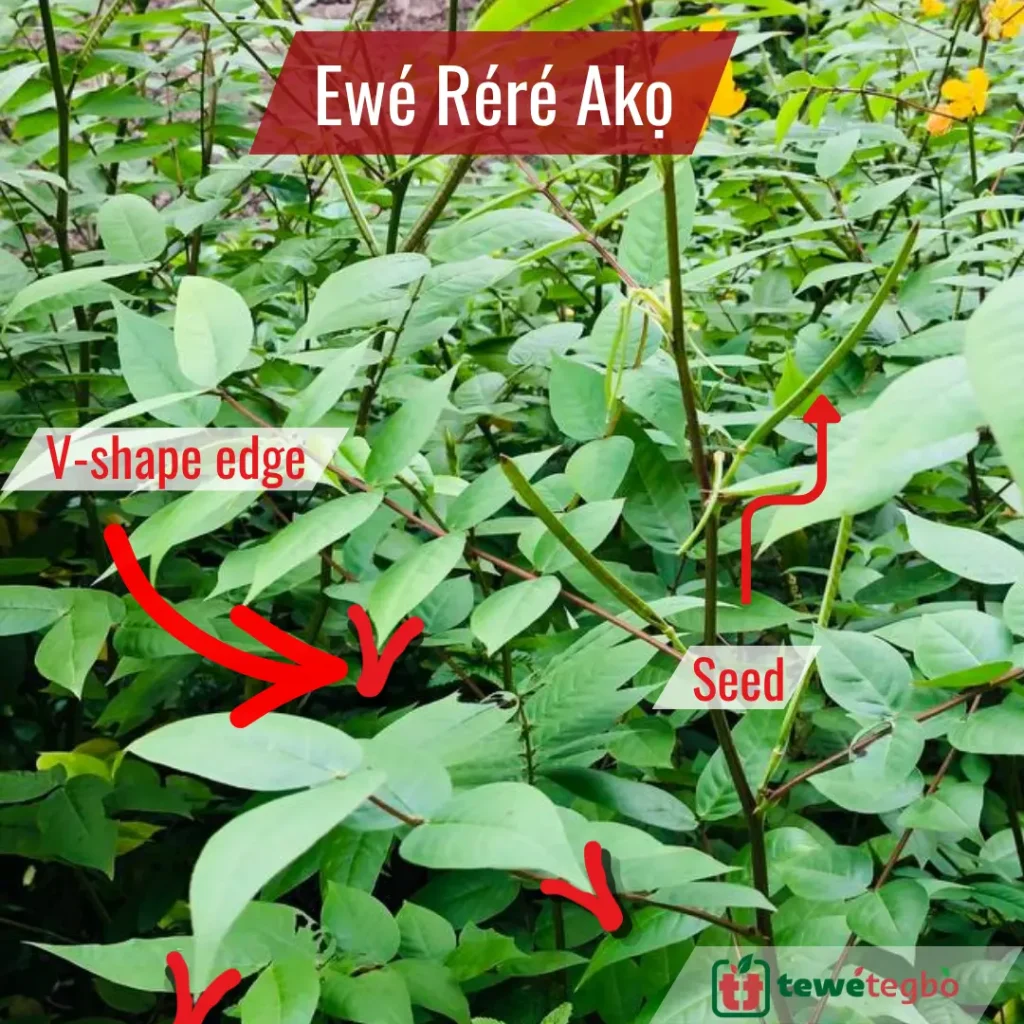
One reason elders distinguish between Ewe Rere Ako ati Abo is that the two plants do not appear exactly the same.
Although both share many similarities and are generally recognized as forms of Ewe Rere, experienced herbal practitioners often point to differences in the leaves.
According to some elders:
Ewe Rere Ako tends to have leaflets with more pointed tips.
Ewe Rere Abo tends to have leaflets with more rounded or curved tips.
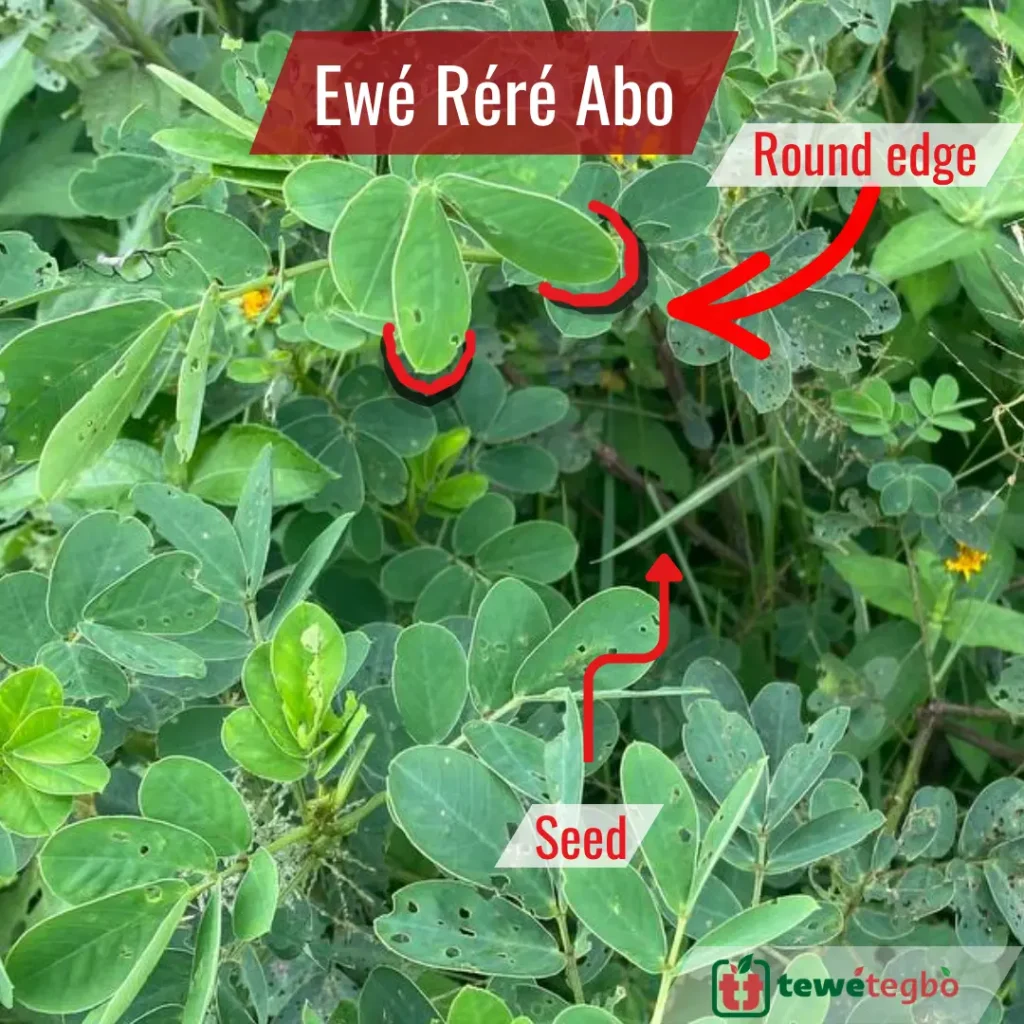
Both are balẹ̀rẹ̀ (ground-growing plants), and both produce bean-like seeds inside similar cover.
Because of these similarities, elders generally regard them as closely related forms of the same herb rather than completely different plants.
Some traditional people also believe that Rere Ako and Rere Abo complement each other when used together in certain herbal preparations.
Interestingly, Ewe Rere Ako appears to be the more widely recognized and commonly used of the two.
In fact, when a traditional herbal prescription simply mentions “Ewe Rere” without specifying Ako or Abo, many traditional people automatically assume that Ewe Rere Ako is being referred to.
This does not mean Ewe Rere Abo is unimportant. It simply reflects the fact that Ewe Rere Ako is the form most people are familiar with.
What Is Ewe Rere?
Ewe Rere is a medicinal plant commonly found growing in open fields, abandoned farmland, roadsides, and other disturbed areas.
Although many people see it as an ordinary weed, the plant has been used in traditional medicine across different parts of Africa for generations.
Its scientific name is Senna occidentalis (formerly known as Cassia occidentalis).
Before that name twists somebody's tongue, let's just call it Ewe Rere and move on. 😄
In English, it is sometimes called:
One reason for the name “Coffee Senna” is that the seeds were historically roasted (like groundnut) and used as a substitute for coffee in some parts of the world.
The plant typically grows as a small shrub with compound leaves, yellow flowers, and long seed cover containing multiple seeds.
In Yoruba herbal practice, however, Ewe Rere is remembered less for its appearance and more for the traditional uses associated with its leaves, roots, and seeds.
Traditional Uses of Ewe Rere in Yoruba Herbal Practice
Ewe Rere for High Temperature (Igbona)
One of the most common traditional uses of Ewe Rere is for what many Yoruba elders describe simply as igbona (excessive body heat or high temperature).
When a child develops a very high temperature, some traditional practitioners use fresh Ewe Rere leaves externally rather than internally.
One traditional method involves rubbing Ewe Rere Ako between the palms and mixing them with red palm oil (epo pupa).
Another method involves crushing the leaves and mixing them with black soap (ose dudu).
The preparation is then rubbed over the body.
Many elders believe this helps cool the body and bring the temperature down within a short period of time.
As with many traditional remedies, methods and combinations may vary from one practitioner or community to another.
Ewe Rere for Cough
Another traditional use associated with Ewe Rere is in herbal preparations for cough.
In some communities, the leaves of Ewe Rere Ako are crushed and mixed with original honey and lime juice.
The mixture is then taken in small quantities according to the practitioner's recommendation.
The combination reflects a pattern that appears frequently in Yoruba herbal practice.
Rather than relying on a single ingredient, practitioners often combine herbs with other natural substances that are believed to complement one another.
For many elders, Ewe Rere Ako remains the preferred form when preparing this particular remedy.
Ewe Rere and Prolonged Menstrual Bleeding
Ewe Rere is also traditionally associated with helping stop excessive bleeding.
This belief is not limited to wounds alone.
Some traditional people use fresh Ewe Rere leaf juice mixed with coconut water when menstrual bleeding is believed to continue longer than normal.
The reasoning may be connected to the plant's traditional reputation for helping control bleeding from minor cuts and wounds.
Ewe Rere and Wound Care
Among some traditional practitioners, Ewe Rere is valued for its reputation as a plant that helps stop bleeding.
Fresh preparations made from the leaves have traditionally been applied to minor wounds and cuts.
This traditional use contributes to the plant's broader reputation as a herb associated with controlling excessive bleeding.
As with many traditional remedies, practices vary between communities, and proper wound care remains important, especially for deep or serious injuries.
Ewe Rere in Traditional Remedies for Malaria & Typhoid
In some Yoruba herbal traditions, the roots of Ewe Rere Ako are included in herbal preparations used for illnesses associated with prolonged fever and weakness.
One method involves washing the roots and boiling them together with sliced oranges.
The resulting preparation is then used according to the practitioner's recommendation.
Ewe Rere for Insomnia
Not all traditional uses of Ewe Rere focus on fever, cough, or bleeding.
Some practitioners also associate the plant with sleep.
In certain traditional practices, the seeds of Ewe Rere are used for individuals who struggle to sleep normally.
This is another example of how different parts of the same plant may be assigned different roles in Yoruba herbal medicine.
While the leaves are often mentioned in discussions about fever and bleeding, the seeds may appear in preparations intended for rest and sleep.
Safety and Important Considerations
Like many herbs used in traditional medicine, Ewe Rere has a reputation for being powerful.
However, powerful does not always mean harmless.
It should be consumed moderately and not in excessive amounts.
This does not automatically mean the plant has no value.
Rather, it serves as a reminder that traditional herbs deserve the same respect people give to conventional medicines.
Traditional knowledge has long emphasized that a herb's safety and effectiveness depend on correct identification, preparation, and dosage.
Spiritual Uses of Ewe Rere
In some communities, Ewe Rere is also known by another name:
“Ẹlẹ́rù Gbé Ẹrù Ẹ.”
Literally, the phrase can be interpreted as:
“May the carrier take back the load.”
Within traditional Yoruba belief systems, it is often understood as a symbolic return of burdens, obstacles, negativity, or unwanted influences to their source.
The preparation may combine:
Interestingly, this is one of the situations where both Rere Ako and Rere Abo are often mentioned together, reinforcing the belief among some practitioners that the two forms complement one another.
It is important to note that these practices belong to traditional cultural and spiritual belief systems.
A Plant Many People Ignore
One interesting thing about Ewe Rere is how easy it is to overlook.
It grows along roadsides.
Around old farmland.
Beside fences.
In empty plots.
In many cases, people walk past it every day without giving it a second thought.
I once received a message from someone in South Africa looking for Ewe Rere and asking if I could help send it to them.

While someone hundreds or even thousands of kilometres away was searching for the plant, many people here walk past it without even noticing it.
Sometimes the plants people value most are growing quietly in places everyone else ignores.
Chat me Now on WhatsApp about Ewe Rere
Not sure if Ewe Rere will work for you?
Send me a WhatsApp message now, I’ll guide you.
Let me reconnect you to the nature’s pharmacy.