
Benefits of Bitter Leaf (Ewuro): Uses, Yoruba Types & Side Effects
There are some leaves Yoruba elders never joke with.
Ewuro is one of them.
Many people simply call it bitter leaf.
But to Yoruba elders, ewuro is more than an ordinary leaf for soup.
It is a respected herb.
People use it for food, herbal remedies, cleansing, and keeping the body healthy.
There is even a Yoruba saying:
“Ewuro l’agba igi.”
“Bitter leaf is the elder among trees.”
Why was ewuro given such respect?
First, elders believed it could help with many different illnesses.
Second, ewuro stays green almost all year round.
Even during the dry season, when many plants dry up, ewuro is usually still fresh and available.
Long before pharmacies and modern hospitals became common, this mattered a lot.
When someone suddenly became sick during harmattan and many herbs had already dried up, ewuro was often one of the few leaves still fresh and easy to find.
That reliability made elders value it deeply.
Over the years, people have used ewuro in soups and herbal mixtures.
And according to Yoruba herbal tradition, there is more than one type of ewuro.
There is:
In this post, I will mainly focus on the benefits of bitter leaf (ewuro obe). This is the common type many people already know.
I will also briefly talk about the other types of ewuro.
By the end, you will understand why Yoruba elders respect ewuro so deeply.
But first:
What Is Bitter Leaf (Ewuro)?
Bitter leaf is a green leafy plant widely used in Nigeria and many parts of Africa for both food and traditional herbal practice.
Its botanical name is Vernonia amygdalina.
In Yoruba, bitter leaf is commonly called ewuro.
Other Yoruba names sometimes associated with it include:
The leaf is naturally bitter, which is where the English name “bitter leaf” comes from.
It is commonly used to prepare:
Many people also combine it with other herbs such as:
depending on the intended traditional use.
Ewuro in Yoruba Herbal Thinking
In Yoruba herbal tradition, plants are not only grouped by what they are used for.
They are also grouped by their nature and character.
One of such groups is called:
“Iran Oloju Eji”
(the group of two-faced herbs)
Ewuro (bitter leaf) is part of this group.
Yoruba elders say:
“Adun ni n gbeyin ewuro.”
“Sweetness is what ends bitterness.”
The meaning is simple:
What starts hard may end well.
This saying comes directly from how ewuro tastes.
At first, it is very bitter…
…strong and sharp.
But if you keep it in your mouth for a while, a small sweetness may slowly appear.
Yoruba people noticed this long ago and turned it into a lesson:
Not everything that is bitter will remain bitter forever.
Because of this “two-sided” nature, ewuro is also seen in traditional thinking as a balancing herb.
It is believed to help the body stay in balance…
…not too much of one thing, not too little of another.
This may also explain why ewuro is used both as:
It appears in:
In traditional practice, ewuro is believed to help the body remove what it does not need while also supporting what is weak.
Yoruba healers describe it in a simple way:
it helps the body return to balance.
Because of this idea, ewuro was traditionally used in different kinds of situations that seem opposite, such as:
The goal was not to force the body, but to help it return to its natural balance.
Some traditional practitioners also connect this idea of balance to the name ewuro itself.
According to one traditional explanation:
“ewu” can mean problem, danger, or imbalance.
And “ro” can mean to calm, settle, or bring under control.
So in this understanding, ewuro is seen as:
a herb that helps restore balance in the body.
Whether the problem is seen as:
traditional healers believe ewuro helps the body move back toward balance.
In simple terms, they believed:
the herb can meet the body where it is.
Another herb sometimes linked with this same idea of balance is aidan onigun (aidan fruit).
It has both soft and hard edges on its body.
Health Benefits of Bitter Leaf (Ewuro)
Bitter leaf has been used for many years in many African homes as both food and traditional medicine.
In Yoruba culture, ewuro is commonly used for body cleansing and wellness, and it is often mixed with other herbs.
Bitter leaf also contains natural nutrients that support general well-being.
Below are some common traditional uses and health benefits linked to bitter leaf.
1. Bitter Leaf May Help Support Healthy Blood Sugar
Many people use bitter leaf to help manage sugar levels in the body.
Some drink bitter leaf water or juice in the morning as part of their regular wellness routine.
Research also suggests that bitter leaf may help support healthy blood sugar balance.
In Yoruba traditional practice, ewuro is believed to help the body stay balanced and healthy.
If you are taking diabetes medicine, avoid using too much bitter leaf without speaking to a health professional first.
2. Bitter Leaf Is Commonly Used During Fever and Malaria
For many years, people have used bitter leaf during times of fever, malaria, chills, and body weakness.
In many homes, bitter leaf soup is given to people recovering from malaria because it is seen as nourishing, strengthening, and easy to eat.
Some people also drink bitter leaf water when feeling very weak or feverish.
Because of these traditional uses, bitter leaf remains one of the most respected wellness plants in many homes.
3. Bitter Leaf May Help Digestion
Bitter leaf is commonly used to support digestion.
Some people drink bitter leaf water after heavy meals or when they have stomach discomfort.
Many believe the bitter taste helps the stomach work better and may support appetite and smooth bowel movement.
Because of this, bitter leaf is often used for:
4. Bitter Leaf Is Commonly Used for Body Cleansing
Many people believe bitter leaf helps cleanse the body.
Because of this, some drink bitter leaf water early in the morning on an empty stomach.
Others mix it with herbs and natural ingredients like:
In many traditional homes, bitter herbs are valued for helping the body stay clean and balanced.
This is one reason ewuro is still highly respected today.
5. Bitter Leaf May Help Support Liver Health
For many years, people have used bitter leaf during periods of illness, body stress, or after excessive alcohol intake.
Bitter leaf is often linked with body cleansing and overall wellness.
Since the liver helps the body remove waste and process what we eat and drink, bitter leaf is traditionally connected with supporting liver health.
6. Bitter Leaf May Help the Body Recover After Illness
Bitter leaf is traditionally used to help restore strength and appetite after sickness.
People recovering from illness are sometimes given meals made with bitter leaf and other vegetables.
In some Yoruba homes, bitter leaf is mixed with vegetables like:
then dried and ground into powder.
Small amounts may be added to pap (ogi/akamu) or soft food for people who are weak or recovering from illness.
7. Bitter Leaf Is Traditionally Used for Body Pain and Weakness
Some Yoruba elders prepare squeezed bitter leaf juice at night for people experiencing:
The belief is that the bitterness helps “reset” the body before morning.
Traditional Yoruba Method
Fresh ewuro leaves are squeezed by hand to extract the juice.
The liquid is then strained and taken at night, sometimes with a small amount of honey because of the intense bitterness.
Traditionally, this preparation is associated with:
8. Bitter Leaf Is Traditionally Associated With Male Vitality
Some traditional herbal practitioners combine:
for men experiencing weakness in sexual performance.
Traditional Yoruba Method
Traditionally, small strands of the leaves are chewed raw each morning for several days.
In Yoruba herbal thought, this combination is associated with:
9. Bitter Leaf May Support Weight Management
Bitter leaf water is increasingly used by people interested in weight management and metabolic wellness.
Some people drink bitter leaf water on an empty stomach or combine it with scent leaf for this purpose.
Traditionally, bitter herbs were often associated with:
However, bitter leaf alone should not be seen as a miracle weight-loss solution.
10. Bitter Leaf May Support Healthy Blood Pressure
Some traditional practitioners use bitter leaf in situations involving blood pressure imbalance.
Modern studies have also explored compounds within Vernonia amygdalina that may support circulation and cardiovascular health.
Within Yoruba herbal philosophy, ewuro is often viewed as a balancing herb rather than a one-directional herb.
This is part of the broader “Iran Oloju Eji” philosophy discussed earlier in this guide.
Health Benefits of Bitter Leaf and Scent Leaf
In many Yoruba homes, bitter leaf (ewuro) and scent leaf (efinrin) are often used together in traditional herbal mixtures.
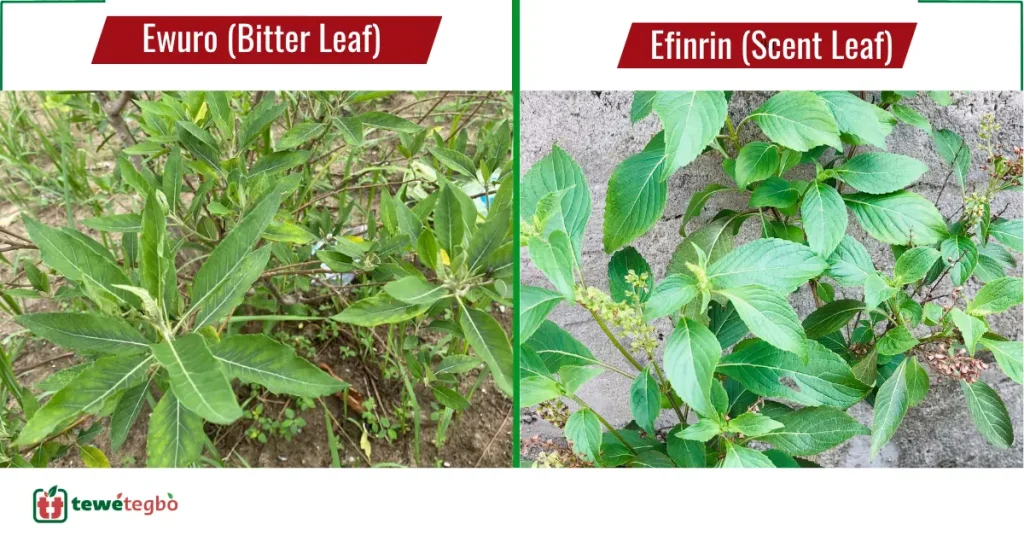
People commonly use the combination for:
Bitter leaf is known for its strong bitter taste, while scent leaf is valued for its strong smell and traditional wellness uses.
Some people boil the leaves together as herbal water, while others squeeze the fresh leaves to make juice.
The mixture is commonly used during periods of:
Traditional Method for Jedi Jedi (Pile)
A common traditional mixture uses:
The leaves are squeezed together to bring out the juice before adding the salt.
People traditionally use this mixture to help with discomfort linked to pile and body heat.
Benefits of Bitter Leaf Water and How to Use It
Bitter leaf water is one of the most popular ways people consume ewuro for traditional wellness purposes.
The preparation is usually made by:
Many people believe drinking bitter leaf water may help support:
Drinking Boiled Bitter Leaf Water
Drinking boiled bitter leaf water is common in many traditional homes.
Some people lightly boil the leaves and drink the water warm, especially:
Traditionally, some elders also drink squeezed bitter leaf water at night for body pain and general body reset before morning.
Because bitter leaf preparations can be very strong, moderation is important.
Drinking Bitter Leaf Water on Empty Stomach
Many people drink bitter leaf water on an empty stomach because they believe it helps the body absorb the plant compounds better.
In traditional practice, this is commonly associated with:
However, bitter leaf water may not be comfortable for everyone, especially in excessive amounts.
People with stomach sensitivity or underlying medical conditions should be cautious.
Spiritual Benefits of Bitter Leaf (Ewuro)
Beyond food and traditional medicine, bitter leaf (ewuro) also has spiritual meaning in many Yoruba traditions.
Because of its strong bitter taste and cleansing reputation, ewuro is often linked with:
Many Yoruba elders connect bitter leaf with the idea that difficult times can later bring peace and joy.
This is reflected in the saying:
“Adun ni n gbeyin ewuro.”
“Sweetness comes after bitterness.”
Because of this belief, some people include bitter leaf in traditional cleansing baths, spiritual washing, and prayer preparations.
Some believe it helps the body and mind feel lighter, cleaner, and renewed.
Different families and traditional practitioners may use bitter leaf in different ways across Yorubaland.
The Different Types of Ewuro in Yoruba Herbal Practice
Many people think ewuro is just one plant.
But in Yoruba herbal practice, there are different types of ewuro.
These plants are connected because they share similar bitterness, character, and traditional use.
That is why elders may mention “ewuro,” but the exact type depends on:
The four common types are:
Although they are different, many traditional practitioners believe they work in similar ways.
Some herbalists even mix different types together to make stronger herbal preparations.
Or even use one in place of the other.
Many elders also believe the wild types growing in the forest are stronger than the common bitter leaf we see around us at home.
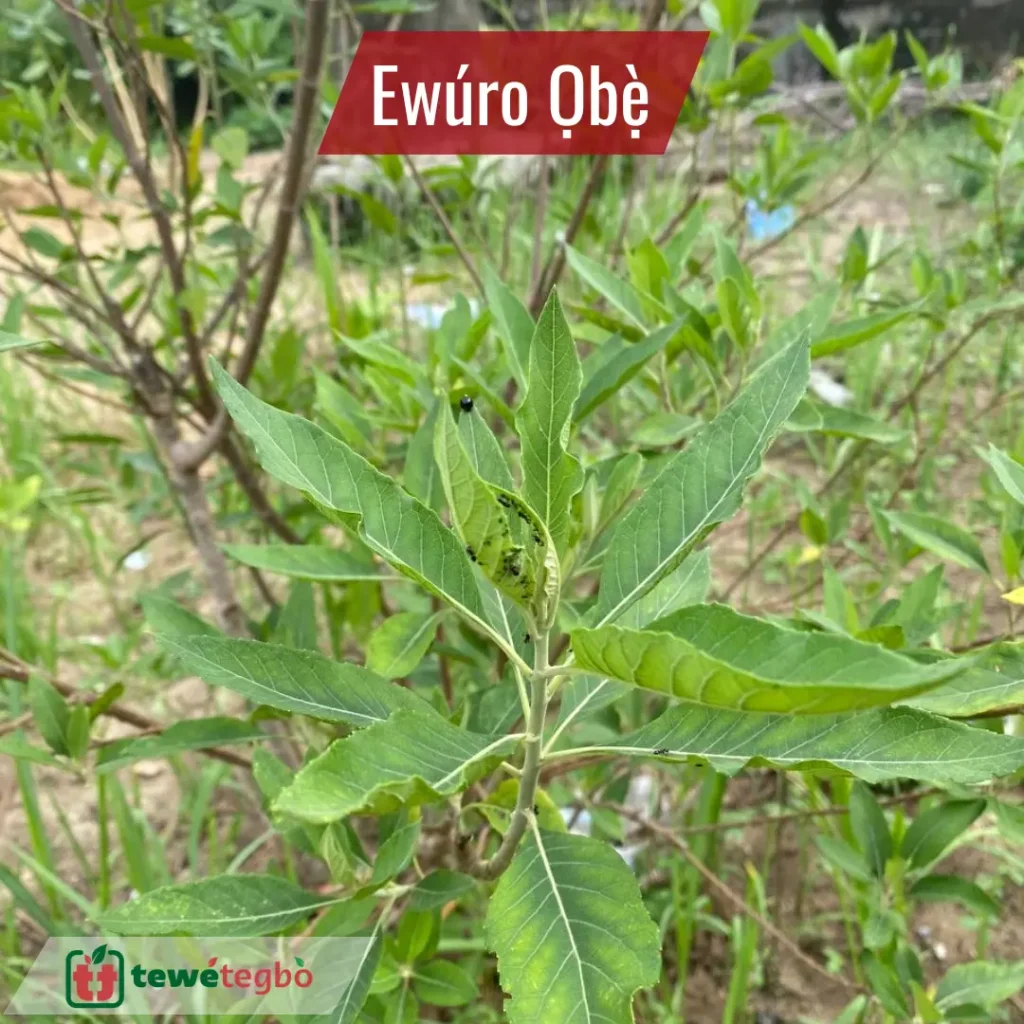
1. Ewuro Obe — The Common Soup Bitter Leaf
This is the type most people simply call bitter leaf.
The word “obe” means soup.
So ewuro obe means:
“the bitter leaf used for soup.”
This is the common type seen at homes.
People use it for:
Other Yoruba names linked to it include:
Most of the benefits discussed in this article mainly refer to ewuro obe because it is the type most people eat and use at home.
2. Ewuro Igbo (Ewuro Ijebu / Ewuro Ogun) — The Forest Bitter Leaf
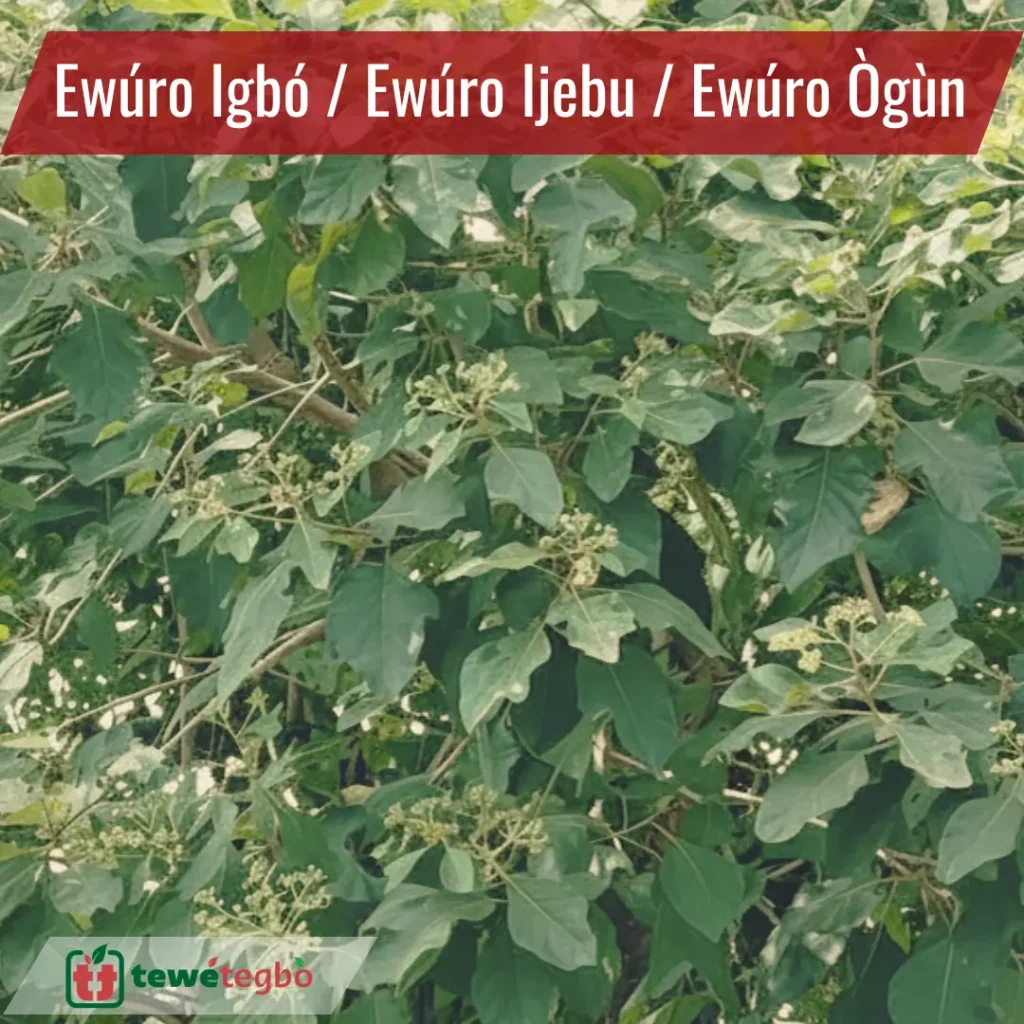
The word “igbo” means forest or bush.
Ewuro igbo is the wild type of ewuro that grows naturally in the forest rather than around homes.
In different places, some people also call it:
The name ewuro ogun literally means:
“medicinal bitter leaf”
People often use this name when trying to distinguish it from the common bitter leaf used mainly for soup, known as ewuro obe.
Traditional practitioners often describe ewuro igbo as:
than the common ewuro obe.
Many elders believe it works faster in herbal preparations because it grows naturally without cultivation.
Because of its intense bitterness, people do not usually use it for everyday soup like ewuro obe.
Instead, it is more commonly associated with herbal mixtures, traditional remedies, and stronger preparations.
Some traditional practitioners also combine ewuro igbo with other types of ewuro when preparing herbal remedies they want to make stronger or more active.
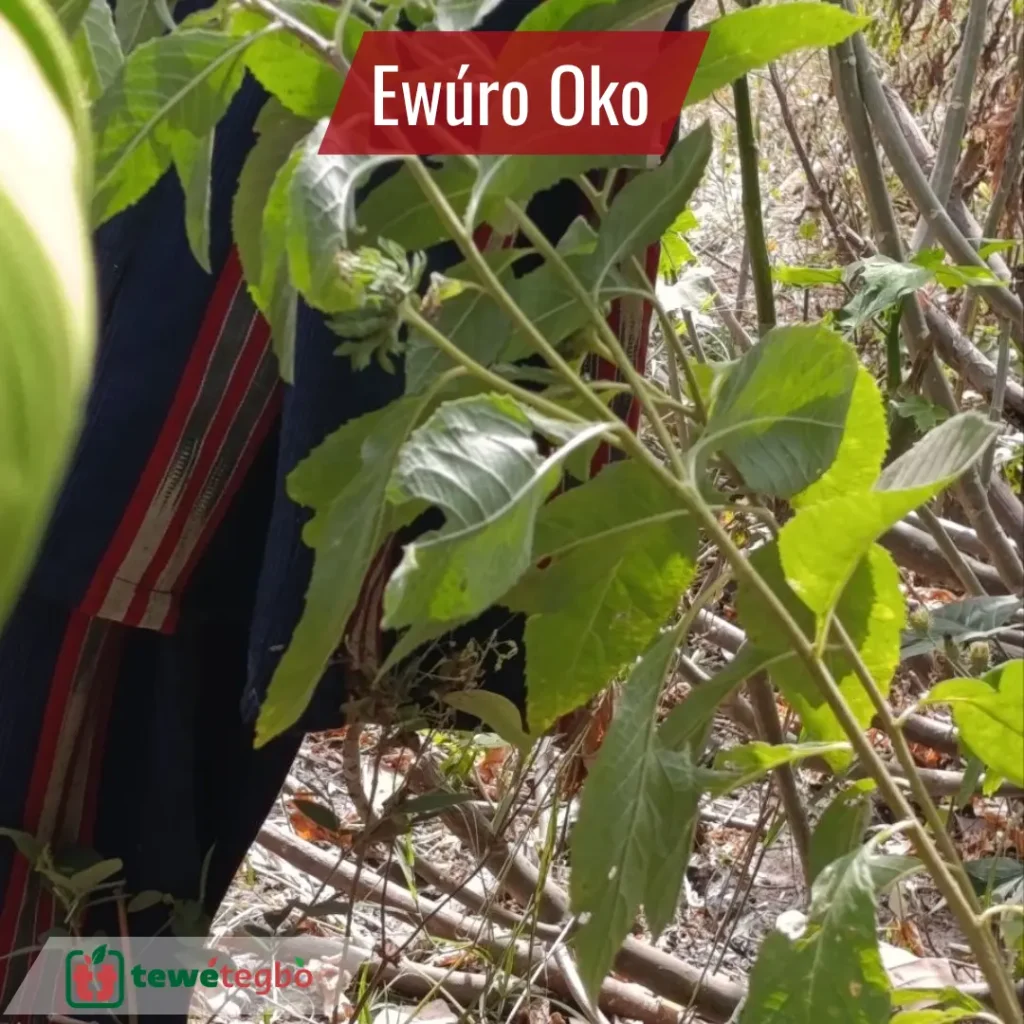
3. Ewuro Oko — The Farm Bitter Leaf
The word “oko” means farm.
Ewuro oko is commonly found around farms and cultivated land.
In traditional understanding, it is seen as being between ewuro obe and ewuro igbo in strength.
It is stronger than the common soup bitter leaf, but not as strong as the forest type.
People may use it when other types are not easily available.
Like the others, it is also used in traditional herbal preparations.
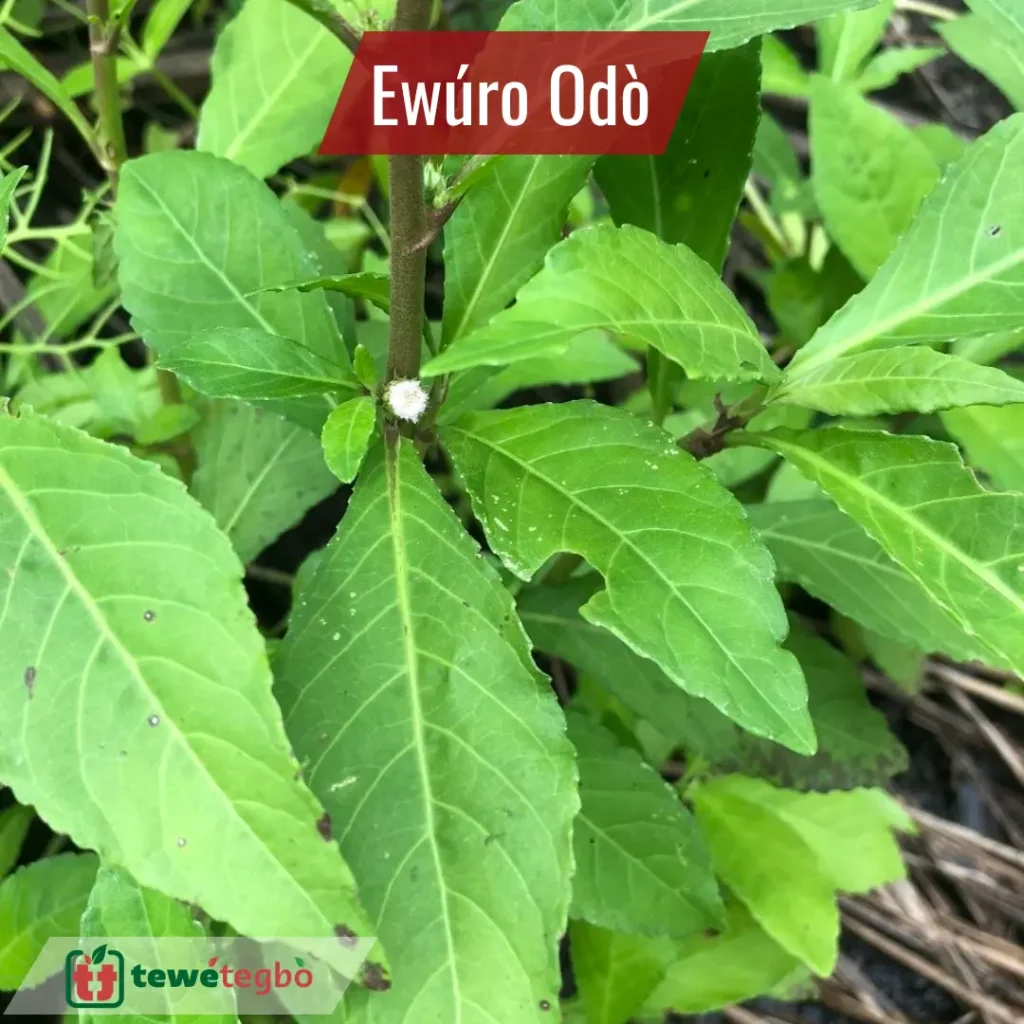
4. Ewuro Odo — The Riverside Bitter Leaf
The word “odo” means river.
Ewuro odo grows around riversides and wet areas.
In Yoruba herbal thinking, plants are believed to carry some qualities of where they grow.
Because ewuro odo grows around water, some practitioners connect it with cooling and cleansing.
It is sometimes used in traditional preparations linked to internal body heat.
It is also one of the less common types seen in markets.
Side Effects of Bitter Leaf and Who Should Be Careful
Although bitter leaf (ewuro) is widely eaten as food and used traditionally across many homes, that does not mean every preparation should be taken carelessly or excessively.
At the same time, caution does not mean the herb is bad.
In Yoruba herbal understanding, almost anything taken excessively can become a problem — even water.
The issue is usually not the herb itself, but:
There is a difference between:
In moderate food quantities, bitter leaf is generally considered safe for most healthy adults.
However, certain people should still be more careful, especially with:
Pregnant Women Should Avoid Too Much Raw Bitter Leaf Juice
Cooked bitter leaf soup is commonly eaten during pregnancy in many homes.
But some traditional practitioners avoid giving pregnant women large amounts of raw bitter leaf juice, especially in early pregnancy.
Moderation is important.
A Simple Traditional Understanding
Many elders believe:
bitter leaf as food is different from bitter leaf as medicine.
Eating small amounts in soup is not the same as drinking strong bitter leaf juice every day.
This is why moderation, balance, and wisdom are always encouraged.
Frequently Asked Questions About Bitter Leaf
Can I Drink Bitter Leaf Water Every Day?
Some people drink small amounts of bitter leaf water regularly as part of their wellness routine.
However, excessive intake may not be suitable for everyone.
Because bitter leaf is very active and naturally bitter, too much may cause:
– stomach discomfort,
– digestive irritation,
– or weakness in some people.
Moderation is generally safer than excessive daily consumption.
Is bitter leaf good for ulcer?
Traditionally, diluted bitter leaf preparations are sometimes used carefully for stomach-related discomfort.
However, raw concentrated bitter leaf juice may be too harsh for some people with active stomach ulcers because of its strong bitterness.
People with ulcer conditions should approach concentrated preparations cautiously and seek proper medical advice where necessary.
Can Pregnant Women Drink Bitter Leaf Water?
Cooked bitter leaf in soup is commonly eaten in many homes during pregnancy in moderate amounts.
However, traditional practitioners often avoid excessive intake of concentrated raw bitter leaf juice during pregnancy, especially in large quantities.
Moderation and proper medical guidance are important during pregnancy.
Does Bitter Leaf Cure Infection?
In traditional Yoruba herbal practice, ewuro (bitter leaf) is often used as part of herbal preparations for infections and internal cleansing.
However, elders rarely depend on ewuro alone.
Instead, it is commonly combined with other herbs and spices such as:
– baaka,
– kanafuru (cloves),
– efinrin (scent leaf),
– garlic,
– and other traditional ingredients,
depending on how severe the condition is.
What is ewuro in English?
Ewuro is the Yoruba name for bitter leaf.
In other Nigerian languages, it is called onugbu (Igbo), shiwaka (Hausa).
Does bitter leaf water burn fat?
Yes, bitter leaf water supports fat burning, though it functions differently than a stimulant diet pill.
Why Bitter Leaf (Ewuro) Remains Important
For many people, bitter leaf is simply a vegetable used for soup.
But in Yoruba tradition, ewuro is more than food.
It is connected to health, tradition, and everyday life.
People use it in:
For many years, bitter leaf has remained one of the most respected herbs in many homes.
Yoruba elders even say:
“Ewuro l’agba igi.”
“Bitter leaf is the elder among trees.”
This reflects how valued and dependable the plant is in traditional life.
Another popular saying is:
“Adun ni n gbeyin ewuro.”
“Sweetness comes after bitterness.”
The saying reminds people that difficult times can later bring peace and joy.
Even today, many people still drink bitter leaf water, cook bitter leaf soup, and mix ewuro with other herbs for different traditional uses.
Whether seen as food, traditional medicine, or cultural wisdom, the benefits of bitter leaf remain valued everywhere.
Chat me Now on WhatsApp about Bitter Leaf (Ewuro)
Not sure if Bitter Leaf (Ewuro) will work for you?
Send me a WhatsApp message now, I’ll guide you.
Let me reconnect you to the nature’s pharmacy.