
Ewe Ejinrin – Iwulo Ewe Ejinrin
There is a leaf that many people see almost every day…
Growing quietly on fences.
Crawling along the ground.
Climbing over other plants.
It is called ewe ejinrin.
Also known as ejinrin aja, ejinrin dudu, igbole aja, okoko
Most people don’t touch it.
Not because it is rare.
Not because it is hard to find.
But because it is too bitter.
So they ignore it.
What they don’t realize is this:
The same leaf they avoid…
…is the same leaf our grandparents found useful back then.
Not just because it works.
But because of the kind of plant it is.
In Yoruba herbal classification, ewe ejinrin belongs to a group called “itakun balere” (plants that don’t stay in one place…)
They spread.
They climb.
They move.
And in traditional understanding, plants like this are not ordinary.
They are often used for problems that don’t stay in one place either…
Things that move inside the body.
Things that spread quietly.
Things that refuse to go easily.
Which raises a simple question:
If this leaf is so bitter that people now avoid it…
Why did our grandparents keep traditionally using it for body pain, infections, and high blood sugar?
We’ll get into that.
But beyond that, we’ll take a quick look at:
What Does Ewe Ejinrin Look Like? (Easy Identification Guide)
If you don’t know this plant well, you can mistake it for something else.
Ewe Ejinrin Picture
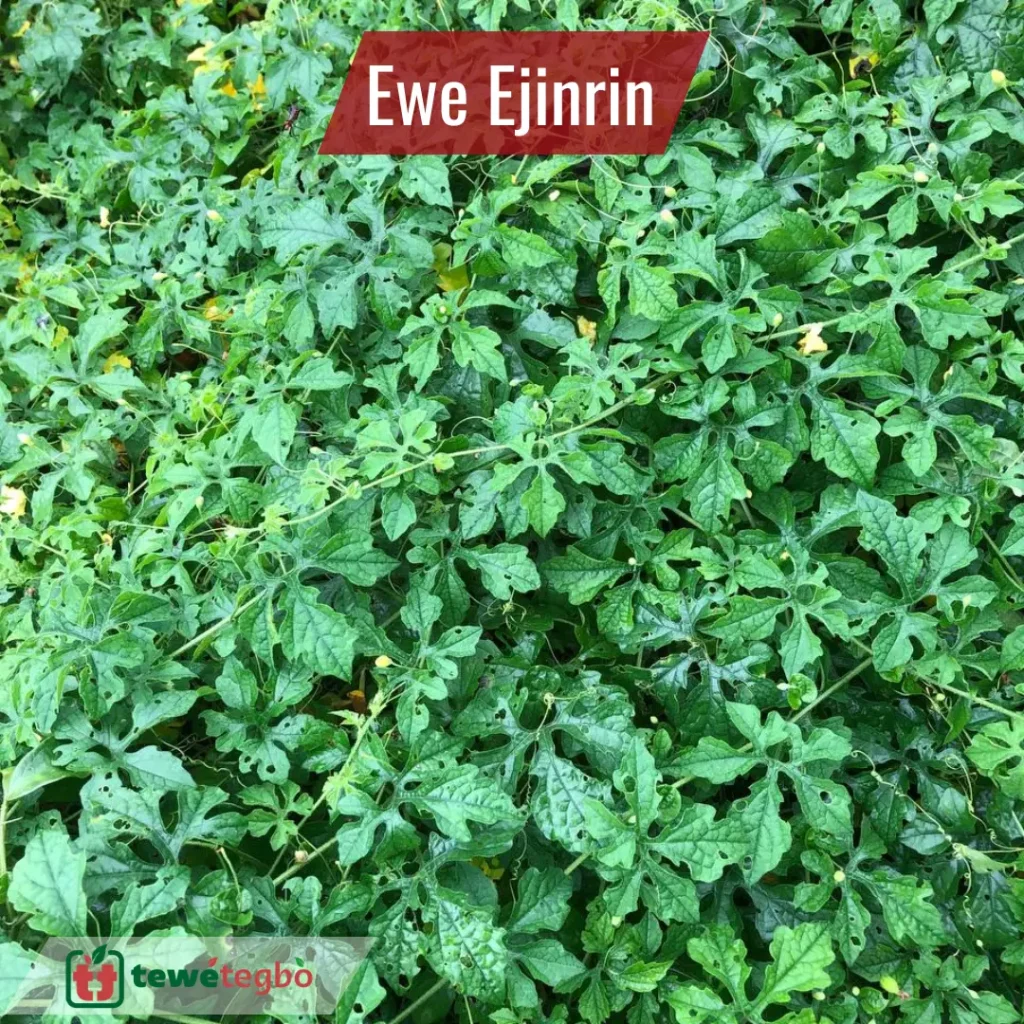
Here is how to recognize it quickly:
It is very, very bitter
That bitterness is your strongest confirmation.
I even put it in video below to better recognize ewe ejinrin at a glance.
What is Ewe Ejinrin in English (With Igbo & Hausa Names)?
Ewe ejinrin is the Yoruba name for a plant known in English as bitter gourd, bitter melon, or sometimes bitter apple.
Its botanical name is Momordica charantia.
The plant is widely known across Nigeria and different parts of the world because of its extremely bitter taste and its long history in traditional medicine.
Different tribes in Nigeria also have their own names for it:
| Language / Tribe | Name |
|---|---|
| Yoruba | Ewe Ejinrin / Ewe Ejinrin Aja / Ewe Ejinrin Dudu / Ewe Igbole Aja / Ewe Okoko |
| Igbo | Okwunuolo / Irighirighi |
| Hausa | Daddasu |
| English | Bitter gourd / Bitter melon |
But despite the different names…
Most people recognize the plant for the same thing:
Its bitterness.
And in traditional herbal practice, that bitterness is often seen as a sign of its cleansing strength.
What Is Ejinrin Wewe? (And Is There Really an “Ejinrin Nla”?)
If you search online, you may come across a name called “ejinrin wewe.”
This has made many people assume there are two types:
But from traditional understanding and common herbal usage, that may not actually be correct.
The word “wewe” in Yoruba often refers to something soft, fresh, tender, or small-looking.
Because of that, some people use “ejinrin wewe” simply to describe the regular fresh creeping ejinrin plant…
Not necessarily a completely different plant.
And despite how common the phrase has become online…
Many traditional users do not actually recognize a separate “ejinrin nla” (big ejinrin).
This appears to be one of those misunderstandings that gradually spread as more people repeated it.
So when you hear “ejinrin wewe,” it is usually referring to the same bitter creeping plant commonly known as ewe ejinrin.
Why Is Ewe Ejinrin So Bitter?
This is where many people miss the point.
In traditional herbal understanding:
Bitter herbs are cleansing herbs
Ewe ejinrin is not bitter by accident.
That bitterness is believed to:
So when people complain that it is too bitter…
Traditional users will tell you:
“That is why it works.”
Health Benefits of Ewe Ejinrin
Let’s break this down in a simple way.
These are the common reasons people use it.
1. Helps Control Blood Sugar
Ewe ejinrin is widely used by people trying to manage high blood sugar.
It helps:
This is why it is often used in traditional support for diabetes.
2. Helps Reduce Cholesterol
It is also used to:
Think of it as a natural internal cleanser.
3. Helps With Pile (Jedi Jedi)
For pile, it may help:
4. Supports the Body Against Infections
Ewe ejinrin is known as a cleansing leaf.
People use it for:
Especially when added with some other herbs
5. Helps Relieve Body Pain
When the body feels heavy or painful:
6. May Help With Sleep
Some people use it when:
It helps calm the body system.
7. Helps With Skin Problems
For skin issues like rashes or irritation:
Ewe Ejinrin for Women’s and Men’s Health
Some traditional uses of ewe ejinrin are openly discussed.
Others are usually passed down quietly between elders, traditional birth attendants, and herbal practitioners.
This is one of those areas.
In traditional Yoruba practice, ewe ejinrin was sometimes included in preparations connected to intimate health, women’s care, and sexual wellness.
The remedies below are documented from oral traditional practice and are shared for cultural and educational purposes only.
8. Traditional Use for Vaginal Tightness and Childbirth Preparation
In traditional Yoruba practice, ewe ejinrin was sometimes used for women who experienced excessive tightness, discomfort during intercourse, or concern about tearing during childbirth.
Interestingly, the part of the plant used here is not the leaf itself, but the yellow pod or flower that opens around the veins of the plant.
Preparation
The opened yellow pod or flower is harvested and pounded together with ose dudu (traditional black soap).
The mixture is then used externally during bathing.
External use only. Do not insert internally.
Traditionally, preparations like this were usually handled by experienced older women or traditional birth attendants familiar with the plant and its use.
9. Traditional Use for Vaginal Odour
For women experiencing persistent vaginal odour, traditional practice sometimes combined ewe ejinrin with alum (potassium alum).
Preparation
The leaf is ground together with alum and used externally as a wash.
In many parts of West Africa, alum has long been used in traditional hygiene practices because of its cleansing and tightening effect on the skin.
Its combination with ewe ejinrin reflects the traditional belief that both ingredients work together to support cleanliness and freshness.
External use only. Do not insert internally.
10. Traditional Use for Men’s Sexual Stamina
In traditional Yoruba herbal practice, ewe ejinrin was also included in certain compound preparations connected to male strength and sexual stamina.
Importantly, the leaf was not used alone.
It was traditionally combined with other herbs believed to support energy, balance, and endurance.
Common Ingredients Included
Preparation
Traditional compound preparations like this were usually customized by experienced herbal practitioners.
Because of that, the exact proportions and preparation methods often varied between communities and herbalists.
How To Use Ewe Ejinrin (Simple Methods)
Now let’s break down the real uses.
Not theory.
Actual traditional applications
1. For Body Pain
When the body feels heavy or painful, ewe ejinrin is used to help reduce discomfort.
How it is prepared:
– Mix fresh ewe ejinrin with pawpaw leaves
– Squeeze out the juice
– Drink one tea cup at night
2. For Difficulty Sleeping
When sleep is not coming easily, the body may need calming.
How it is prepared:
– Mix ewe ejinrin with ewe ifon
– Squeeze and extract the juice
– Take one tea cup at night
3. For Piles (Jedi Jedi)
This is one of the more serious traditional uses.
How it is prepared:
– Squeeze and extract the juice
– Take one tea cup
This method is often used consistently.
4. For Infections (Arun Ibalopo)
Ewe Ejinrin Tutu (fresh bitter gourd leaf) is known for its cleansing effect and can help support the body during infections.
How to prepare:
– Take fresh Ewe Ejinrin Tutu, Baaka, Kanafuru (cloves), and Atale Pupa (turmeric).
– Grind all ingredients into a fine powder.
– Mix 1 teaspoon of the powder into pap (cornmeal porridge).
– Take morning and night.
5. For Skin Problems (Rashes, Hives)
This is where the leaf is used externally.
Method 1:
– Roll the leaf into a sponge
– Use it to bathe without soap
Method 2:
– Pound with black soap
– Use for bathing
6. For Cholesterol
Ewe ejinrin is used to support fat balance in the body.
How it is prepared:
– Squeeze fresh leaves
– Add ginger or alligator pepper
– Drink one tea cup
7. For Blood Sugar
This is one of its most popular uses worldwide.
How it is prepared:
– Squeeze fresh leaves
– Drink the juice directly
– Usually taken in the morning
Simple, but powerful.
Spiritual Benefits of Ewe Ejinrin
In traditional Yoruba understanding, herbs are not seen as “just plants.”
The way a plant grows…
The way it spreads…
Even the way it tastes…
All of these are believed to say something about the kind of work the plant does.
That is part of why ewe ejinrin belongs to the class of plants known as “itakun balere”, creeping plants that move, spread, and cling as they grow.
And traditionally, plants in this category are sometimes used for conditions believed to “move” or spread through a person’s life or body.
Because of this, ewe ejinrin is not only used physically.
It also appears in certain traditional cleansing practices and bathing preparations connected to protection, removal of negative conditions, and spiritual balance.
One example is the traditional bathing method where the leaf is used directly on the body during bathing.
In Yoruba understanding, this kind of cleansing is not always seen as physical alone.
It is believed to help wash away both visible and unseen burdens.
This is where physical cleansing and spiritual cleansing are believed to meet.
Frequently Asked Questions About Ewe Ejinrin
What Is Ewe Ejinrin Called in English?
Ewe ejinrin is called bitter gourd, bitter melon, or sometimes bitter apple in English. Its botanical name is Momordica charantia.
What Is Ejinrin Wewe?
Some people use the name “ejinrin wewe” to describe a smaller or softer-looking type of ejinrin.
This has made many people assume there is also an “ejinrin nla” (big ejinrin).
But traditionally, many herbal users do not actually recognize a separate “ejinrin nla.”
The word “wewe” may simply refer to the tender or regular creeping form of the plant rather than a completely different type.
What Is Ewe Ejinrin Used For Traditionally?
Traditionally, ewe ejinrin is used for:
– Body pain
– Internal cleansing
– Blood sugar balance
– Skin problems
– Infections
– Cholesterol support
– Different preparations are used depending on the condition.
Can Ewe Ejinrin Be Mixed With Coconut Water?
Yes. Some traditional preparations combine ewe ejinrin with coconut water (omi agbon).
The idea behind this combination is that coconut water is gentle on the body and may help balance the strong bitterness of the leaf.
Is Ewe Ejinrin Good for Constipation?
Ewe ejinrin is not traditionally known as the main herb for constipation.
However, because it supports digestion and internal cleansing, some people find that it helps when the stomach feels heavy or sluggish.
Because the leaf is strong and very bitter, it should be used carefully and in small amounts.
Is Fresh Ewe Ejinrin Better Than Dried?
For juice preparations, fresh ewe ejinrin (ewe ejinrin tutu) is usually preferred because it contains more liquid and is easier to squeeze.
Dried versions are more commonly used when preparing herbal powders.
Can Pregnant Women Use Ewe Ejinrin?
Pregnant women are generally advised to avoid using ewe ejinrin unless guided by a qualified healthcare professional.
Because the herb is strong, it should be used with caution during pregnancy.
Can Ewe Ejinrin Help Sexual Performance?
In traditional understanding, some sexual weakness issues are believed to be connected to internal imbalance or waste buildup in the body.
Because ewe ejinrin is viewed as a cleansing herb, some people use it alongside lime water (osan wewe) as part of traditional cleansing preparations connected to sexual health.
Traditional users believe that restoring balance in the body may help normal function return over time.
Before You Leave
Ewe ejinrin is not the only leaf used for cleansing.
Another common one is efinrin.
But here is the difference:
They don’t work the same way inside the body.
If you understand both…
You will know which one your body really needs.
Chat me Now on WhatsApp about Ewe Ejinrin
Not sure if Ewe Ejinrin will work for you?
Send me a WhatsApp message now, I’ll guide you.
Let me reconnect you to the nature’s pharmacy.