

Ewe Akintola – Iwulo Ewe Akintola
There’s a plant many of us grew up with.
We saw it on the roadside… in the backyard… near the farm.
We used it to stop bleeding. Some people even trusted it more than first aid.
In Yoruba land, we call it Ewe Akintola.
Others know it as Ewe Awolowo or Panti Ota.
To many of us, it feels like it has always been here.
But here’s where it gets interesting…
This plant (ewe akintola) is not originally from Africa.
That is why you may hardly find it among the oldest traditional herbs…
Not deeply rooted in oral practices like ofọ̀, ọ̀hún, and similar traditions.
It is believed to have arrived from the Americas around the early 1900s.
And yet… today, it is everywhere.
So what happened?
In less than 100 years, this plant spread across Nigeria and quietly became part of our lives:
It didn’t just grow here.
It integrated.
And maybe that raises a deeper question:
What truly makes something “ours”?
Is it where it started… or what it has done for us?
Because whether it came from far away or not…
Ewe Akintola has earned its place in our story.
But knowing a leaf is common… is not the same as understanding it.
Because most people only know ewe akintola for one thing… stopping bleeding.
But that’s just the surface.
We need to go deeper.
And look at:
What Is Ewe Akintola? (English Name & Meaning)
Ewe Akintola (scientifically known as Chromolaena odorata) is a fast-growing plant commonly found across Nigeria.
Ewe Akintola English Name:
Ewe Akintola Other Names:
Today, it grows freely:
Many farmers see it as a stubborn weed.
But traditional medicine sees it as something else entirely:
A healer hiding in plain sight.
How To Identify Ewe Akintola (So You Don’t Mistake It)
If you don’t know it well, you might miss it.
But once you learn it… you’ll start seeing it everywhere.
Ewe Akintola Image
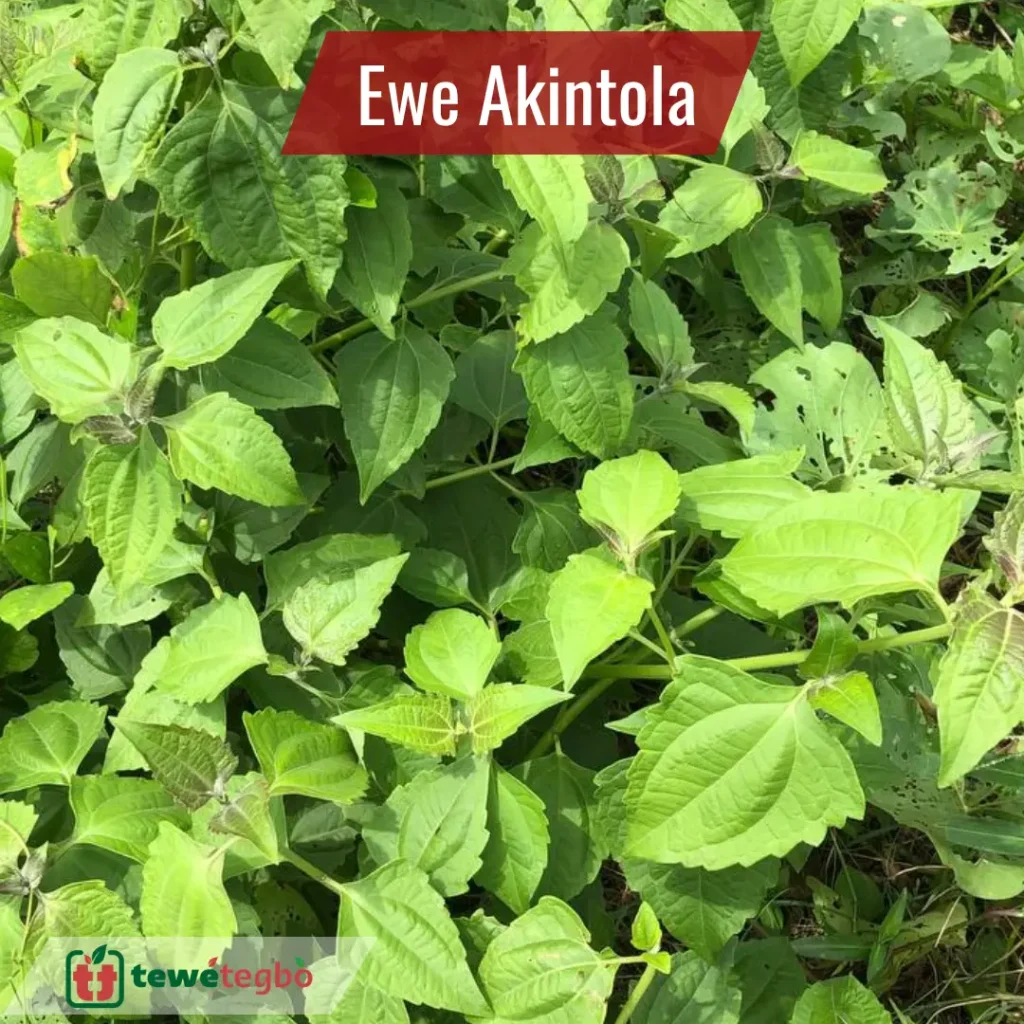
Here’s how to recognize it:
The smell is the biggest clue.
Once you smell it once… you won’t forget it.
You can see ewe akintola video too below for better recognition.
Ewe Akintola Benefits & Uses (What It Actually Does)
This is what ewe akintola is traditionally used for.
Not theory.
Real-life use.
1. Stops Bleeding Fast (The One Everybody Knows)
This is the most common use.
If you grew up in Nigeria, you’ve probably seen this:
And the bleeding slows down.
This is not just tradition.
The leaf contains compounds that help blood clot faster and heal wounds.
2. Fights Infection (Inside & Outside)
Used for:
It helps the body fight bacteria and reduce inflammation.
3. Helps Heal Ulcer (Internal Wound)
Here’s a simple way to understand it:
The same leaf that heals outside wound…
is also used for inside wound.
For ulcer:
4. Used For Malaria (With Other Leaves)
Ewe akintola is rarely used alone.
It is usually combined with:
Then:
This combination is common in many Yoruba homes.
5. Used For Typhoid (Steam Method)
Helps open the body and reduce fever.
6. Used For Newborn Baby Bath
This is a long-standing tradition.
Believed to cleanse and protect the skin.
7. Used During Pregnancy
Some women use it as a warm herbal bath for:
8. Helps With Menstrual Pain
Used to reduce:
9. Treats Skin Problems
Applied directly for:
10. Used For Blood Pressure
Traditionally used to support blood flow and balance.
Best used with proper guidance.
11. Used In Complex Herbal Treatments
In some cases, it is combined with other herbs (like egbo asa) for serious conditions like cancer.
This is not for self-use.
Usually handled by experienced herbalists.
12. Mosquito Repellent
The smoke helps chase mosquitoes away.
How To Use Ewe Akintola (Simple Step-by-Step Methods)
How to Use Ewe Akintola for Wounds (To Stop Bleeding)
1. Pluck a few fresh ewe akintola leaves
2. Wash them quickly with clean water
3. Rub the leaves between your palms to release the juice
4. Apply the juice directly to the wound
5. Place the squeezed leaf on the wound as a cover
This helps slow bleeding and supports faster healing.
How to Use Ewe Akintola for Malaria
1. Get fresh ewe akintola leaves
2. Add other leaves like:
– lemongrass
– guava leaves or mango leaves
3. Wash all leaves properly
4. Boil everything together in a pot of water
5. Drink the water when it cools slightly
6. Use the steam from the hot mixture for inhalation
This combination is commonly used in traditional homes.
How to Use Ewe Akintola for Ulcer
1. Pluck fresh leaves
2. Dry them under shade (not direct sun)
3. Grind the dried leaves into powder
4. Mix the powder with:
– original honey
– or palm kernel oil
5. Take small amounts as traditionally advised
Used to support healing of internal wounds.
Can Ewe Akintola Be Eaten Like a Vegetable?
No.
It is not used as a regular food.
Ewe akintola is mainly used as medicine, not as a vegetable.
From a traditional Yoruba perspective, this makes sense.
The plant belongs to a group often described as balẹ̀rẹ̀ onírùn (hairy ground plants).
Plants in this category are usually not taken directly into the mouth.
They are not commonly:
Instead, they are prepared in other ways, such as:
That is why you rarely see anyone cooking ewe akintola like a vegetable.
Spiritual Use of Ewe Akintola
Beyond physical healing, ewe akintola also has a place in Yoruba traditional practice.
Some people use it for what is often called “aporo ofa”…
A form of spiritual cleansing, believed to remove negative influences or unseen attacks on the body.
The preparation usually involves mixing the leaf with adi eyan (palm kernel oil), then using it as part of a cleansing process.
In this context, the goal is not just to treat the body… but to clear what cannot be seen.
Now, whether someone believes in this or not will depend on personal views.
But one thing is worth noticing:
After such treatments, people often report feeling lighter… calmer… more settled in their body.
And from a physical point of view, this is not surprising.
Ewe akintola contains compounds that:
So while the explanation may differ, the experience of relief is real for many people.
Quick Answers About Ewe Akintola
What is the English name of ewe akintola?
It is commonly called Siam weed.
Can you eat ewe akintola?
No. People don’t eat it like a vegetable.
It is used as medicine because it belongs to balẹ̀rẹ̀ onírùn (hairy ground plants), which are mostly not taken directly into the mouth.
They are usually squeezed or boiled.
What is ewe akintola used for?
It is used for wounds, infections, malaria support, ulcer, and skin problems.
Can ewe akintola cure malaria?
It is traditionally used alongside other herbs to support malaria treatment.
How do you use ewe akintola for wounds?
Crush the fresh leaf, squeeze out the juice, and apply it directly to the wound.
All This Simply Means
Ewe Akintola is one of those plants people ignore.
It grows freely.
It looks ordinary.
Farmers even try to remove it.
But look closer…
This “weed” has helped:
For generations.
And here is the truth most people miss:
Knowing the leaf is one thing…
Knowing the right way to combine and use it is another.
That is where the real difference is.
Chat me Now on WhatsApp about Ewe Akintola
Not sure if Eyin Olobe will work for you?
Send me a WhatsApp message now, I’ll guide you.
Let me reconnect you to the nature’s pharmacy.